
Emotion Recognition via Deep Forest: Escaping the Hyperparameter Trap of DNNs
Emotion recognition from multi-channel EEG via deep forest
This paper proposes a novel multi-channel EEG emotion recognition framework using Deep Forest (gcForest). It maps raw EEG signals into 2D spatio-temporal frame sequences and achieves state-of-the-art performance, reaching 97.69% accuracy on the DEAP dataset and superior results on DREAMER.
TL;DR
Researchers have developed a new EEG-based emotion recognition method that swaps out complex Deep Neural Networks (DNNs) for a Deep Forest (gcForest) architecture. By transforming EEG signals into 2D spatial frames, the model achieves up to 97.69% accuracy while remaining insensitive to hyperparameter settings and highly effective on small datasets where traditional deep learning fails.
Background & Motivation: Why Not DNNs?
While Deep Learning has dominated the field of Affective Computing, it comes with two "hidden costs":
- The Tuning Nightmare: DNNs require meticulous tuning of learning rates, dropout, and architecture layers.
- Data Hunger: They typically need thousands of labeled samples to generalize, but high-quality, labeled EEG data is expensive and difficult to acquire.
The authors argue that we need a data-driven approach that is robust, easier to train, and capable of mining the spatial-temporal signatures of the brain without manual feature engineering.
Methodology: Spatio-Temporal Mapping meets Deep Forest
The core innovation lies in the transformation of 1D EEG vectors into 2D frame sequences based on the International 10-20 electrode placement system.
1. Spatio-Temporal Framing
Instead of treating EEG as a simple flat list of numbers, the authors map each channel to its physical coordinate on the scalp. This creates a "movie frame" of brain activity, preserving the spatial proximity of electrical signals.
2. The gcForest Architecture
The model consists of two primary modules:
- Scanning Module: Similar to a Convolutional Layer, it uses sliding windows to capture local spatial correlations across the 2D EEG frame.
- Cascade Forest: A multi-layered ensemble of Random Forests and Completely-Random Forests. Unlike DNNs, the "depth" of the forest is determined automatically; training stops when accuracy on a validation set ceases to improve.
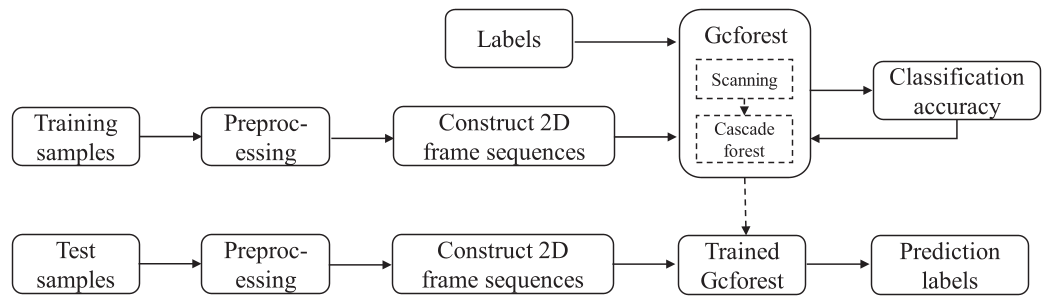 Fig 1: The proposed workflow from raw EEG to emotion classification via Deep Forest.
Experimental Showdown: Crushing the Baselines
The authors compared their model against seven major baselines, including SVM, MLP, and advanced DNNs like DGCNN (Dynamic Graph CNN) and CRAM (Convolutional Recurrent Attention Model).
Key Findings:
- SOTA Performance: On the DEAP dataset, the method surpassed the second-best model (DGCNN) by 5.14% in valence.
- Stability: The standard deviation of the results was significantly lower than CRAM, indicating the model is more reliable across different human subjects.
- Small Data Efficiency: Perhaps the most impressive result was that even with only 10% of the training data, the Deep Forest model outperformed several DNNs trained on 90% of the data.
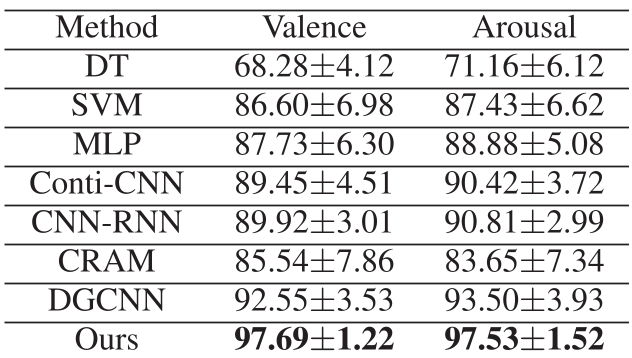 Table 1: The Deep Forest (Ours) demonstrates a clear lead in both accuracy and stability.
Deep Insight: Why Does It Work?
The success of this work stems from the In-Model Feature Transformation. While traditional forests are seen as "shallow," the cascading structure allows for the representation learning usually reserved for DNNs. Because forests are non-differentiable and based on decision trees, they do not suffer from vanishing gradients and are naturally more robust to the noisy, non-stationary nature of EEG signals.
Critical Analysis & Future Outlook
Strengths:
- Excellent performance on small-scale biomedical data.
- Reduced computational "headache" (no backpropagation or gradient descent).
Limitations:
- The model currently focuses on subject-dependent tasks (training and testing on the same person).
- As noted by the authors, for datasets with fewer channels (like DREAMER's 14 channels), the spatial scanning advantage diminishes because the "image" becomes too sparse.
Future Work: The next frontier is Subject-Independent recognition. Integrating Domain Adaptation with Deep Forest could allow a model trained on one group of people to work instantly for a new user—a "Holy Grail" for consumer BCI products.
Conclusion
This paper serves as a powerful reminder that "Deep" doesn't always have to mean "Neural." For researchers and engineers working with limited biological data, the Deep Forest approach offers a mathematically sound, high-performance, and efficient alternative to the standard deep learning paradigm.