
Minimalist Biometrics: High-Accuracy Emotion Recognition with EEG and PPG
Emotion Recognition Based on Photoplethysmogram and Electroencephalogram
The paper presents a multimodal emotion recognition framework leveraging a reduced set of physiological signals (5 EEG channels and 1 PPG channel) from the DEAP dataset. Using machine learning models like AdaBoost and Logistic Regression, it achieves classification accuracies of 68.68% for arousal and 66.03% for valence, facilitating wearable-ready emotional monitoring.
TL;DR
This study demonstrates that we don't need a lab-grade 32-channel EEG cap to understand human emotions. By combining just 5 EEG channels with a single Photoplethysmogram (PPG) sensor, researchers achieved up to 68.68% accuracy in classifying emotional arousal. This paves the way for "invisible" emotional monitoring via simple wearable headbands.
The Wearability Gap
Emotion recognition is critical for human-computer interaction and mental health intervention. While physiological signals like EEG (brain waves) and PPG (blood volume pulse) provide objective data compared to facial expressions, the current gold standard—the DEAP dataset—often involves cumbersome setups.
The core challenge is: Can we maintain high diagnostic accuracy while drastically reducing the sensor count? Most current "SOTA" models require a full cap of 32 EEG electrodes, which is impossible for a user to wear during daily work or leisure.
Methodology: The Fusion of Brain and Pulse
The researchers focused on the Valence-Arousal model, which maps emotions onto a 2D plane (e.g., "Excited" is high arousal/high valence).
1. Signal Selection
- EEG (5 Channels): The team selected AF3, AF4, T7, T8, and Pz. Why? These positions are commonly used in portable devices (like Emotiv) and target the frontal and temporal lobes where emotional processing is most active.
- PPG (1 Channel): Chosen for its low noise and ability to reflect the autonomic nervous system's reaction (heart rate spikes during stress).
2. Feature Engineering
For EEG, they focused on frequency energy ratios (Delta, Theta, Alpha, Beta). For PPG, they used the Slope Sum Function (SSF) to extract valleys and calculate time-domain statistics like variance and median intervals.
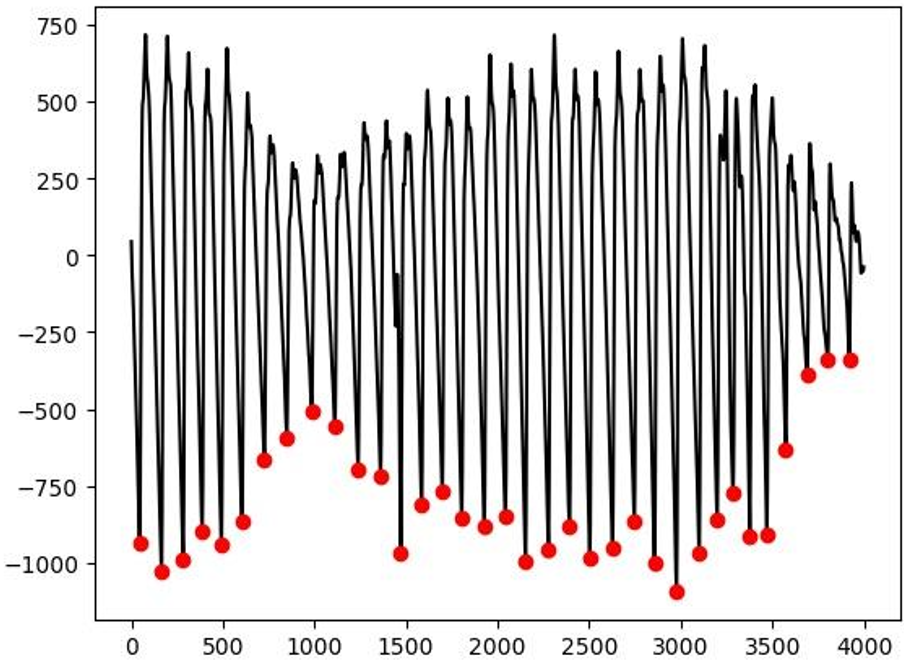 Fig. 1: Feature point extraction from filtered PPG signals to reduce individual variability.
Experiments & Results
The study compared a simple Logistic Regression against the ensemble AdaBoost learner. AdaBoost proved superior by iteratively focusing on "hard-to-classify" samples.
| Signal Type | Arousal (ACC) | Valence (ACC) |
|---|---|---|
| EEG only | 63.74% | 62.64% |
| PPG only | 54.95% | 64.84% |
| Combined (All) | 68.68% | 66.03% |
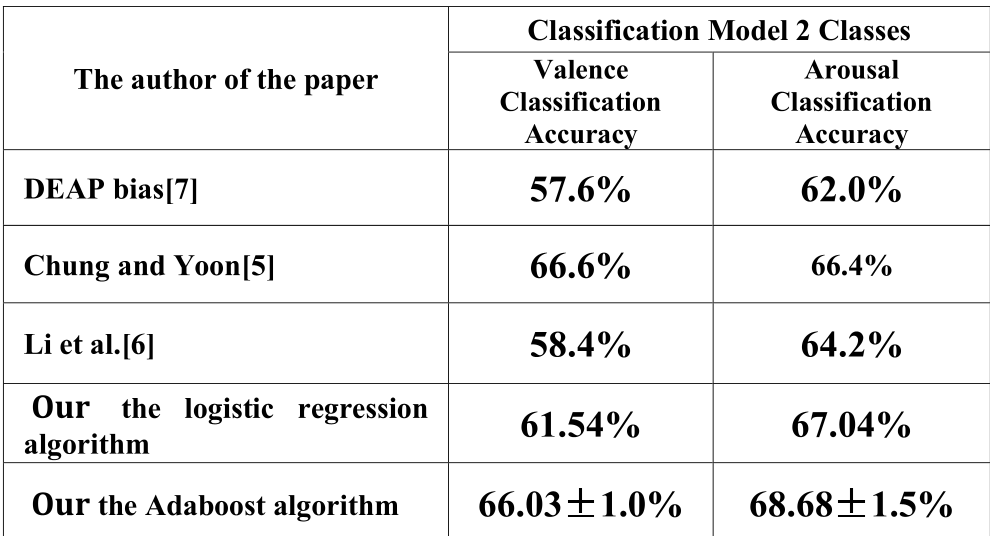 Fig. 2: The proposed AdaBoost method outperforms several benchmarks, including the original DEAP baseline, despite using fewer channels.
Why the Fusion Works
Interestingly, the results show that EEG is better at detecting Arousal, while PPG is more sensitive to Valence. By fusing the two, the model compensates for the weaknesses of each individual modality, leading to a more stable "emotional signature."
Critical Insight & Conclusion
The true value of this paper lies in its Inductive Bias toward practical application. By proving that 5 channels are nearly as good as 32, it justifies the move toward consumer-grade "smart headbands."
Limitations: The study uses the DEAP dataset’s preprocessed Python packages, which are already filtered for eye movements (EOG). In a real-world scenario, the noise would be significantly higher, requiring more robust real-time cleaning algorithms.
Future Outlook: The next frontier is moving from "classification" to "continuous monitoring," where AI can detect the subtle slide toward anxiety or depression before the user is even aware of it.