
Beyond Hand-Crafted Features: A Codebook Approach to Physiological Emotion Recognition
Emotion Recognition Based on Physiological Sensor Data Using Codebook Approach
This paper introduces a codebook-based approach for emotion recognition using physiological signals (BVP, GSR, RES, EMG). By quantizing characteristic subsequences into "codewords," the method achieves a state-of-the-art accuracy of 54.3% on a benchmark dataset, significantly outperforming traditional hand-crafted feature methods.
TL;DR
Emotion recognition is moving from "guessing" which statistical features matter (like mean or variance) to learning them directly from the data. This paper proposes a codebook-based framework that treats physiological signals like "sentences" made of "codewords." By clustering subsequences and using soft assignment, the authors achieved a major performance lead over traditional hand-crafted methods.
Background: The Limits of Intuition
Recognizing emotions through physiological sensors (like heart rate or skin conductance) is inherently difficult because signals are noisy and vary wildly between people. For years, the gold standard was hand-crafted features: researchers would decide to measure the "standard deviation of first-order derivatives" or "spectral power."
The problem? These features are often arbitrary. As the authors argue, why use the mean when the mean plus 1.5 might be more representative? Nature doesn't follow our manual definitions. We need a way to let the signals speak for themselves.
Methodology: The "Visual Words" of Physiology
The authors' core insight is to treat physiological sequences like images in computer vision. They adopt the Codebook Approach (often called Bag of Visual Words):
- Subsequence Collection: They use a sliding window to chop the long signals (BVP, GSR, etc.) into small segments.
- Codebook Construction: Using k-means clustering, they group these thousands of segments into clusters. The centers of these clusters are Codewords—the fundamental "motifs" of an emotion.
- Soft Assignment: Instead of saying a segment belongs to exactly one codeword, they use a Gaussian kernel to assign it partially to multiple similar codewords. This accounts for the uncertainty and noise inherent in sensor data.
- SVM Classification: The final "fingerprint" of a 2-minute signal is a histogram representing how often each codeword appeared.
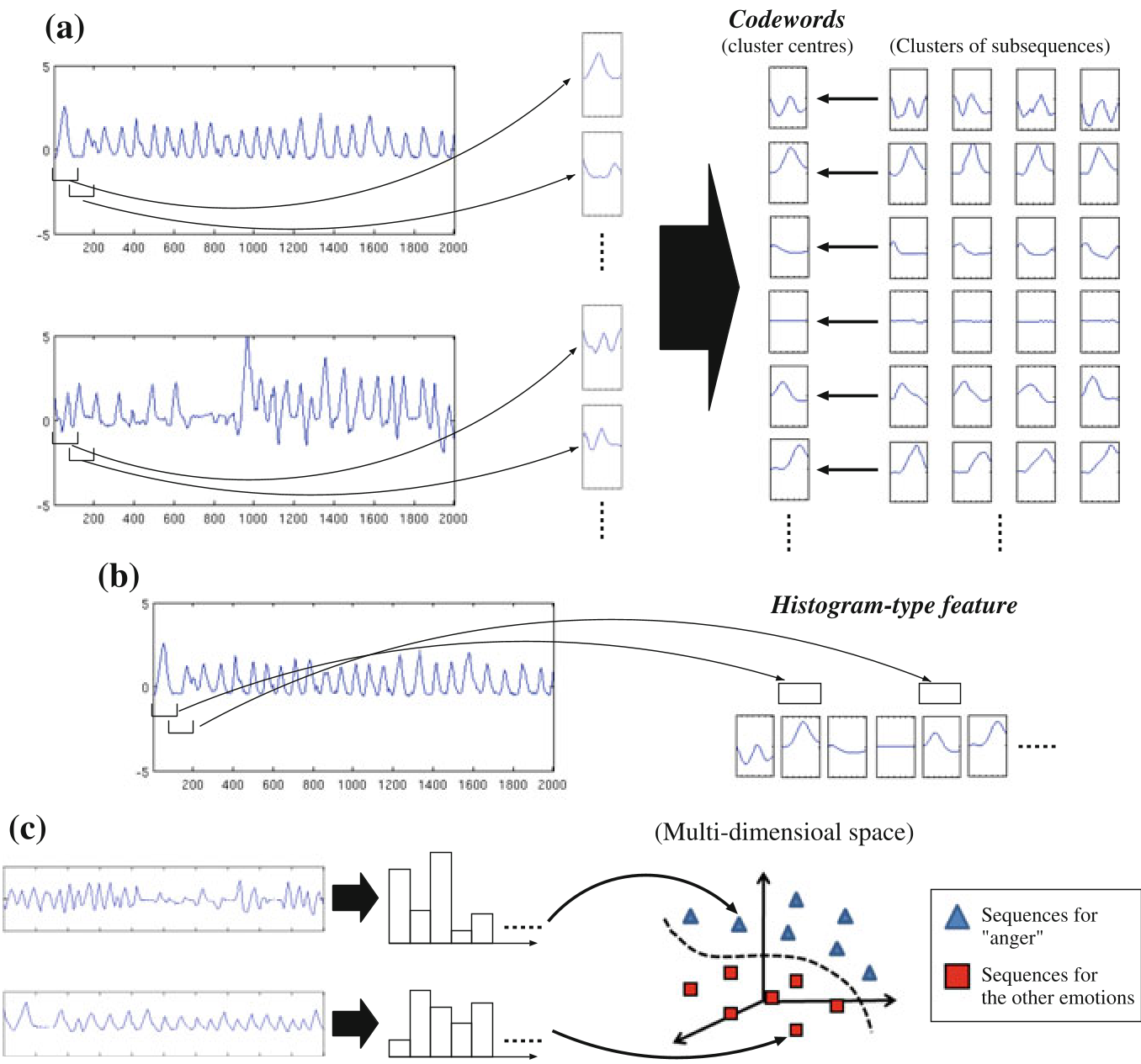 Figure 1: The three-step process: Codebook construction, codeword assignment, and classification.
Why It Works: Visualizing the Codewords
One of the most compelling parts of this work is the visualization of the codewords. The algorithm "discovered" specific shapes in the Respiration (RES) and Blood Volume Pressure (BVP) signals that correlate highly with specific emotions like "Grief" or "No-emotion."
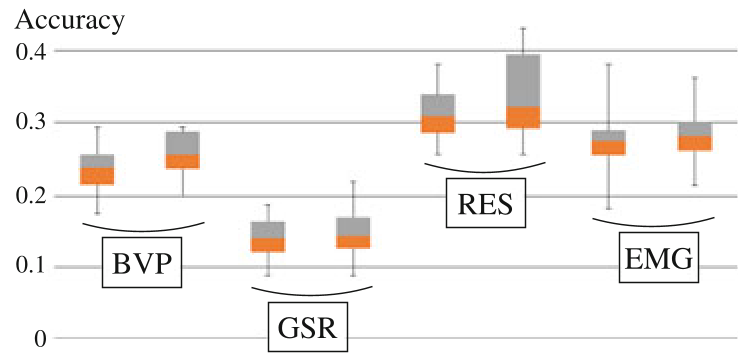 Figure 2: Learned codewords representing characteristic changes in physiological values.
By using Early Fusion (concatenating the features from all four sensors), the model gains a holistic view of the body's reaction, far exceeding the capability of any single sensor.
Experimental Breakthroughs
The method was tested on a dataset featuring 8 emotions recorded over 20 days.
- Performance: The codebook approach reached 54.3% accuracy, dwarfing the 37.5% achieved by standard hand-crafted features used in prior SOTA work.
- Soft vs. Hard: The introduction of "Soft Assignment" ( parameter tuning) proved crucial, as physiological signals are too fluid for "hard" categorization.
 Table 1: Comparison showing the codebook method significantly outperforming raw data fusion and hand-crafted features.
Critical Insight & Future Outlook
The beauty of this approach is its Generative-to-Discriminative pipeline. It uses unsupervised learning (clustering) to find the "vocabulary" of human physiology, then uses supervised learning (SVM) to interpret the "essay."
However, the paper acknowledges a limitation: simple histograms discard the temporal order of the codewords. In the future, moving toward sequence-aware models (like HMMs or modern Transformers) while retaining this "learned vocabulary" could unlock even higher accuracy for Ambient Assisted Living (AAL) systems.
Takeaway: If you are working with complex sensor data, stop engineering features by hand. Let a codebook define the language of your data.