
Bridging the Slang Gap: Robust Emotion Recognition via Bag of Concepts
Emotion recognition for sentences with unknown expressions based on semantic similarity by using Bag of Concepts
The paper introduces a "Bag of Concepts" (BoC) approach for emotion recognition targeting Japanese "Youth Slang" and internet colloquialisms. By utilizing Word2Vec embeddings and unsupervised clustering on a large Twitter corpus, the method maps unknown slang expressions to semantic concept IDs to enhance model robustness.
TL;DR
Researchers have developed a method to decode emotions in sentences containing "Youth Slang"—words that don't exist in standard dictionaries. By moving away from specific words and toward "Bag of Concepts" (BoC) via unsupervised clustering of Twitter data, the system can understand the emotional intent of a new slang term based on the company it keeps, rather than needing a manual definition.
Background: The Moving Target of Youth Slang
In the digital age, language evolves faster than dictionaries can be printed. In Japan, "Youth Slang" (Wakamono Kotoba) frequently blends contradictory emotions—take "Uza-kawaii," a portmanteau of Uzai (annoying) and Kawaii (cute). Standard NLP pipelines, which rely on morphological analysis, often break these words into nonsense or ignore them entirely.
The authors argue that we cannot simply ignore these words, as they are the primary vehicles for emotion on social media. However, manually updating dictionaries is an impossible task. The solution? Semantic Latent Spaces.
The Problem with Traditional BoW
The classic Bag-of-Words (BoW) model treats every word as a unique atom. If an atom (word) wasn't in the training set, the model is "blind" to it. This leads to:
- Morphological Failure: Slang words are often split incorrectly during tokenization.
- Sparsity: New words create a "long tail" that the model cannot generalize from.
- Loss of Nuance: Simply converting slang to "formal" equivalents often loses the subtle emotional "vibe" of the original expression.
Methodology: From Words to Concepts
The core innovation lies in the Bag of Concepts (BoC) pipeline. Instead of looking for the word "Uzai," the system looks for the concept that behaves like "Uzai" in a sea of data.
1. Building the Concept Database
The authors trained a Word2Vec model on a massive Twitter corpus (specifically filtered for slang and emotion). This mapped every word into a 200-dimensional vector space where words used in similar contexts sit near each other.
2. Unsupervised Clustering
Using the Bayon clustering tool, they grouped these vectors into 30,000 "concepts." Even if a word is "unknown" to the emotion classifier, it likely belongs to a cluster containing other known words with similar emotional polarities.
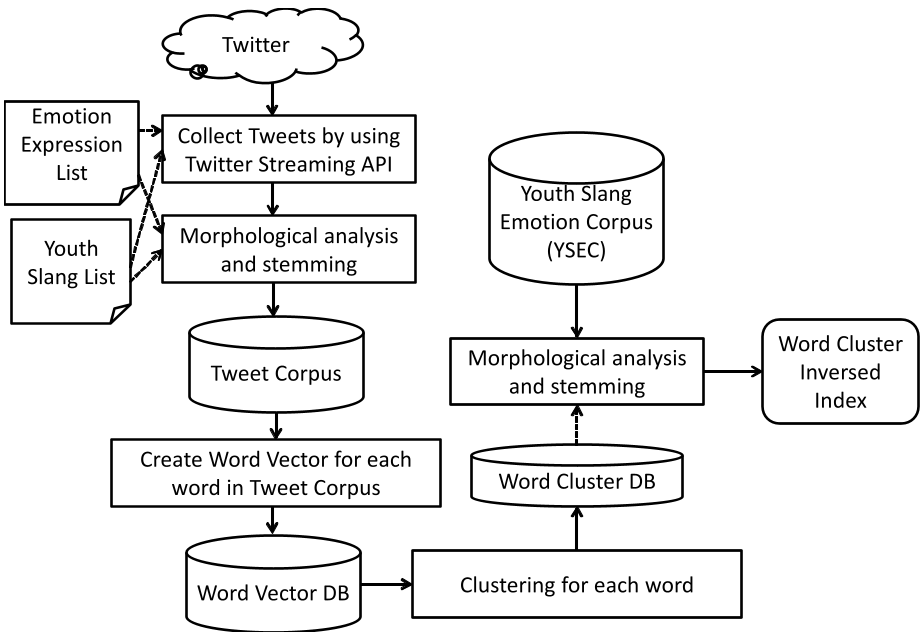 Fig 1: The proposed estimation flow using k-NN and Bag of Concepts.
Experiments and Results
The researchers tested their method on the Youth Slang Emotion Corpus (YSEC), featuring 14 distinct emotion tags.
The Robustness Paradox
Interestingly, the baseline Bag-of-Words actually outperformed Bag of Concepts in raw accuracy (36% vs 32%). This is a known phenomenon in NLP where reducing dimensions through clustering can "smear" specific features. However, the true value of BoC appeared in robustness.
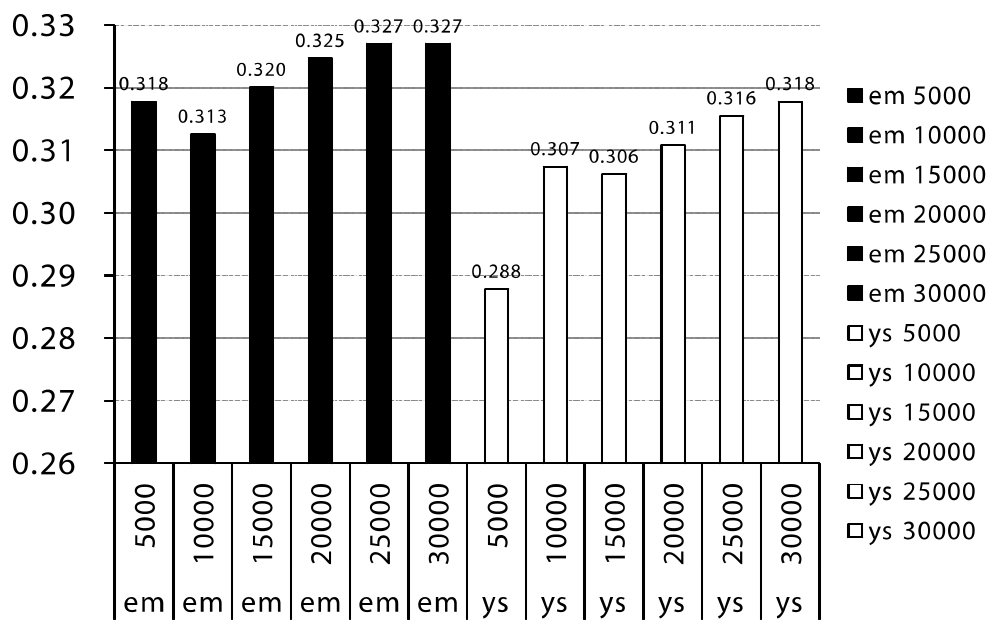 Fig 2: Comparison of different classification methods using BoC features.
The k-NN (k-Nearest Neighbor) approach using BoC was significantly more "rugged." As shown in the table below, the k-NN success cases had a higher density of unknown words (2.34 per sentence) compared to the baseline success cases (2.22).
| Method | Success/Failure | # Unknown Words per Sentence |
|---|---|---|
| Baseline (BoW) | Success | 2.22 |
| Proposed (k-NN) | Success | 2.34 |
Critical Insight: Why Does This Work?
The effectiveness of this method hinges on the Emotion Polarity Match Rate. The authors proved that within their clusters, approximately 90-94% of words shared the same emotional polarity. This means that if a new slang word falls into a "Joy" cluster, it is highly likely to be a positive expression, even if the model has never seen that specific string of characters before.
Summary & Future Outlook
While the Bag of Concepts hasn't yet unseated traditional models in accuracy, it provides a vital safety net for "In-the-Wild" text processing.
Takeaways for the Industry:
- Context is King: For social media analysis, the "neighborhood" a word lives in is more important than its dictionary definition.
- Cluster Precision: Future work must focus on reducing the "noise" in clustering to ensure that antonyms (like "good" and "bad") don't end up in the same concept ID.
- Scalability: The use of SimString for high-speed similarity search suggests that this method can be scaled to real-time social media monitoring for brands and public sentiment.
The study reminds us that in the world of language, sometimes the concept of a word is far more powerful than the word itself.