
Recognition of Emotion with SVMs: A Structural Approach to Sentiment
10436_Recognition of Emotion with SVMs.
This paper presents a text-based emotion recognition system utilizing Support Vector Machines (SVM) via the LIBSVM library. The method focuses on binary classification of emotional states (non-negative vs. negative) extracted from keyboard-inputted sentences.
TL;DR
This research tackles the challenge of identifying human emotions in text-based communication. By combining Morphological Analysis for feature selection and Support Vector Machines (SVM) for classification, the authors developed a system capable of distinguishing between "Negative" and "Non-negative" emotions with an impressive 87.5% accuracy. Unlike simpler statistical models, this approach utilizes the maximal margin principle to ensure better generalization on unseen text data.
Problem & Motivation: The Fuzziness of Sentiment
How do we teach a machine to understand the "feeling" behind a sentence? In the realm of Human-Computer Interaction (HCI), recognizing emotional states is critical for applications ranging from assistive robotics to patient monitoring.
However, emotion recognition faces a major hurdle: Linguistic Uncertainty. Human emotions are not discrete boxes; they are fuzzy and overlapping. Prior works often failed because they couldn't handle the high dimensionality of language or the "noise" of non-emotive words. The authors argue that by focusing on core "keywords" and using a robust classifier like SVM, they can overcome the limitations of earlier statistical descriptions.
Methodology: From Sentences to Support Vectors
The system follows a rigorous four-stage pipeline:
- Keyword Extraction: Using a morphological analyzer, the system strips sentences down to their most informative parts—nouns, verbs, adjectives, and adverbs. Stopwords are eliminated to reduce noise.
- Keyword Processing (Vectorization): The extracted words are converted into a Vector Space Model (VSM). Each keyword's index corresponds to its position in the VSM, and its value is determined by its frequency within the sentence.
- SVM Modeling: Utilizing LIBSVM, the system maps these vectors into a high-dimensional feature space.
- Classification: The core logic relies on finding the optimal hyperplane that separates categories (Negative vs. Non-negative) with the largest possible margin.
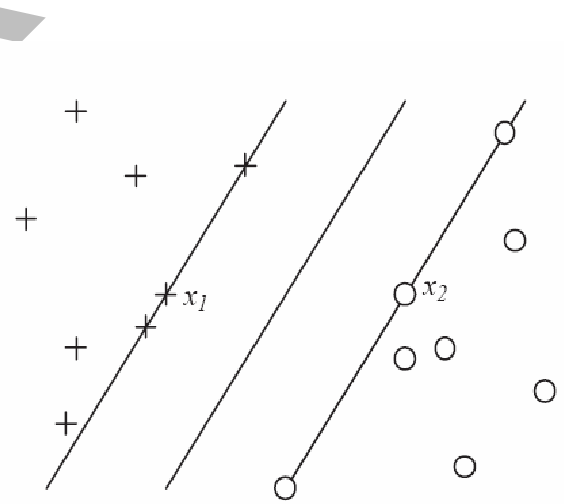 Figure 1: The SVM seeks to maximize the margin between classes to ensure robust generalization.
The decision function is defined as: Where and are optimized during the training phase to create a "Model" that can predict future inputs with high speed.
Experiments & Results
The authors tested the system using 1,140 training sentences and 280 test sentences. The data reflects real-world usage, likely sourced from internet chat platforms.
| Emotion Type | Precision | Recall | F1-Score |
|---|---|---|---|
| Non-negative | 90.8% | 82.0% | 86.2% |
| Negative | 85.0% | 92.5% | 88.6% |
The results, as shown in the table above, indicate that the system is particularly good at "remembering" negative emotions (high recall), which is vital for monitoring systems where missing a negative state (like frustration or distress) could be critical.
 Table 1: Performance metrics showcasing high precision and recall across both emotional polarities.
Critical Insight & Future Work
The success of this method lies in its Inductive Bias. By assuming that nouns, verbs, and adjectives carry the bulk of emotional weight, the authors effectively performed dimensionality reduction before the data even reached the SVM.
Limitations:
- Binary Scope: Currently, the system only differentiates between positive and negative polarities. Real human emotion is more granular (e.g., distinguishing "Anger" from "Boredom").
- Contextual Ignorance: As a bag-of-keywords approach, it may struggle with sarcasm or complex negations where the order of words changes the meaning entirely.
Conclusion: This work provides a solid foundation for building efficient, real-time emotion recognition engines. The high accuracy of 87.5% suggests that even with classical machine learning methods, careful feature engineering (morphological analysis) can yield SOTA-level results in restricted domains.