
NeuCube: Decoding the Spatio-Temporal Language of Emotions via Brain-Inspired SNN
Emotion Recognition and Understanding Using EEG Data in A Brain-Inspired Spiking Neural Network Architecture
This paper introduces a brain-inspired spiking neural network (BI-SNN) architecture, specifically the NeuCube framework, for recognizing four emotional states from EEG data. By mapping EEG signals into a 3D reservoir that mimics the Talairach brain atlas, the system achieves a state-of-the-art classification accuracy of 94.83%.
TL;DR
Researchers have developed a Brain-Inspired Spiking Neural Network (BI-SNN) based on the NeuCube architecture that maps EEG signals into a 3D virtual brain. By mimicking the biological way our brains process information through spikes and spatial connectivity, the model reached a 94.83% accuracy in distinguishing emotions like happiness, calmness, fear, and anger, while simultaneously revealing which brain regions "light up" for each state.
Problem & Motivation: Beyond the Black Box
While Deep Learning (CNNs, LSTMs) has pushed the boundaries of accuracy in EEG analysis, it often suffers from two fatal flaws:
- Spatial Blindness: Standard models treat the 14 or 32 channels of an EEG as simple vector inputs, ignoring the physical 3D locations of the electrodes on the human scalp.
- Lack of Interpretability: It is difficult to extract why a model classified an EEG segment as "Anger." In clinical or BCI (Brain-Computer Interface) settings, understanding the underlying brain dynamics is as important as the classification itself.
The authors argue that by using Spiking Neural Networks (SNNs)—which communicate via discrete temporal events (spikes) rather than continuous values—we can better replicate the brain’s own "computational language."
Methodology: The NeuCube Framework
The core of this research is the NeuCube, a specialized architecture designed for Spatio-Temporal Brain Data (STBD).
1. Encoding (TBR)
Raw EEG signals are converted into spikes using Threshold-Based Representation (TBR). If the signal changes significantly, a spike is emitted. This reduces noise and focuses on the most informative "events" in the brainwave.
2. The 3D Reservoir
Unlike a flat layer of neurons, NeuCube maps neurons into a 3D space corresponding to the Talairach brain atlas. This ensures that neurons representing the "Frontal Lobe" are physically closer to each other in the model, just as they are in a human head.
3. Learning via STDP
The model uses Spike-Timing Dependent Plasticity (STDP). This is a Hebbian learning rule: if Neuron A consistently fires just before Neuron B, their connection strengthens. This allows the network to "self-organize" and learn the temporal flow of brain activity without labels.
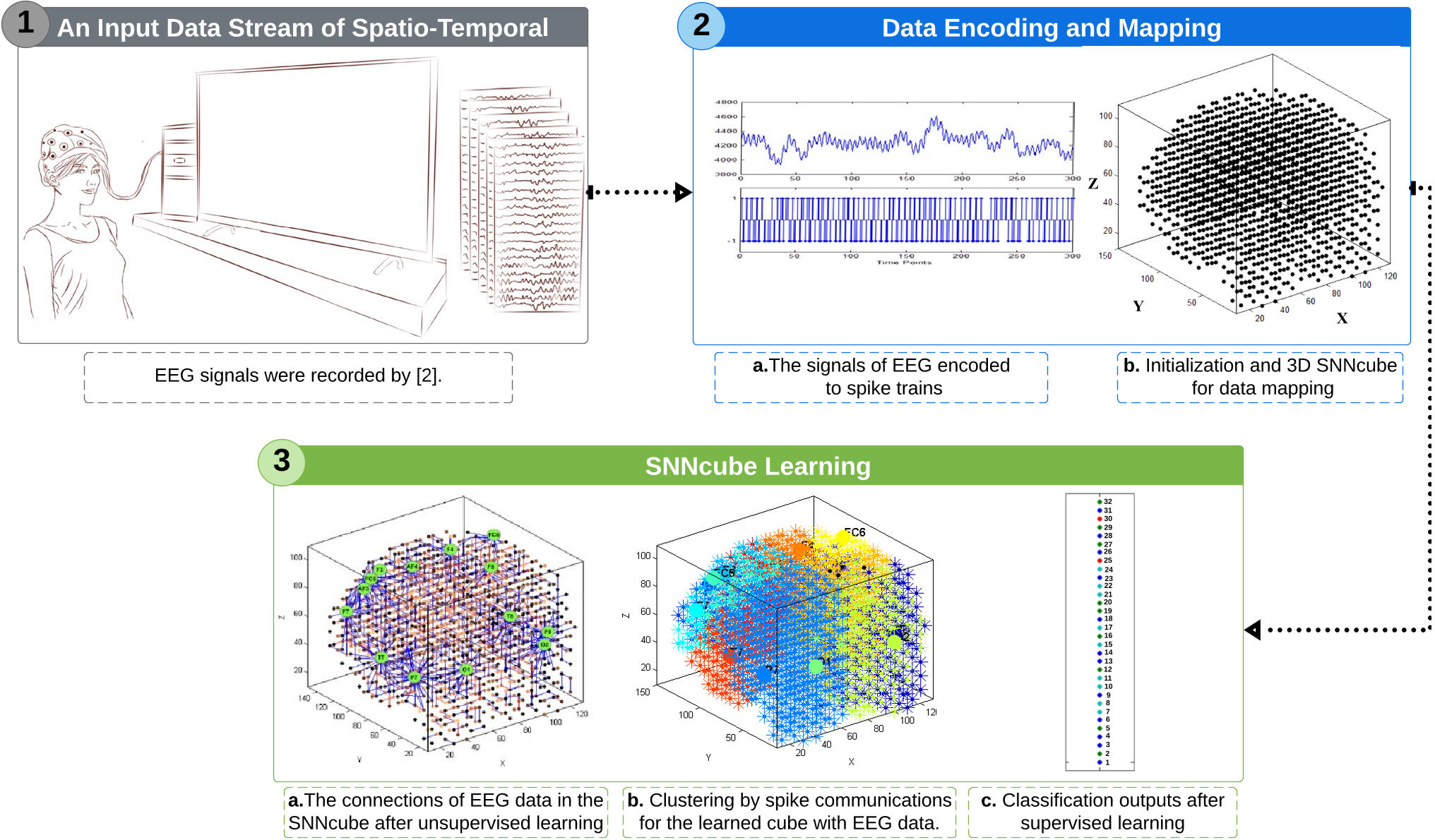 Fig 1: The NeuCube pipeline—from electrode recording to 3D mapping and STDP learning.
Experimental Battle: SNN vs. Traditional ML
The study utilized the DREAMER benchmark dataset, testing four emotions: Calmness, Happiness (Positive), and Fear, Anger (Negative).
Quantitative Performance
The BI-SNN was pitted against Multiple Linear Regression (MLR), Multi-Layer Perceptron (MLP), and Radial Basis Function (RBF) networks.
| Method | Accuracy (4-Class) |
|---|---|
| NeuCube (BI-SNN) | 94.83% |
| MLP | 72.96% |
| RBF | 74.06% |
| MLR | 78.88% |
Qualitative Insight (The "Why")
The visualization of the SNN connectivity revealed a biological truth:
- Positive Emotions: Showed high activation in frontal sites (F7, F3, AF4).
- Negative Emotions: Triggered intense connectivity in the parietal sites (P7, P8) and specific frontal regions (F4, AF3).
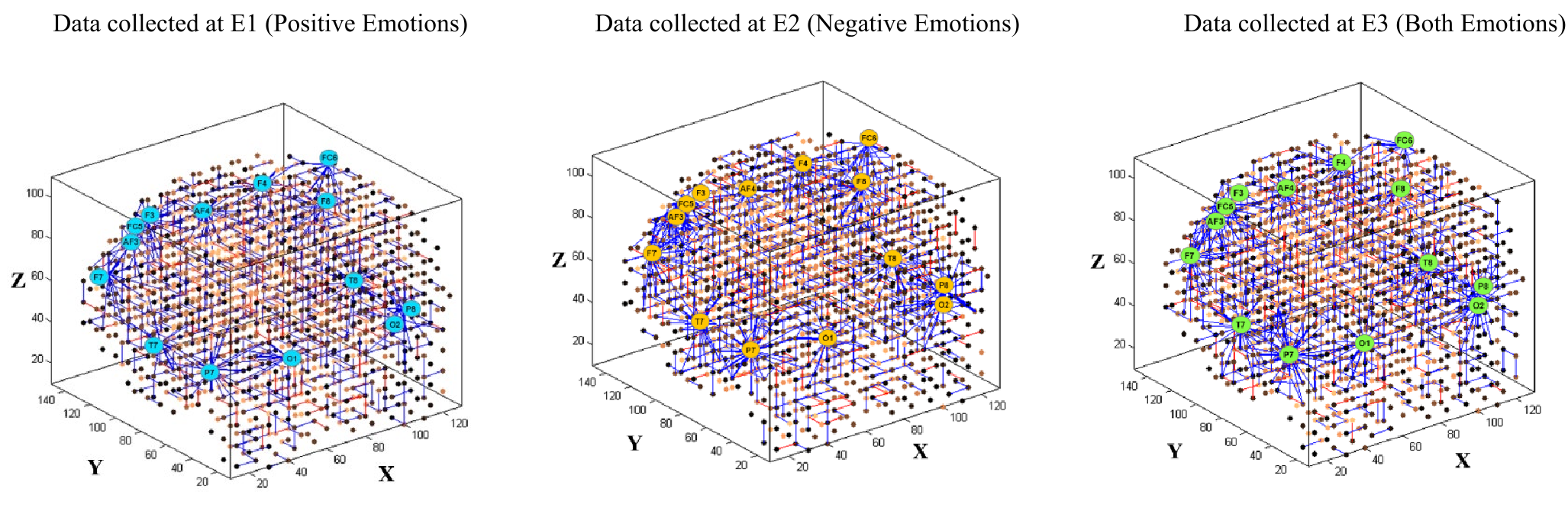 Fig 2: SNN connectivity patterns showing the difference in neural "wiring" between positive and negative emotional states.
Deep Insight & Conclusion
The success of this work lies in its Inductive Bias. By forcing the neural network to assume the shape and spiking behavior of a human brain, the researchers created a model that generalizes better on small EEG datasets than much larger, generic deep learning models.
Takeaway: Future BCI systems shouldn't just be "deeper"; they should be "more biological." The ability to visualize the Feature Interaction Network (FIN) allows clinicians to not only detect emotions but understand the unique cognitive signature of a patient's brain.
Limitations: The dataset size (23 participants) is relatively small. Future work must validate these connectivity patterns across larger, more diverse age groups to ensure these "emotional signatures" are universal.