
Video Casting: Turbocharging Emotional Recognition via GPU-Accelerated Color Averaging
Getting the Emotional Coloring of Videos for Further Teaching of Neural Networks
The paper introduces a preprocessing technique called "Video Cast" for clustering videos by emotional coloring. It compresses multi-frame video data into a single averaged image representing the video's color gamut, significantly reducing the input dimensionality for neural network training.
TL;DR
With the explosion of user-generated content, classifying videos by "emotional coloring" (e.g., scary, bright, cheerful) has become a bottleneck for recommendation engines. This paper proposes a "Video Cast" method: instead of feeding thousands of frames into a network, it averages the color of every pixel across the entire video to create a single representative image. By utilizing NVIDIA CUDA for parallel processing, the authors demonstrate a high-performance pipeline that slashes data redundancy and accelerates training.
Background & Motivation: The Curse of Video Redundancy
Neural networks excel at image classification, but video data remains a "dark side" due to its sheer volume. A 1-minute video at 23 FPS translates to 1,380 individual images. Feeding all these frames into a model creates massive data redundancy—most frames are nearly identical.
The authors argue that the emotional essence of a video is often captured in its overall color palette and lighting. By condensing these 1,380 frames into one "Video Cast," they aim to retain the emotional signature while discarding the computational overhead of temporal sequence processing.
Methodology: From Video Piles to a Single Cast
The core idea is to treat a video like a physical "stack" of photos (Fig 1). By looking "through" the stack, we can compute an average pixel value for every coordinate .
1. The Mathematical Model
The process follows a two-step summation and averaging logic:
- Step 1: Summation - Every pixel from every frame () is added to an intermediate total.
- Step 2: Normalization - The sum is divided by the frame count to get the final average.
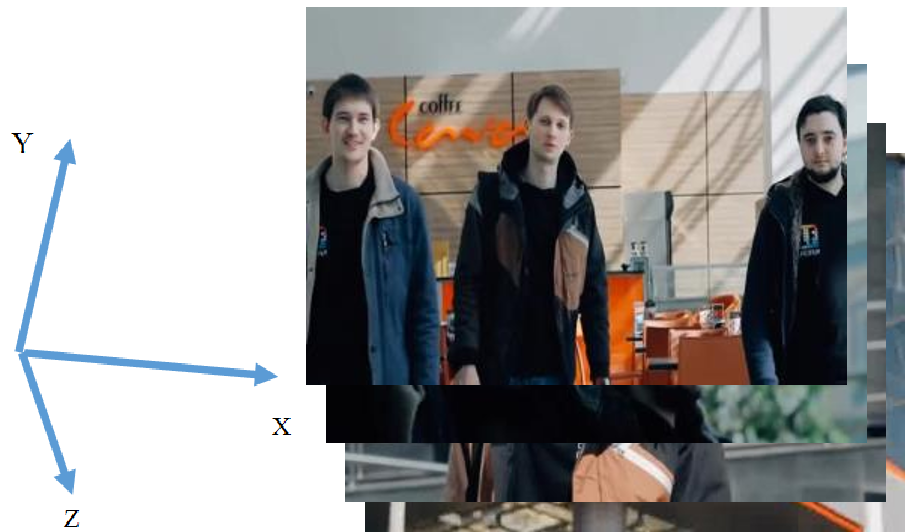 Figure 1: Visualizing a 1-minute video as a vertical stack of 1,380 frames.
2. GPU Acceleration via CUDA
Calculating this on a standard CPU is inefficient because it requires a nested triple loop: . The authors solve this by moving the computation to the GPU. Using CUDA:
- Each pixel's sum is calculated in parallel.
- The complexity of summing pixels drops from to effectively , where is the number of frames.
- Averaging is reduced to a single operation across the matrix.
Experiments and Results: The Visual Summary
The result of this transformation is a "Video Cast" (Fig 2). While human eyes might see it as a blurry abstract image, for a neural network, it is a dense feature map of the video's dominant color gamut—the "emotional coloring."
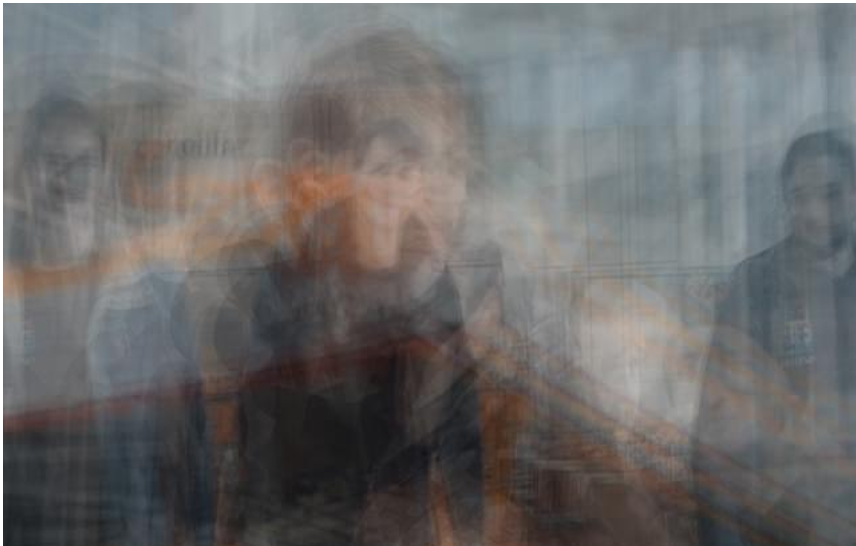 Figure 2: The final "Video Cast" used as an input for the neural network.
Key Gains:
- Data Reduction: Drastic reduction in disk space and memory usage during training.
- Performance: High-speed preprocessing allows for training "on the fly" as new videos are uploaded.
- Clustering Potential: Using external metadata (likes, comments, views) as labels, the neural network learns to associate specific color casts with user engagement and emotional categories.
Critical Insight & Conclusion
The study highlights a non-trivial approach to video processing: sometimes, less is more. By removing temporal details and focusing on color gamuts, the researchers have found a shortcut to identifying the "mood" of a video.
Takeaways for the Industry:
- Summarization is Key: Before reaching for complex Recurrent Neural Networks (RNNs) or Transformers, consider if a simplified spatial summary can solve the task.
- Hardware Alignment: Preprocessing should be designed to leverage GPU architecture early in the pipeline to avoid CPU bottlenecks.
Limitations: While color is a strong emotional indicator, this method might miss context-heavy emotions (e.g., sarcasm or subtle facial expressions) that rely on movements rather than palette. Combining this "Video Cast" with motion vectors could be the next logical step for higher accuracy.