
The Cost of a Screen: Restoring Human Connection via the "Phone Stack" Game
Experiment on Emotional Exchange Method through Phone Stack
This study investigates the erosion of face-to-face communication due to smartphone use by introducing a physical "Phone Stack Game" device. Through video analysis in public eateries, the research demonstrates how gamified smartphone disconnection significantly restores direct emotional exchange, achieving a doubling of verbal and visual engagement.
TL;DR
Can a simple physical device save our dinner conversations? This study from Sungkyunkwan University explores the "Phone Stack Game"—a social challenge where diners stack their phones, and the first to touch theirs pays the bill. By deploying a lit-up physical stacker in Seoul's busiest cafes, researchers proved that "disconnection" from smartphones leads to a 2x increase in eye contact and conversation, revealing just how much our digital lives have cannibalized our emotional ones.
The Digital Erasure of Presence
We’ve all seen it: a group of friends at a restaurant, all staring silently at their respective screens. This phenomenon, often called "phubbing," isn't just a minor social friction; it represents a fundamental shift in how humans exchange emotion.
The authors argue that while existing research focuses on the mental health impacts of smartphones (depression, anxiety, and insomnia), there is a lack of empirical focus on the behavioral replacement of physical interaction. They ask a critical question: If we take the phones away, how much "humanity" do we actually gain back?
Methodology: Gamifying Social Presence
To test this, the research team didn't just ask people to put their phones away—they made it a game with a tangible anchor.
The Device
Built using LittleBits electronic modules, the device acts as a visual "hearth" for the table.
- The Trigger: When phones are placed in the bin, the device activates.
- The Feedback: A flickering LED "candle" and a lit train station image signal that the game is active.
- The Penalty: If someone retrieves their phone early, the light dies, the game ends, and that person pays the bill.
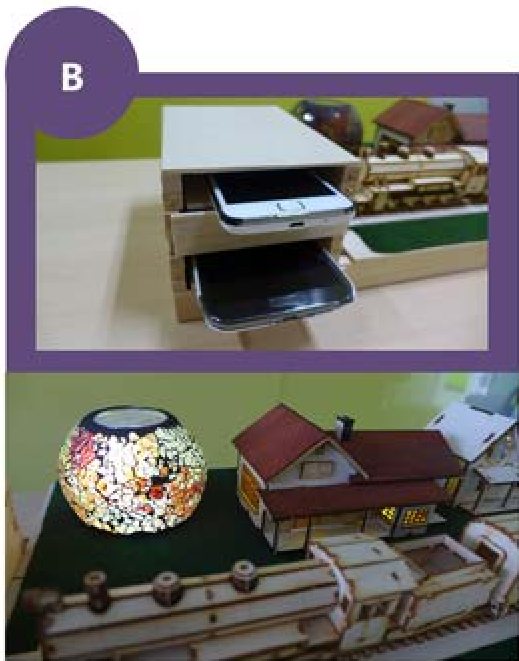 Figure 1: The device before and during play. The visual feedback serves as a constant reminder of the "social contract" active at the table.
The Experiment
The study was conducted in high-traffic hubs in Gangnam, Seoul, including McDonald’s, Burger King, Starbucks, and Coffee Bean. Researchers recorded table behavior at peak times for two weeks before the device was installed and two weeks after.
Experimental Results: Reclaiming the Half-Life of Emotion
The data was categorized into three primary metrics: Eye Contact, Talk, and Gestures. The results were stark and consistent across both fast-food and cafe environments.
Quantitative Leap in Interaction
| Metric (s/hour) | Before | After | Increase |
|---|---|---|---|
| Eye Contact | 1232.9 | 3161.2 | 156% |
| Talk Time | 1046.3 | 2198.4 | 110% |
| Gestures | 181.0 | 245.0 | 35% |
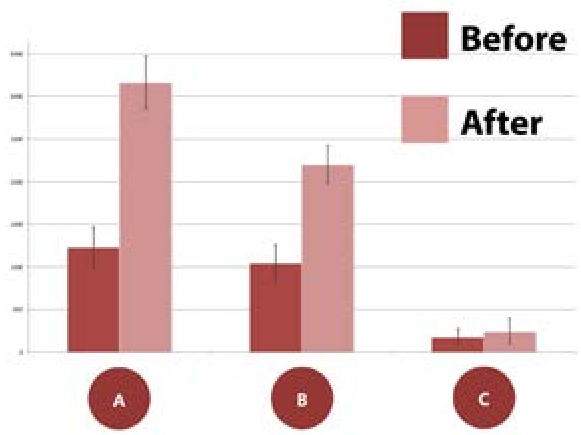 Figure 2: The dramatic shift in social engagement once smartphones were removed from the equation.
Analysis of Results:
- Direct Replacement: The study proves that smartphones replace more than half of potential direct emotional exchange. When the distraction is gamified away, the vacancy is immediately filled by visual and verbal engagement.
- Cultural Nuance: Gesture time showed the smallest increase. The authors attribute this to Korean cultural norms, which often discourage expansive gestures in public, highlighting how social technology interacts with cultural Inductive Bias.
- The "Losing" Cafe: Interaction levels were higher in coffee shops than fast-food restaurants, likely due to the "third place" nature of cafes where lingering is encouraged.
Critical Insights & Future Outlook
Takeaway
This work demonstrates that the lack of communication in modern society isn't a lack of desire to talk, but a high frictional barrier created by the constant dopamine pull of SNS. By introducing a physical "penalty" and a visual "reward" (the glowing device), the social cost of using a phone is made explicit, allowing the natural human state of conversation to re-emerge.
Limitations & Future Work
The authors admit a cultural limitation: the experiment was localized to Seoul. Future research will explore Western contexts where gestures play a larger role in communication. Additionally, while the "Phone Stack" works for friend groups, exploring how such interventions could work for strangers or in professional settings remains an open question.
Conclusion
The "Phone Stack Game" is an elegant piece of Human-Computer Interaction (HCI) research that uses a tool to defeat the misuse of another tool. It serves as a powerful reminder that our social depth is often just one "stacked" phone away.