
Decoding Irony: An Emotion-Ranked Approach to Satire Detection
Implementation of Emotional Features on Satire Detection
This paper introduces an emotion-based satire detection framework using a novel "Bag-of Sorted Emotion" (BOSE) feature representation. By integrating both supervised (TFRF) and unsupervised (TFIDF) weighting schemes with Ensemble Bagging classifiers, the model effectively identifies satirical content across diverse text lengths and platforms, including news articles, product reviews, and tweets.
TL;DR
Satire is notoriously difficult for machines to "get" because it relies on irony rather than literal meaning. This paper shifts the focus from purely lexical features (words used) to emotional structures (how emotions are ranked). By introducing Bag-of-Sorted Emotion (BOSE) features and using Ensemble Bagging, the researchers developed a system that detects satire across tweets, news, and reviews, proving that how an author feels is just as important as what they say.
Problem & Motivation: The Ambiguity of Irony
Traditional NLP treats satire as a text classification problem based on word frequency (BoW). However, satirical language is "implicit"—it uses humor and exaggeration to criticize. The authors point out two critical gaps:
- Emotional Neglect: Most researchers look at syntax or signatures (punctuation, adjectives), but rarely the emotional subtext.
- The Ambiguity Trap: Satirical and serious texts often share similar emotions (e.g., "disgust" can appear in a serious news report and a satirical critique). Base classifiers like SVM struggle to draw a clear boundary in this "emotional overlap."
Methodology: Ranking the Feels
The core innovation is the Bag-of-Sorted Emotion (BOSE). Rather than just counting emotional words, the authors rank them.
1. Feature Engineering
The system extracts 8 basic emotions and 4 sentiment scores using SÉANCE. These scores are then sorted to create a ranked profile of the text's emotional state.
- BOSE_TFIDF: Unsupervised weighting reflecting the importance of emotional sequences.
- BOSE_TFRF: Supervised weighting that highlights emotional patterns that are significantly more frequent in satirical vs. non-satirical categories.
2. Model Architecture
The researchers compared a standard SVM with Ensemble Bagging. The intuition here is that ensemble methods are better at handling the "diversity and characteristics" of biased real-world data than a single linear classifier.
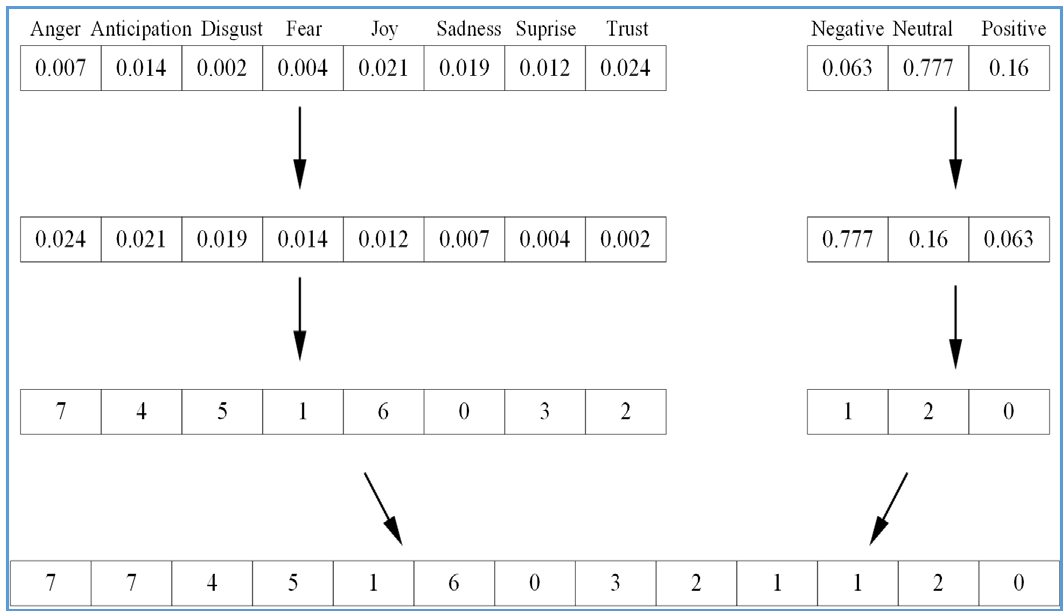 Fig 1. Structure of the Bag-of-Sorted Emotion (BOSE) extraction process.
Experiments & Results: Stability Over Length
The authors tested their model on three distinct datasets: Newswire articles (long), Amazon Reviews (medium), and Twitter (short).
Key Findings:
- Short Text Superiority: On Twitter, where traditional BoW failed due to lack of word repetitions, the emotional model maintained a 67% accuracy, outperforming the baseline.
- The Ensemble Advantage: As shown in the benchmarking tables, the Ensemble Bagging classifier consistently outperformed SVM, which frequently "flatlined" because it couldn't resolve the ambiguity of emotional features.
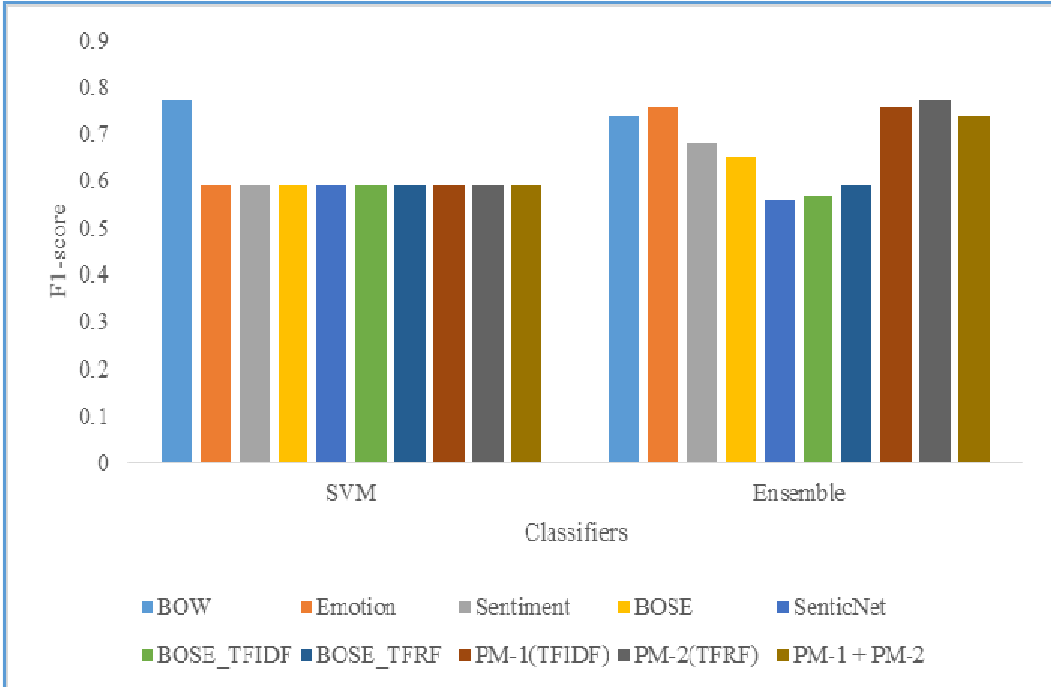 Fig 2. Performance comparison on News Articles: Note how Ensemble methods (Proposed Model) hit higher F1 peaks compared to the baseline.
Quantifiable Gains:
On the News Articles dataset, the supervised model (PM-2 TFRF) achieved a precision of 0.78 and F1-score of 0.77, a significant success for an emotion-only model.
Critical Analysis & Conclusion
Takeaway
The paper proves that emotion-based features are a viable, and sometimes superior, alternative to word-based features, especially in short-form social media where lexical context is scarce. The shift from "raw scores" to "sorted rankings" (BOSE) provides a more stable representation of stylistic intent.
Limitations
- Ambiguity Persistence: Even with sorting, the accuracy on short text (67%) leaves room for improvement.
- The Long-Text Gap: In long product reviews, the traditional Bag-of-Words approach still holds a slight lead (80% vs 78% accuracy), likely because specific "snarky" keywords are highly predictive in that specific domain.
Future Work
The authors suggest exploring even more granular features to boost short-text performance. From an industry perspective, this work paves the way for better Fake News detection and Cyberbullying filters that can "read between the lines" by analyzing the emotional intent of the user.