
Emotional Health: Bridging the Gap Between Feelings and Clinical Data through IoT and CV
Emotional Health: A Data Driven Approach to Understand our Emotions and Improve our Health
This paper presents a data-driven framework for emotional health monitoring by integrating IoT biosensor data and "Selfie" images into Electronic Health Records (EHR). The authors utilize Computer Vision (Local Binary Patterns) and Machine Learning (SVM, KNN, and Decision Trees) to detect emotional states and predict potential physiological impacts on long-term health.
TL;DR
This research introduces a novel framework that treats emotional health as a vital sign. By combining Computer Vision (CV) on "Selfie" images with IoT biosensor data, the authors propose a system integrated into the Sanjeevani EHR to detect depression, anxiety, and stress before they manifest as chronic physical illnesses like heart disease or diabetes.
Background & Positioning
In the landscape of digital health, emotional wellness is often the "missing variable." While we track steps and glucose, we rarely quantify the physiological toll of sadness or anger. This work positions itself as a bridge between behavioral psychology and clinical informatics, moving emotional health from the therapy couch into the scalable domain of Cloud-based Machine Learning.
Problem & Motivation: The Physiological Toll of Emotions
The authors highlight a critical medical reality: emotions are not just "mental." Feelings like anger or fear trigger the release of cortisol and adrenaline, causing coronary narrowing and hypertension.
- The Gap: Current EHRs (Electronic Health Records) are static repositories of history rather than dynamic systems capable of real-time intervention.
- The Insight: By monitoring the "physical manifestation" of emotions—such as facial micro-textures and pulse variance—we can identify high-risk outpatients earlier.
Methodology: The Technical Stack
The core of the system relies on a robust pipeline that handles the "noise" and "perturbations" of real-world mobile photography.
1. Computer Vision via Local Binary Patterns (LBP)
Instead of relying on heavy neural networks that may struggle with varying camera quality, the authors use LBP. This method transforms an image into a histogram of integer labels by comparing a central pixel with its neighbors to determine texture patterns (flat, uniform, or non-uniform).
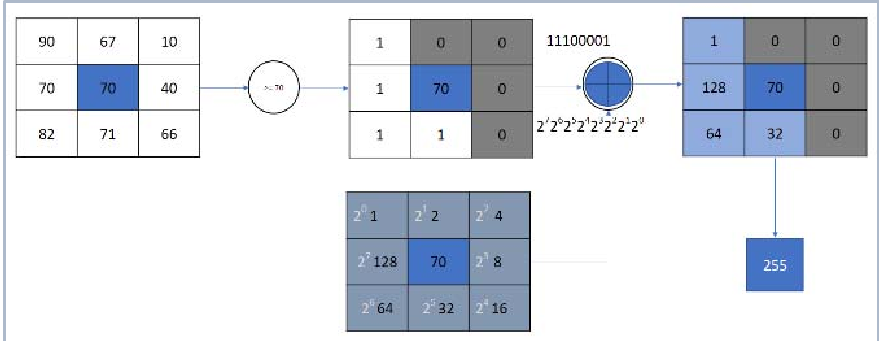 Fig 1: The stages of LBP calculation for texture analysis.
2. Multi-Modal Classification (SVM & Decision Trees)
- Support Vector Machines (SVM): Used to classify complex images. The flattened LBP array is transformed into a high-dimensional space where a hyperplane separates different emotional states.
- Decision Trees (ID3): Applied to biosensor data (from IoT) to provide interpretable rules for classifying physiological symptoms like heart palpitations or insomnia.
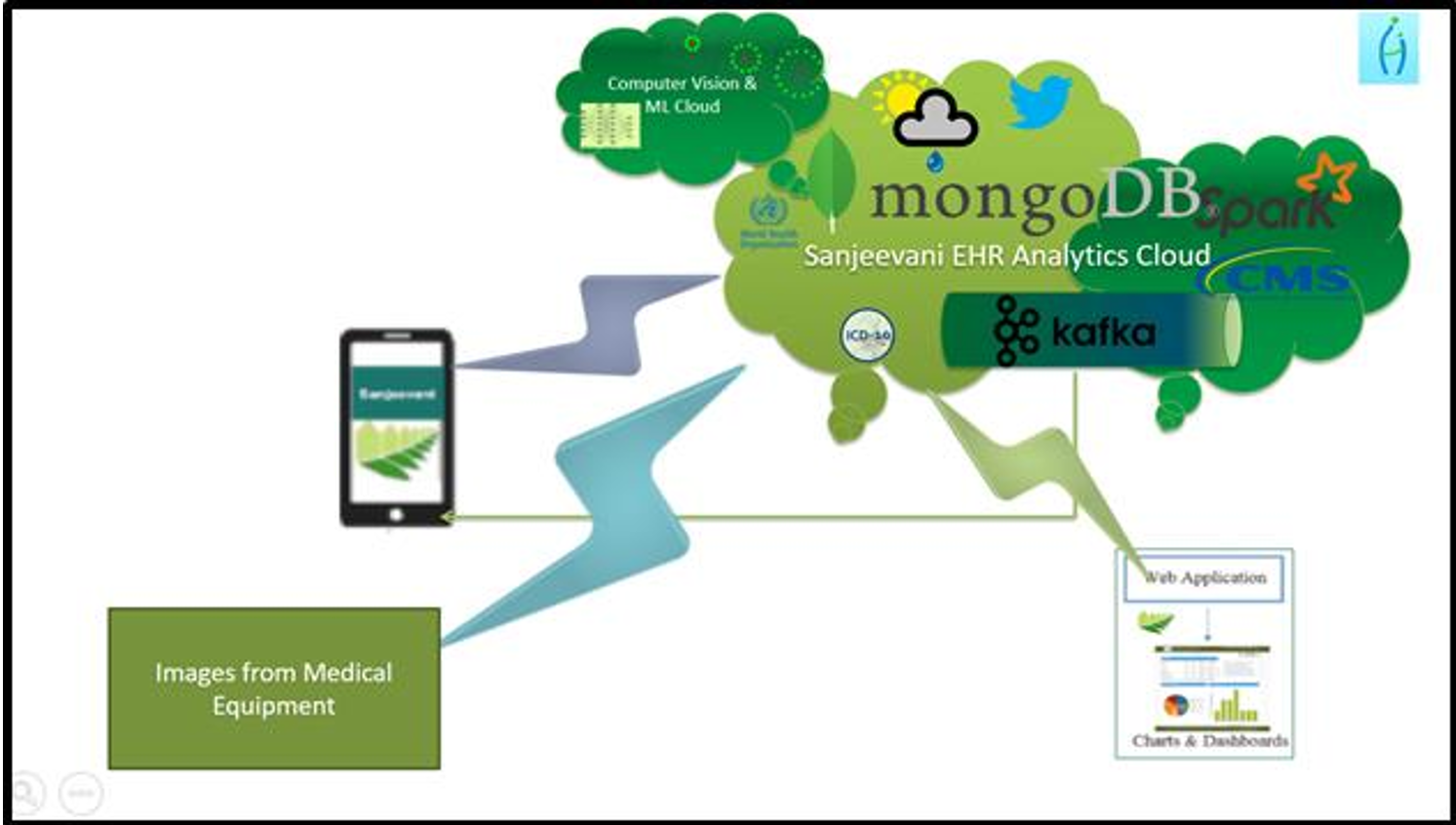 Fig 2: The Sanjeevani Healthcare Cloud Platform architecture integrating CV and EHR.
Experiments & Real-World Application
The system was deployed on the Sanjeevani EHR platform, where users (primarily senior citizens) upload "Selfie" images and biosensor logs.
- Data Sources: The model was trained using a combination of health camps, IoT mobile sensors (pulse, skin conductance), and oncology datasets.
- Outcome: The classification engine successfully translates raw LBP histograms into actionable clinical insights, allowing the dashboard to highlight urgent emotional distress situations.
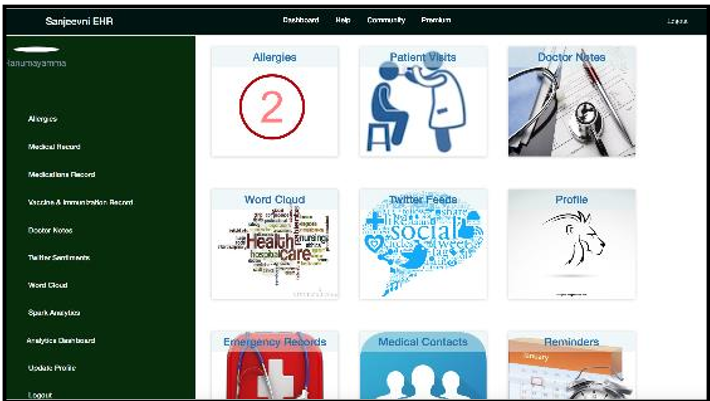 Fig 3: The Sanjeevani EHR Dashboard facilitating remote monitoring of emotional health metrics.
Critical Insight & Conclusion
Takeaway
The genius of this approach lies in its pragmatism. By using LBP and SVM instead of purely data-hungry deep learning models, the researchers created a system that is computationally efficient enough for cloud-based EHR integration while remaining robust against the "perturbations" of user-generated mobile content.
Limitations & Future Work
While the "Selfie" approach is innovative, the paper acknowledges that image quality and user behavior influence the results. Future iterations aim to expand the AI footprint across more medical specialties and increase the granularity of emotional sub-states (e.g., distinguishing between different types of anxiety).
Final Thought: When our phones can "see" our sadness before we feel its physical toll, we enter a new era of preventive medicine.