
Engineering Emotion: Scaling Affective Computing with Object-Oriented Architecture
Emotional Intelligence in Multimodal Object Oriented User Interfaces
This paper proposes an Object-Oriented (OO) architecture for Multimodal Emotion Recognition systems, aimed at improving human-computer interaction. By modeling interaction data, user stereotypes, and input modalities as discrete objects with specific properties and methods, the system achieves a robust framework for fusing diverse data sources and accommodating new modalities.
TL;DR
While most affective computing research focuses on the "how" of detection algorithms, Alepis and Virvou focus on the "where" and "how to manage." They introduce an Object-Oriented (OO) framework for multimodal emotion recognition that treats sensors, user stereotypes, and emotional states as structured objects. This shift provides the modularity needed to scale from simple desktop setups to complex, multi-device environments.
Background: Sorting the Chaos of Human Feelings
Affective computing—the quest to make computers recognize and respond to human feelings—has historically been a fragmented field. Early SOTA (State of the Art) work often optimized for a single modality (like facial recognition) while ignoring the systemic integration of others. This paper identifies a critical architectural gap: the lack of a standardized data structure to fuse diverse inputs like keyboard dynamics, vocal patterns, and user demographics.
The Core Insight: Everything is an Object
The authors argue that an Emotion Recognition system should not be a monolithic script but a collection of cooperating objects. By applying the Object-Oriented Method (OOM), they decompose the interaction into:
- Classes: Defining the abstract traits of a modality.
- Encapsulation: Hiding the complex signal processing of a microphone or camera from the central fusion server.
- Inheritance: Creating specialized versions of emotion detectors.
The Emotion Detection Server Architecture
The proposed architecture positions the emotion detection server as a central hub that interacts with various input properties.
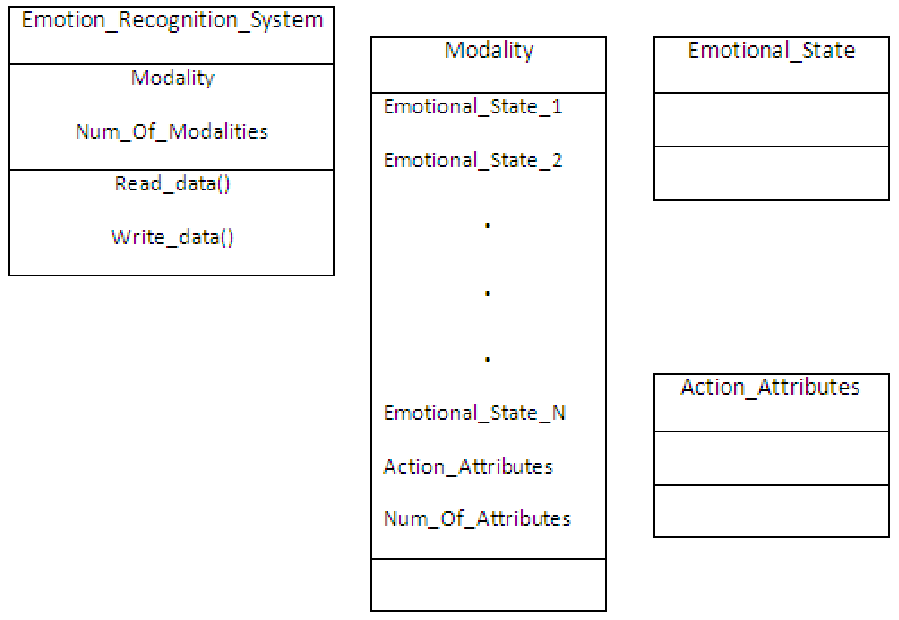 Fig 1: The general architecture of the emotion recognition system, showcasing the server-modality interaction.
Methodology: Stereotypes and Multimodality
One of the paper's standout contributions is the Emotion Stereotype Class. Recognizing that a 20-year-old student and a 60-year-old professional express frustration differently, the system uses stereotypes to weight modalities.
- User Actions: The system monitors specifics like
k4(frequent use of the Delete key) orm3(high voice volume) as discrete attributes of the input objects. - Fusion Logic: Using Simple Additive Weighting (SAW), the system calculates the "weight of significance" for each mode based on the user's age, computer experience, and gender.
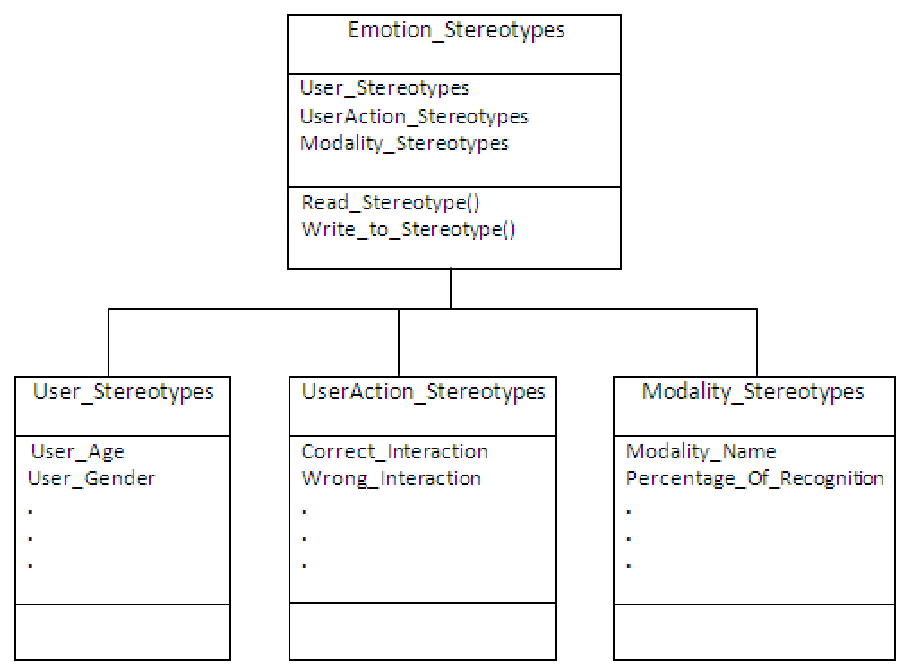 Fig 2: The Object Model for constructing emotional stereotypes, categorizing users by personality, actions, and modality-specific traits.
Why This Matters: From Theory to Laboratory
The true value of this work lies in its Extensibility. Because the system is decoupled:
- New Sensors: Adding a heart-rate monitor simply requires creating a new object instance of the modality class.
- Device Agnostic: The architecture supports inputs from PCs, mobile devices, and integrated lab installations simultaneously.
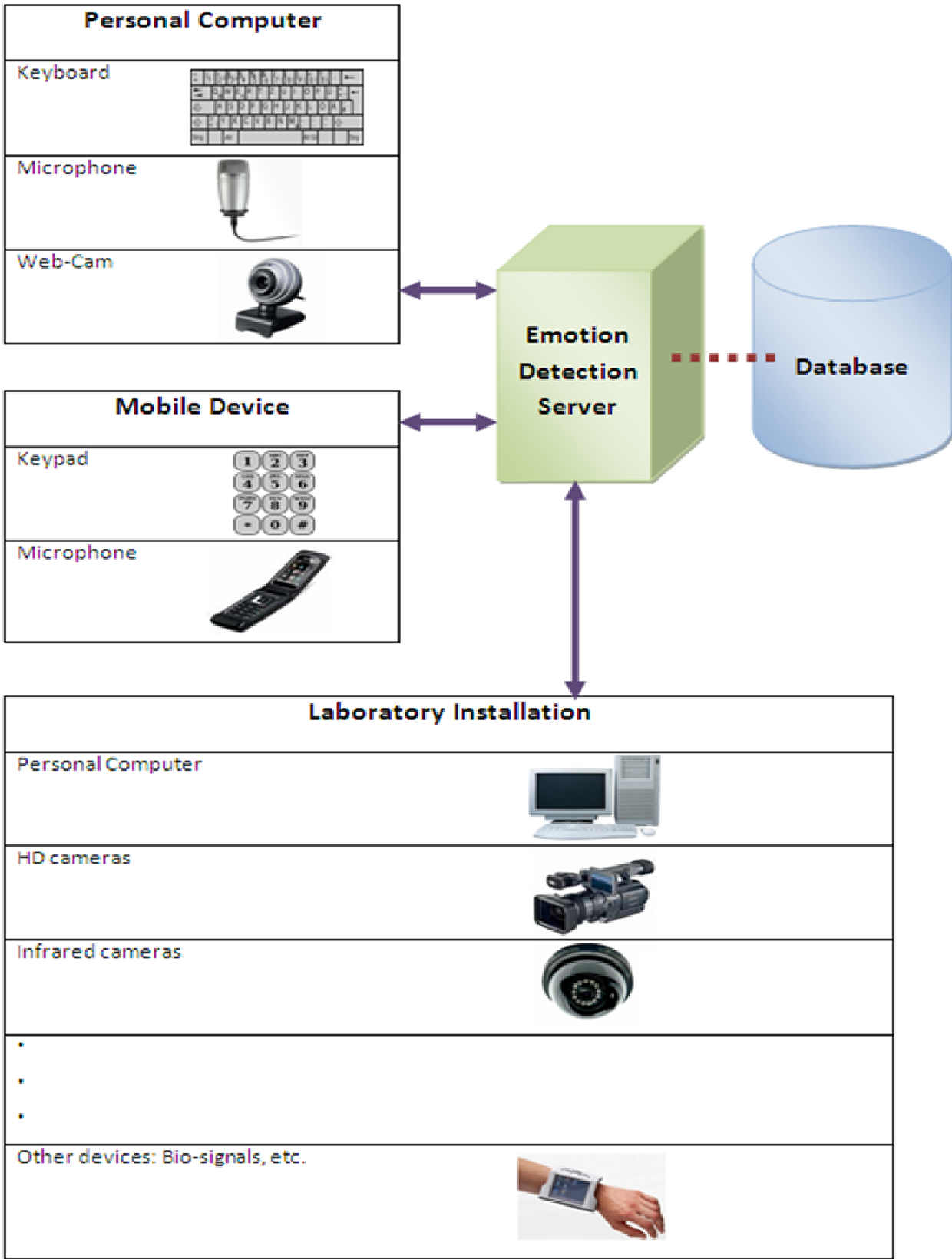 Fig 3: The deployment of the emotion detection server across different device ecosystems.
Critical Analysis & Conclusion
Takeaway
Alepis and Virvou successfully demonstrate that the Object-Oriented Method is not just for software engineering; it is a vital tool for Multimodal AI. By structuring the "messy" data of human emotions into clean, reusable objects, they provide a roadmap for future Emotion-Oriented User Interfaces.
Limitations
While the architecture is sound, the paper relies on Relatively simple classification (SAW) for weighting. In the era of Deep Learning, replacing these weights with learned attention mechanisms inside the same OO-structured "slots" would likely yield even higher accuracy.
Future Outlook
As we move toward "Ambient Intelligence," systems must be able to listen, see, and feel across a mesh of devices. This paper’s blueprint for a decoupled, object-oriented emotion server is a foundational step toward that pervasive future.