
Decoding the Digital Dialogue: The Emotional Anatomy of TripAdvisor Reviews
How Emotional Do We Get? A Closer Look into the Trip Advisor Dialogue
This study presents a quantitative text analysis of the emotional dialogue between tourists and hotel managers on TripAdvisor. Utilizing a dataset of 440 review-response pairs, it evaluates how emotional valence (Joy, Surprise, Anger, etc.) shifts based on hotel classification and star ratings, identifying a critical need for strategic emotion regulation in online management responses.
TL;DR
Is TripAdvisor just a digital megaphone for angry travelers? New research by Dickinger and Lalicic suggests otherwise. By analyzing 440 sets of hotel reviews and manager responses, the study reveals that Joy and Surprise actually dominate the conversation. However, the real "secret sauce" lies in how managers regulate their emotions—turning customer anger into professional apologies and positive reinforcement.
Background & Motivation: The CMC Power Shift
In the era of Computer-Mediated Communication (CMC), the customer has gained unprecedented control. As the authors note, a staggering 71% of tourists perceive a management response as a critical factor in their evaluation. Yet, despite this high stake, many service providers handle online interactions instinctively rather than strategically. The core question remains: Are managers catching the "emotional virus" of angry customers, or are they successfully performing emotional labor to pivot the narrative?
Methodology: Mapping the Six Pillars of Emotion
To quantify the "vibe" of TripAdvisor, the researchers moved beyond simple positive/negative sentiment. They adopted a categorical framework of six basic emotions:
- Joy (Goal fulfillment)
- Surprise (Expectation mismatch - often positive in this context)
- Anger (Unfairness/Frustration)
- Disgust (Avoidance/Repulsion)
- Sadness (Loss/Disappointment)
- Fear (Threat/Anxiety)
Using WordStat, they compared the vocabulary used by guests against the vocabulary used by staff, looking for patterns of "Emotional Contagion" (the tendency to mimic the other party's feelings).
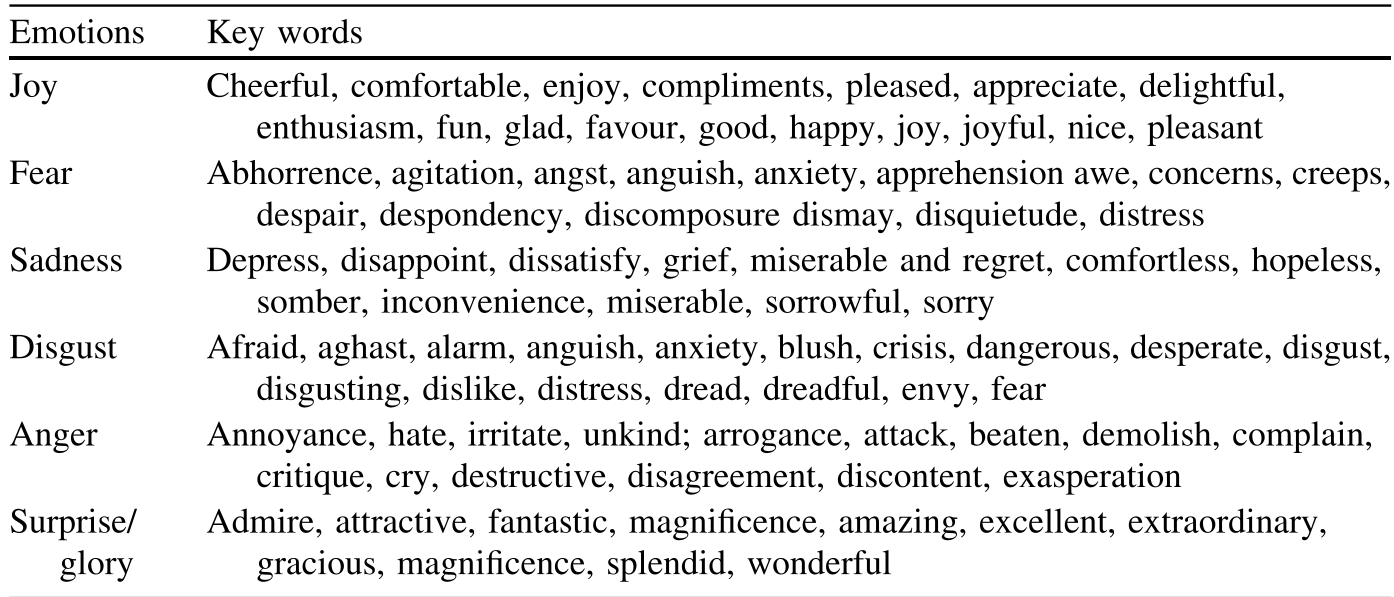 The dictionary defines the linguistic boundaries for each emotional category.
Key Insights: Surprise for Guests, Joy for Managers
The results provide a fascinating look at the "asymmetry" of hospitality dialogue:
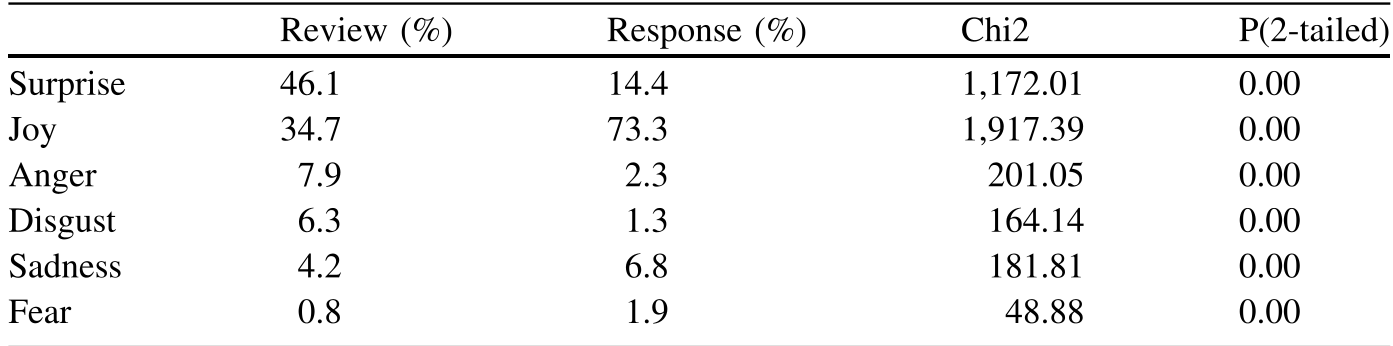
- The Surprise Factor: Tourists express "Surprise" (46.1%) far more than managers (14.4%). This suggests that most reviews are driven by experiences that either exceeded or fell short of expectations.
- Management Labor: Managers are "Joy" specialists. A massive 73.3% of their words fall into the Joy category (compliments, appreciation, pleasure), compared to only 34.7% for guests.
- The Negative Filter: While guests do express Anger (7.9%) and Disgust (6.3%), managers successfully filter these out (averaging ~2% combined), showing strong emotional regulation.
Star Ratings and Emotional Variance
Does a 5-star hotel talk differently than a 1-star? The data says yes.
- Luxury = Joy: High-class hotels show significantly higher frequencies of "Joy" in their responses.
- The "Defensive" Manager: The study found instances where managers of lower-tier hotels broke professional character, responding to complaints with sarcasm or defensiveness (e.g., "We are not magicians but just simple hotel managers").
- Sadness as a Pivot: When faced with a negative rating (Score 1), managers don't respond with anger; they pivot to Sadness (70.1% of sadness-related words in responses occur here), primarily through apologies and regret.
Critical Analysis: The Professional Takeaway
This paper highlights a crucial gap in current hospitality management: training. While most managers are "emotionally regulated," there is a clear risk of mimicking customer frustration in the online space.
The Takeaway for Brands:
- Don't Fear the Vent: Review sites are not just for complaints; they are hubs of "Surprise" and "Joy."
- Strategic Apologies: Using "Sadness" markers (regret, apologies) is an effective recovery tool, but it must be paired with "Instrumental Support" (solving the actual problem).
- Tiered Expectations: 4 and 5-star hotels must be particularly sensitive to "Surprise," as their guests are more likely to comment on extraordinary service.
Future Outlook
As text-mining becomes more sophisticated, future research must look at the longitudinal impact of these emotional exchanges. Does an "Empathetic" response actually lead to a higher re-booking rate? For now, the message is clear: in the digital dialogue, your goal isn't just to respond—it's to regulate.