
Emotional Virtual Human: Bringing Artificial Psychology to the Smart Home
The management system with emotional virtual human based on smart home
This paper presents a Smart Home Management System featuring an Emotional Virtual Human (EVH) acting as an intelligent housekeeper. By integrating multimodal recognition—face, speech, text, and eye tracking—the system utilizes a multi-layered artificial psychology model to achieve empathetic human-computer interaction.
TL;DR
Researchers have developed a smart home management system that replaces traditional static menus with an Emotional Virtual Human (EVH). By leveraging artificial psychology, the system doesn't just execute commands; it perceives user emotions through face, speech, and text analysis, adjusting its own "personality" and responses to create a harmonious domestic environment.
Background: Why Give a Housekeeper Feelings?
In the landscape of the Internet of Things (IoT), we are surrounded by smart devices that are technically "intelligent" but socially "numb." This paper argues that for a smart home to be truly effective, it must be people-centered. The "Virtual Housekeeper" acts as a bridge, utilizing Artificial Psychology to ensure that interactions are not just functional, but empathetic.
Methodology: The "Brain" of the Virtual Human
The core innovation lies in the Multi-level Emotional Model. Unlike simple reactive systems, this model mimics the human brain's dual processing:
- Perceptive Level: Focused on immediate results (What is the user's current facial expression or tone?).
- Rational Level: Focused on causes, consequences, and historical context (Why is the user feeling this way based on previous interactions?).
Personality and Mood Dynamics
The system introduces non-cognitive factors—Personality (Inward vs. Outward) and Mood (a long-lasting state). For instance, an "Inward-looking" virtual human is quiet and has a lower threshold for stable emotional shifts, while an "Outward" one is more expressive.
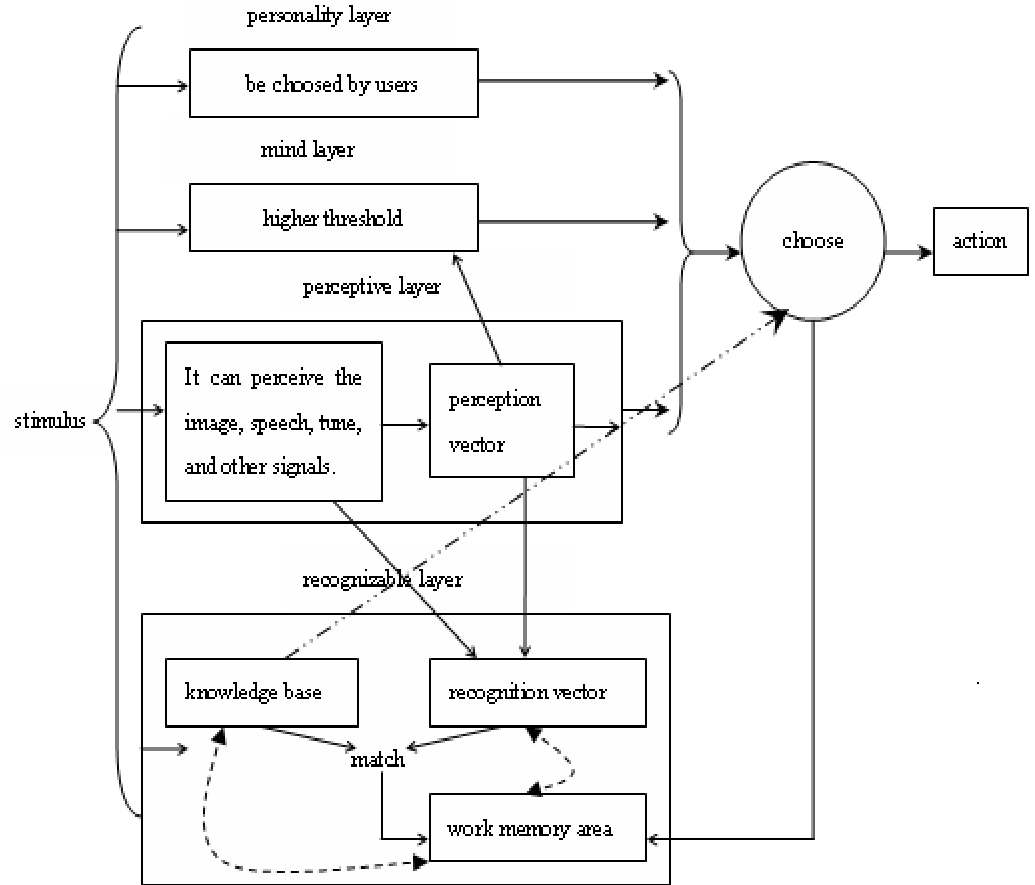 Figure 1: The architecture of the EVH, illustrating the flow from external stimulus to cognitive analysis and final action.
Key Technologies & Experiments
The EVH manages the home through a combination of high-tech sensory inputs:
- Text & Speech Analysis: Using Hidden Markov Models (HMM) and Chinese Lexical Analysis (ICTCLAS), the system calculates the probability of transitions between states like Calm, Happy, Sad, or Angry.
- Eye Tracking: Utilizing Pupil Center Cornea Reflection (PCCR), the system allows users to interact with the interface just by looking. If a user stares at a button for 5 seconds, the action is triggered—eliminating the need for a physical mouse.
- Facial Expressions: Based on the Facial Action Coding System (FACS), the virtual human responds with muscle-accurate expressions to match its calculated emotional state.
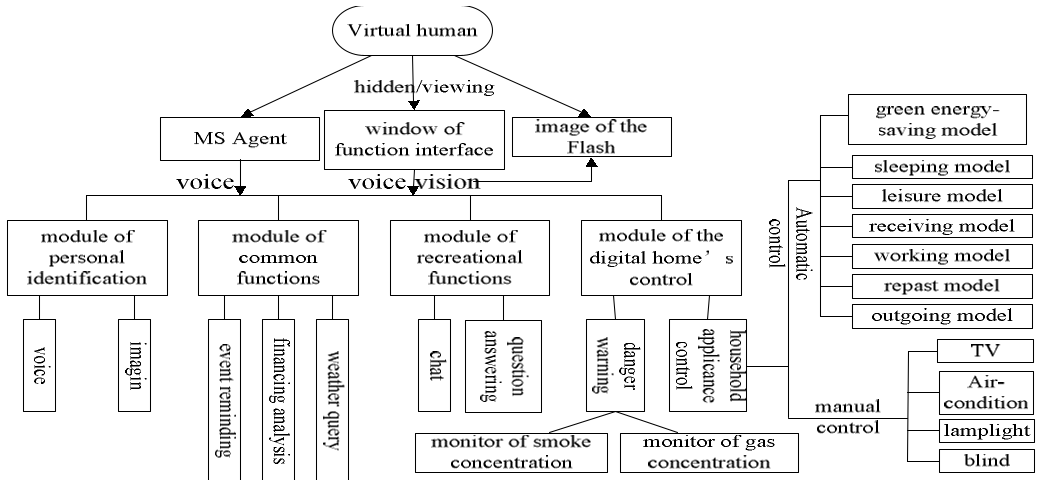 Figure 2: The software platform functions, ranging from security and appliance control to financial analysis and weather forecasting.
Results and Insights
The system demonstrates that a virtual human can significantly improve the "harmony" of a digital home. By analyzing the transition probability matrices (as shown in the paper's tables), the system proves it can maintain a stable "Calm" state while responding realistically to positive stimuli (50% transition probability to "Happy" when stimulated in a calm state).
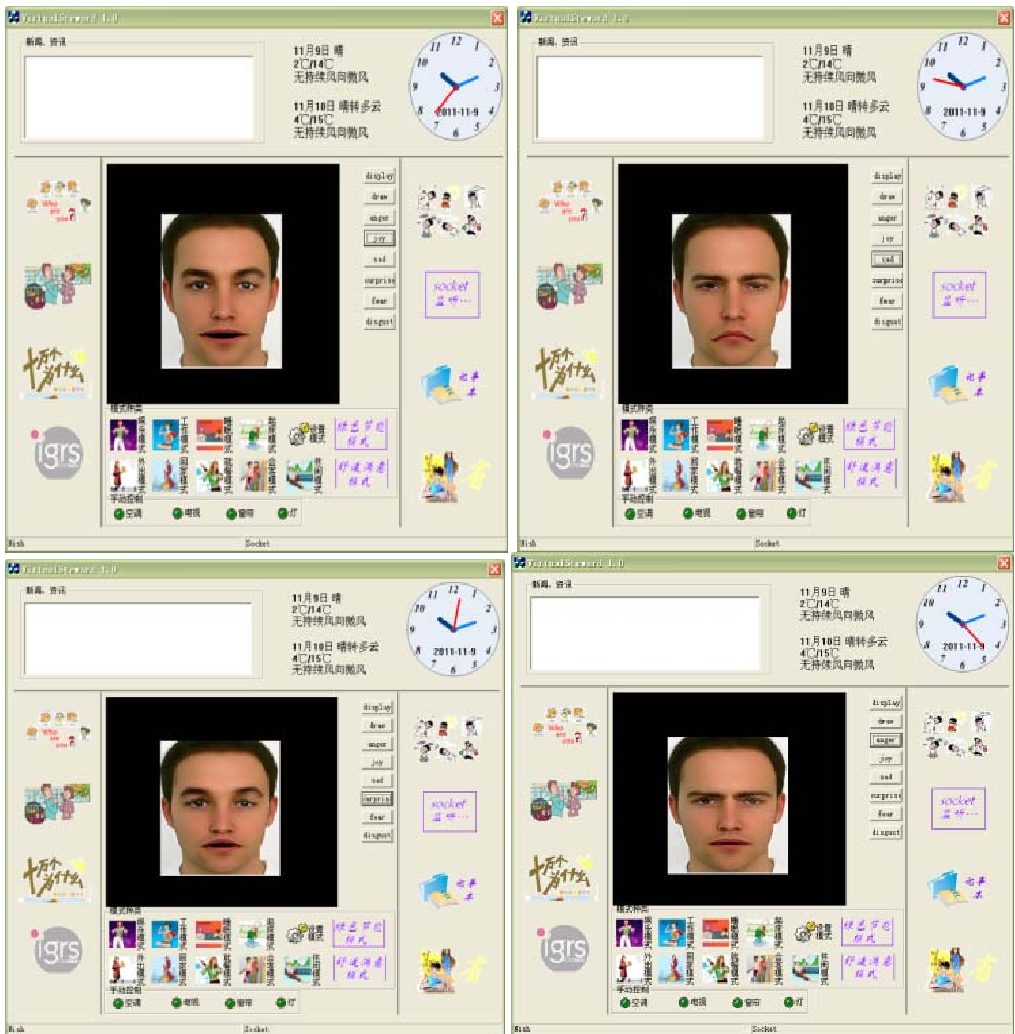 Figure 3: Four basic emotional responses (Happy, Sad, Angry, Surprise) expressed by the virtual butler.
Critical Analysis & Conclusion
Strategic Takeaway
The paper successfully bridges the gap between IoT and Affective Computing. The inclusion of Mood thresholds is particularly insightful, as it prevents the virtual human from "overreacting" to minor, isolated inputs, thereby simulating a more human-like temperament.
Limitations
As noted by the author, the current implementation lacks a 3D portrait, which limits the visual immersion. Furthermore, while the HMM-based transitions are logical, they are somewhat rigid compared to modern neural-network-based generative emotional models.
Future Outlook
This work lays the groundwork for personal robots and pervasive AI housekeepers. Future iterations that incorporate 3D rendering and more complex intonation variations will likely become the standard for high-end smart living environments.