
The Managed Heart of eHealth: Unmasking Emotional Labor in HCI
The Emotional Work of Doing eHealth Research
This paper examines the "emotional labor"—the silent work of managing feelings—inherent in eHealth and Sensitive Human-Computer Interaction (HCI) research. Using autoethnographic case studies from projects in Scotland and Tanzania, it proposes a three-component framework (Kindness, Team Support, and Reflective Practice) to protect researcher wellbeing and leverage emotional insights as valuable data.
TL;DR
eHealth research often involves "breaking your heart." While we focus on participant outcomes, the researchers—who listen to stories of abuse, transcribe sobbing voices, and manage clinical trials—perform intensive, invisible emotional labor. This paper argues that instead of pretending to be "objective superheroes," we must build structural support for researcher wellbeing, treating empathy and emotional distress not as failures, but as critical data.
Background: Beyond Code and Clinical Trials
In the world of HCI, we are increasingly aware of the health and wellbeing of our users. But what about the researchers? This work is situated at the intersection of Sensitive HCI and eHealth, highlighting that the political and organizational structures of research often demand a level of emotional toughness that leads to burnout and secondary trauma.
The "Invisible" Burden: Why Motivation Matters
The authors share the story of Zawadhafsa, a researcher in Tanzania. While conducting a survey on mobile health insurance, participants saw her as a healer rather than a data collector. They "poured out a lifetime of abuse," leaving her shaken.
The core insight here is that emotional labor is the silent work of evoking and suppressing feelings. In eHealth, you must:
- Enact a professional role (the "objective researcher") while hearing about abject misery.
- Maintain boundaries when participants ask for help you cannot provide.
- Manage your own triggers, especially if you share the condition (e.g., depression) you are studying.
Methodology: The Research Lifecycle of Emotions
The authors map emotional labor across the entire lifecycle of a project, using the Help4Mood trial (a system for treating depression) as a primary example.
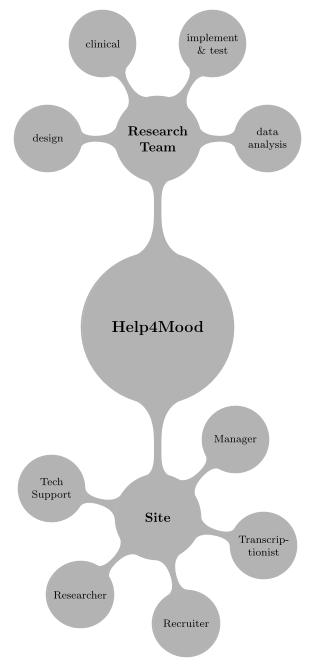 Figure 1: This diagram illustrates that emotional labor isn't just in the field; it permeates planning, technical coding, recruitment, and even the seemingly "dry" task of data analysis.
The Danger of Data Analysis
We often forget the Transcribers. Listening to audio of depressed patients or people sobbing while performing cognitive tasks is deeply distressing. The paper reveals that automatic analysis is often insufficient, forcing humans to "soak" in this trauma for hours.
A Three-Tiered Solution for Researcher Wellbeing
The paper rejects a "one-size-fits-all" fix, proposing instead a flexible process built on three pillars:
- Kindness: Radical self-acceptance. Acknowledging that it is "normal to be human" and allowing researchers to space out interviews to recover emotionally.
- The Team: Moving away from the lone-wolf researcher model. Senior investigators must create a culture where junior researchers can "debrief" and offload emotional weight without fear of being labeled "unprofessional."
- Reflective Practice: Using tools like reflexive journaling to turn emotional reactions into data. If a researcher is "triggered" by a design, that is a signal that a user might be too.
Critical Perspective: The Tug of Tensions
As noted in the commentary by Ingrid Erickson, there is a theoretical tension here. True emotional labor, as defined by Hochschild, isn't just about "feeling sad"—it’s the labor of adhering to professional norms that demand we stay neutral when we feel like crying. The cost is the gap between our instinctual response and our professional performance.
Conclusion: Why Do We Do This?
The authors quote anthropologist Ruth Behar: "Work that breaks your heart is the only work worth doing." If eHealth research arouses strong emotions, it means the work is vital.
However, to continue this vital work, the HCI community must:
- Sensitize the next generation of students to these demands.
- Challenge grant-awarding bodies to value "empathy" not as a commodity, but as a resource that requires institutional support (counseling, supervision, and time).
Takeaway: Researcher wellbeing is not a "box-ticking" exercise for ethics forms; it is the foundation of ethical, sustainable, and impactful science in sensitive settings.