
Rachel: Bridging the Social Gap for Children with Autism via Emotionally Targeted ECAs
Rachel: Design of an emotionally targeted interactive agent for children with autism
The paper introduces "Rachel," a multimodal Embodied Conversational Agent (ECA) system designed to elicit and analyze socio-emotional behaviors in children with Autism Spectrum Disorders (ASD). Utilizing a Wizard-of-Oz (WoZ) paradigm, the system guides children through emotionally evocative storytelling and problem-solving tasks to provide a controlled environment for behavioral data collection.
TL;DR
Researchers at USC have developed Rachel, an Embodied Conversational Agent (ECA) designed to help children with Autism Spectrum Disorder (ASD) practice social and emotional communication. By placing children in a semi-structured, "non-threatening" virtual environment, Rachel elicits rich narrative and affective data that is often difficult to capture in traditional clinical settings.
Background: The Social Bottleneck in ASD Research
Autism is characterized by deficits in social reciprocity and communication. For researchers, capturing naturalistic data on how a child with ASD processes emotions is notoriously difficult. Human-to-human interaction is often too variable or stressful for the child. This paper posits that Embodied Conversational Agents (ECAs) offer a "controlled laboratory" that is consistent, modifiable, and—crucially—less socially demanding than a face-to-face interview with a clinician.
The "Rachel" System: Design & Intuition
Rachel isn't just a chatbot; she is a peer-like avatar (designed to look ~8 years old) that serves as an emotional coach. The system uses a Wizard-of-Oz (WoZ) setup, where a human clinician secretly controls Rachel’s responses. This bypasses the limitations of 2011-era Speech Recognition (ASR) while maintaining the illusion of an autonomous, intelligent peer.
The Four Challenge Levels
The interaction is structured into four sessions of increasing cognitive and emotional difficulty:
- Emotion Matching: Identifying congruent or conflicting faces and voices.
- Emotional Narrative: Creating stories based on evocative images (Angry, Happy, Scared, Sad).
- Missing Face Identification: Inferring an emotion based on social context.
- Mismatched Face Identification: Identifying social "errors" where a character's expression doesn't fit the situation.
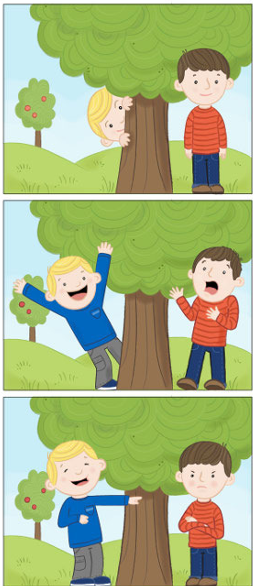 Figure 1: The peer-like Rachel avatar and its graphical interface for emotional storytelling.
Methodology: Multimodal Data Capture
The system's real power lies in its sensor fusion. The researchers recorded:
- High-Definition Video: Three angles to capture facial expressions and gestures.
- Directional Audio: Separating the child's speech from the parent's.
- Physiological Signals: Using the Affectiva Q Sensor to measure skin conductance and temperature—vital because children with ASD may show high internal stress (covert) without showing it on their face (overt).
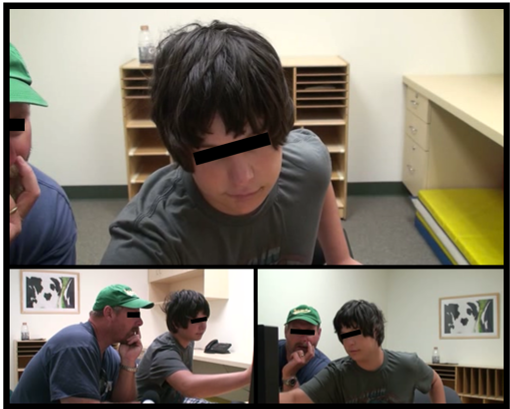 Figure 2: The portable smart-room setup capturing the child's multimodal interaction from multiple perspectives.
Key Results & Insights
The pilot study with two children (ages 6 and 12) provided several critical "Aha!" moments:
- Interactivity: Children talked at least as much with the ECA as they did with a human psychologist.
- Affective State: Children smiled more and fidgeted less during the ECA sessions, suggesting the machine interface reduced social "performance-anxiety."
- The Narrative Hook: Session 2 (Storytelling) was the most engaging, requiring the most feedback from the agent (up to 65% of prompts) to maintain the child's flow.
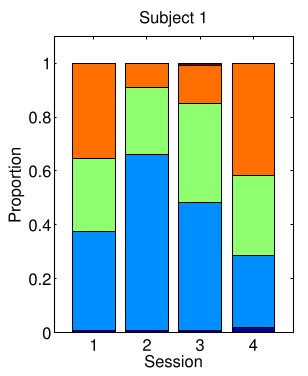 Figure 3: Analysis of prompt types across sessions, showing the heavy reliance on feedback to sustain social engagement.
Critical Analysis & Future Outlook
While the sample size (N=2) is a pilot limitation, the Rachel system demonstrates that ECAs can act as a consistent "bridge" to social world.
The Takeaway: The success of the "emotional coaching" model suggests that future AI-driven therapies should focus on semi-structured narratives rather than simple rote learning. By using an agent that has "preferences" (e.g., Rachel talking about her dog), children are prompted to use social reciprocity naturally.
Future Work: The authors aim to replace manual coding with automatic Voice Activity Detection (VAD) and Speaker Diarization, transforming these sessions into quantitative metrics that clinicians can use to track a child's progress over months of therapy.