
EmotionExpert: Turning Facebook Passivity into High-Quality Emotion Data
EmotionExpert: Facebook game for crowdsourcing annotations for emotion detection
EmotionExpert is a "Game With A Purpose" (GWAP) deployed on Facebook to crowdsource emotion annotations for NLP research. It utilizes Parrott's hierarchy of emotions to label public status updates, achieving a majority vote agreement of 76% with expert "gold standard" annotations.
TL;DR
Emotion detection in NLP suffers from a data scarcity problem—expert labels are expensive, and crowd work on platforms like MTurk is often robotic. EmotionExpert flips the script by turning annotation into a Facebook game. By leveraging social competition and level-based progression, the researchers found that while individuals are inconsistent, the "majority vote" of the crowd can match experts with up to 88% accuracy.
Background Positioning
In the landscape of Natural Language Processing (NLP), this work sits at the intersection of Crowdsourcing and Affective Computing. It moves beyond the transactional nature of Amazon Mechanical Turk, positioning social media not just as a data source, but as a collaborative laboratory for human-in-the-loop AI.
Problem & Motivation: The "Boredom" Bottleneck
Linguistic annotation is notoriously "boring and tedious." For experts, it’s an expensive drain on time; for crowdsourced workers, it’s a race to the bottom of the hourly rate.
The authors' core Insight was twofold:
- Subjectivity is a Strength: Unlike syntax parsing, you don't need a PhD to feel an emotion. Everyday users are "natural experts" of social context.
- Social Validation: People are inherently curious about how their perceptions align with their peers. By showing "How your friends voted," the task becomes a social ritual rather than a chore.
Methodology: The Architecture of a Social Annotation Game
The EmotionExpert system was built using the Facebook API, designed to be "interruptible" yet "continuous."
The Game Loop
Players are presented with status updates (randomly sourced from public feeds) through a "magnifying lens" UI. They must select one of seven blots: Love, Joy, Anger, Fear, Sadness, Surprise, or Neutral.
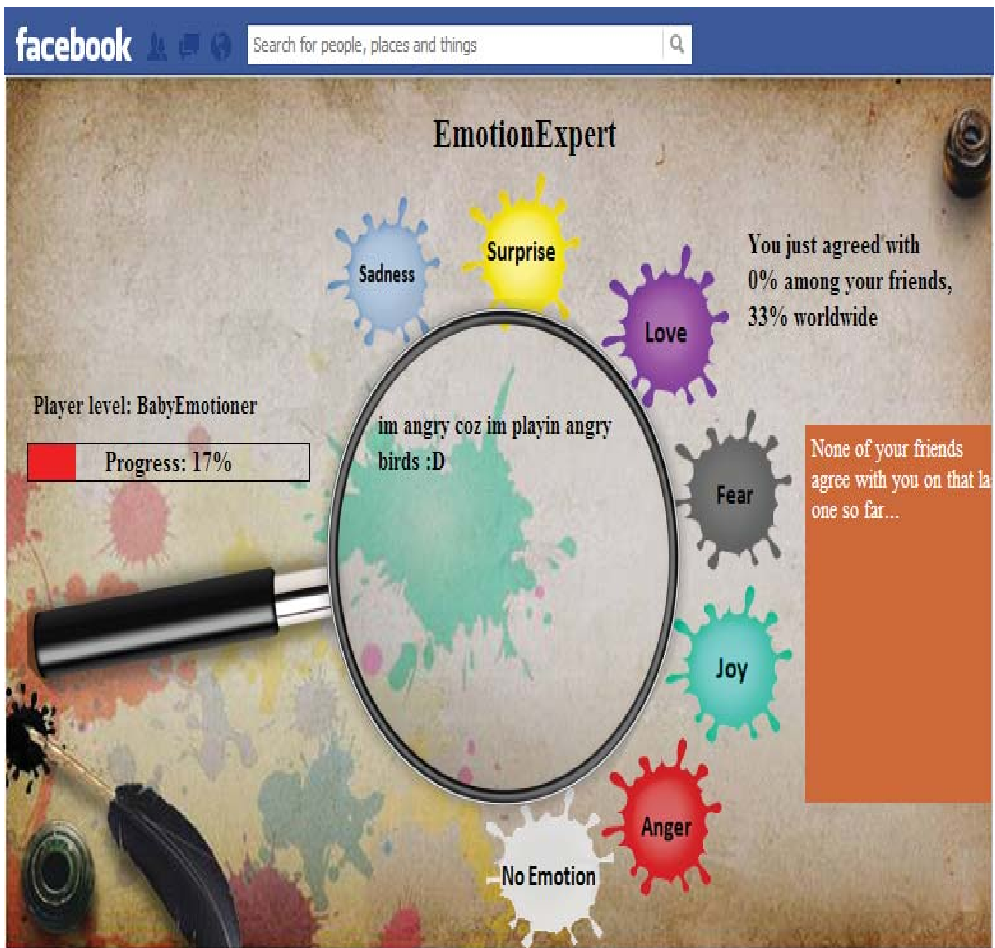 Fig 1: The UI focuses user attention on the text while providing immediate "social feedback" on agreement.
Quality Control (Skimming Detection)
To prevent "random clicking," the system employs two "trap" mechanisms:
- Obvious Posts: "Matt's face turned red with rage" (Must be labeled Anger).
- Control Questions: Hidden factual questions about the post to ensure the user actually read the text.
Theoretical Framework
The study adopts Parrott's Emotion Hierarchy, choosing a small, representative set of 6 primary emotions to minimize "cognitive load"—a crucial design choice for a casual social game.
Experiments & Results: Crowd vs. Experts
The researchers established a "Gold Standard" using three experts (88.7% internal agreement). They then compared the Facebook players' output against this benchmark.
The "Power of the Crowd"
While individual pairwise agreement among players was a low 37.8% (high variance), the Majority Vote was surprisingly robust.
| Metric | Individual (Avg) | Majority Vote (All) | Top-Level Players |
|---|---|---|---|
| Agreement with Experts | 38% | 76% | 88% |
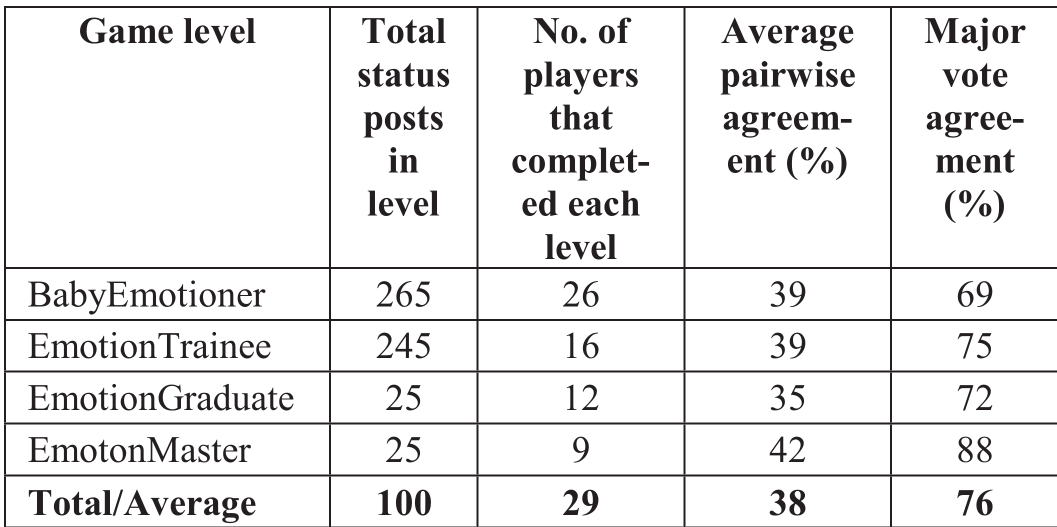 Fig 2: As players progress to higher levels (EmotionMaster), their reliability significantly converges toward expert levels.
Key Discovery: Players who stayed long enough to reach "Level 4" achieved 88% agreement with experts. This suggests that gamification acts as a natural filter, identifying and "training" high-quality annotators through engagement.
Critical Analysis & Conclusion
Takeaway
The study proves that Social Games With A Purpose (GWAP) can successfully generate reliable NLP datasets. The key is not to find perfect individuals, but to aggregate a "noisy" crowd and leverage the convergence of their opinions.
Limitations
- Context Ambiguity: Some players voted based on their personal feelings (e.g., "I don't like movies" -> Neutral) rather than the author's intent.
- Label Rigidity: The single-label constraint was a major pain point. Many emotional posts are multi-faceted (e.g., a "pleasant surprise" contains both Joy and Surprise).
Future Outlook
The authors suggest that future iterations could incorporate facial expression analysis via webcams to validate textual labels against physiological responses. For the AI industry, this path suggests a future where data labeling is no longer a "back-office" cost, but a front-facing consumer experience.
Senior Editor's Note: This paper serves as a foundational reminder that in the era of LLMs, high-quality human data remains the ultimate "Ground Truth." Moving that truth-seeking into the social sphere may be the only way to scale annotation to the levels required by modern foundation models.