
Beyond Utterances: Decoding Long-Form Call Sentiment through Emotional Trajectories
Emotions analysis of speech for call classification
The paper proposes a hierarchical machine learning framework for classifying long telephone conversations as Positive or Negative. By leveraging the Dominant Emotions across M Intervals (DEMI) approach, the system achieves a SOTA precision of 79% in call sentiment classification on simulated call center data.
TL;DR
This research shifts the focus of emotion recognition from isolated audio clips to full-length conversations. By introducing the Dominant Emotions across M Intervals (DEMI) method, the authors demonstrate that the sequence and distribution of emotions across a call are the strongest predictors of whether a customer service interaction was ultimately a success (Positive) or a failure (Negative), achieving an accuracy of 79%.
Problem & Motivation: The Context Gap
Most speech emotion recognition (SER) research is "short-sighted"—it excels at identifying if a person is "angry" or "happy" in a 5-second clip but struggles to interpret a 10-minute dialogue. In a call center environment, a customer might start frustrated (Negative) but end satisfied (Positive). Simply averaging the emotions or looking only at the end of the call often leads to misclassification. The challenge lies in converting a variable-length sequence of emotional states into a fixed-feature vector that a classifier can understand without losing the "story" of the call.
Methodology: The Hierarchical Pipeline
The authors propose a systematic three-stage architecture to bridge the gap between acoustic signals and high-level sentiment.
1. Acoustic Segmentation and Feature Extraction
Using the LIUM SpkDiarization tool and Sphinx4, the audio is sliced into segments where acoustic properties remain stable. From these segments, 90 features are extracted, including:
- Prosodic Features: Pitch (F0), Energy.
- Spectral Features: MFCCs (Mel Frequency Cepstral Coefficients) and LPCCs.
- Voice Quality: Formants (F1, F2).
2. Segment-Level Emotion Recognition
A Multilayer Perceptron (MLP) trained on the Berlin Database maps these features into seven emotional categories: Happy, Neutral, Boredom, Disgust, Fear, Sadness, and Anger.
3. The Core Innovation: DEMI
While the paper explores four aggregation strategies, DEMI (Dominant Emotions across M Intervals) stands out. It divides the call into equal time-steps. For each time-step, it identifies the "Dominant Emotion." This creates a fixed-length "emotional fingerprint" of the call, preserving the temporal flow ().
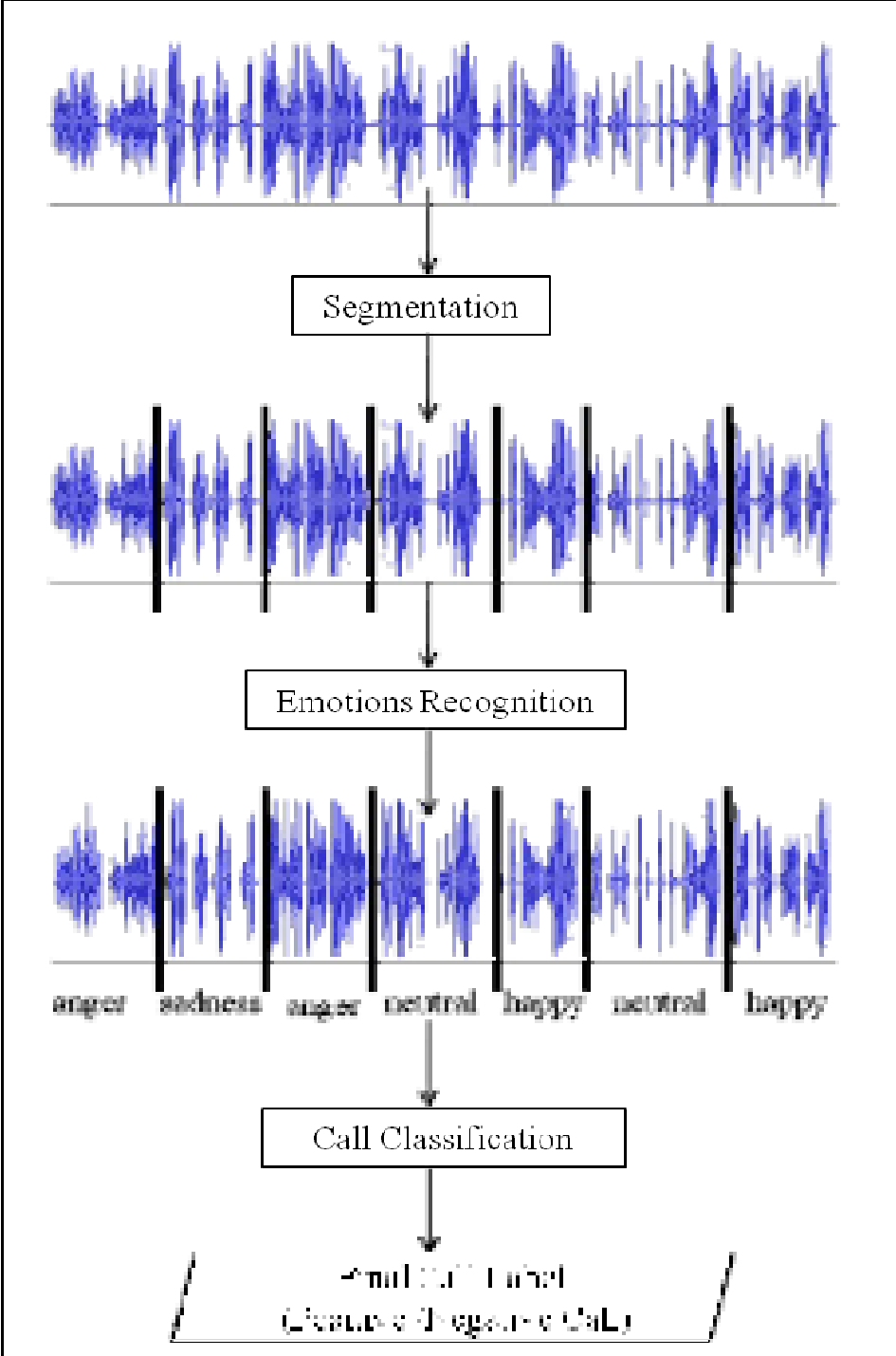 Figure 1: The proposed hierarchical system for call classification.
Experiments & Results
The researchers tested their methodology using a custom dataset of 39 simulated call center interactions.
Key Findings:
- The Temporal Advantage: The DEMI approach () achieved 79% accuracy using a J48 Decision Tree. This outperformed the Normalized Emotion Category Scores (NECS), proving that when an emotion happens matters as much as how often it happens.
- The Failure of "Last-K": Interestingly, focusing only on the final segments of the call (LKE approach) yielded poor results, suggesting that the "resolution" of a call is built throughout the entire interaction, not just the goodbye.
- Interpretability: The Decision Trees (J48) provided clear business logic. For instance, a call is often flagged as Negative if the "Sadness" count is low but "Disgust" and "Anger" occurrences are high.
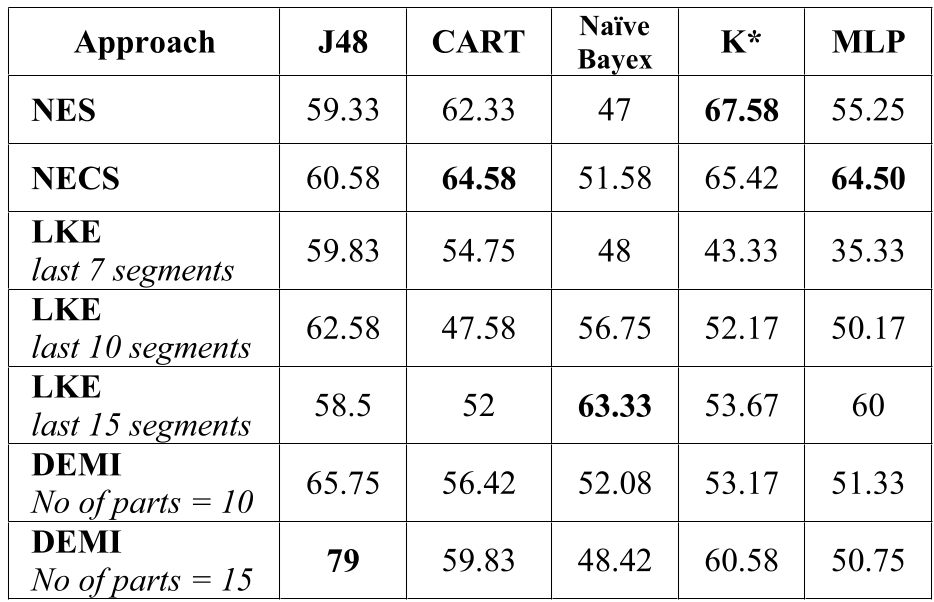 Table 1: Accuracy comparison across different aggregation approaches and classifiers.
Critical Analysis & Conclusion
The study provides a robust framework for long-form audio analysis, moving beyond simple classification to a more "structural" understanding of dialogue.
Takeaway
The success of the DEMI approach highlights that emotional patterns are superior to emotional statistics. For developers building helpdesk AI, this implies that tracking the "emotional arc" of a customer is more vital than simple keyword spotting or end-of-call surveys.
Limitations & Future Work
- Data Scale: The study relied on 39 simulated calls. Real-world call center data involves background noise and overlapping speech, which will require more robust diarization.
- Multimodal Fusion: The authors correctly identify that the next frontier is combining these acoustic insights with textual sentiment analysis (ASR + NLP) to capture both how something is said and what is actually being said.
The path forward involves applying Time Series Classification techniques to these emotional sequences, further refining the "DEMI" concept into a continuous emotional trajectory.