
Deciphering the Emotional Brain: Predicting Learner Mental States via EEG and Machine Learning
How Do Emotions Induce Dominant Learners’ Mental States Predicted from Their Brainwaves?
This paper presents a machine learning-based approach to predict a learner's dominant mental state by analyzing electrical brain activity (EEG) in response to emotional stimuli. Using the International Affective Picture System (IAPS) to induce specific emotions, the authors successfully classified the dominant brainwave frequency band (δ, θ, α, β) with a peak accuracy of 93.82% using Decision Trees.
TL;DR
Researchers at the University of Montreal have developed a high-precision system that predicts a learner's dominant "brainwave state" by analyzing how they react to emotional images. By combining the International Affective Picture System (IAPS) with machine learning, they achieved up to 93.82% accuracy in identifying mental states, paving the way for Intelligent Tutoring Systems (ITS) that read minds to optimize learning.
Why Brainwaves Matter in Learning
Have you ever been so frustrated with a math problem that your brain felt "stuck"? Or so "in the zone" that time flew by? These aren't just feelings; they are measurable shifts in your brain's electrical activity.
The core challenge in educational technology has always been affective sensing. Standard methods—like watching a student’s face or asking them "How do you feel?"—are flawed. Students can mask their emotions, and self-reporting interrupts the "flow" of learning. This paper explores the "physicalistic" alternative: monitoring the four major brainwave bands:
- Delta (δ): Deep sleep/unconscious.
- Theta (θ): Creativity and "drifting" thoughts.
- Alpha (α): Relaxation and calmness.
- Beta (β): Focused concentration or high alertness.
The Experiment: Visual Stimuli as Emotional Triggers
The authors hypothesized that emotional stimuli (images) directly influence the amplitudes of these four bands. They exposed 17 participants to the International Affective Picture System (IAPS), a standardized database of images designed to elicit specific emotions like Anger, Disgust, Fear, and Contentment.
Methodology & Architecture
Using a portable, wireless "Pendant EEG," the team recorded over 33,000 data points. The technical innovation here lies in the Dominance Predictor. Instead of just looking at one wave, they looked at the order of the four waves (4! = 24 possible combinations). For example, a state of BTDA means Beta is the strongest, followed by Theta, Delta, and Alpha—indicating a state of high alertness but perhaps some underlying "drifting" thought.
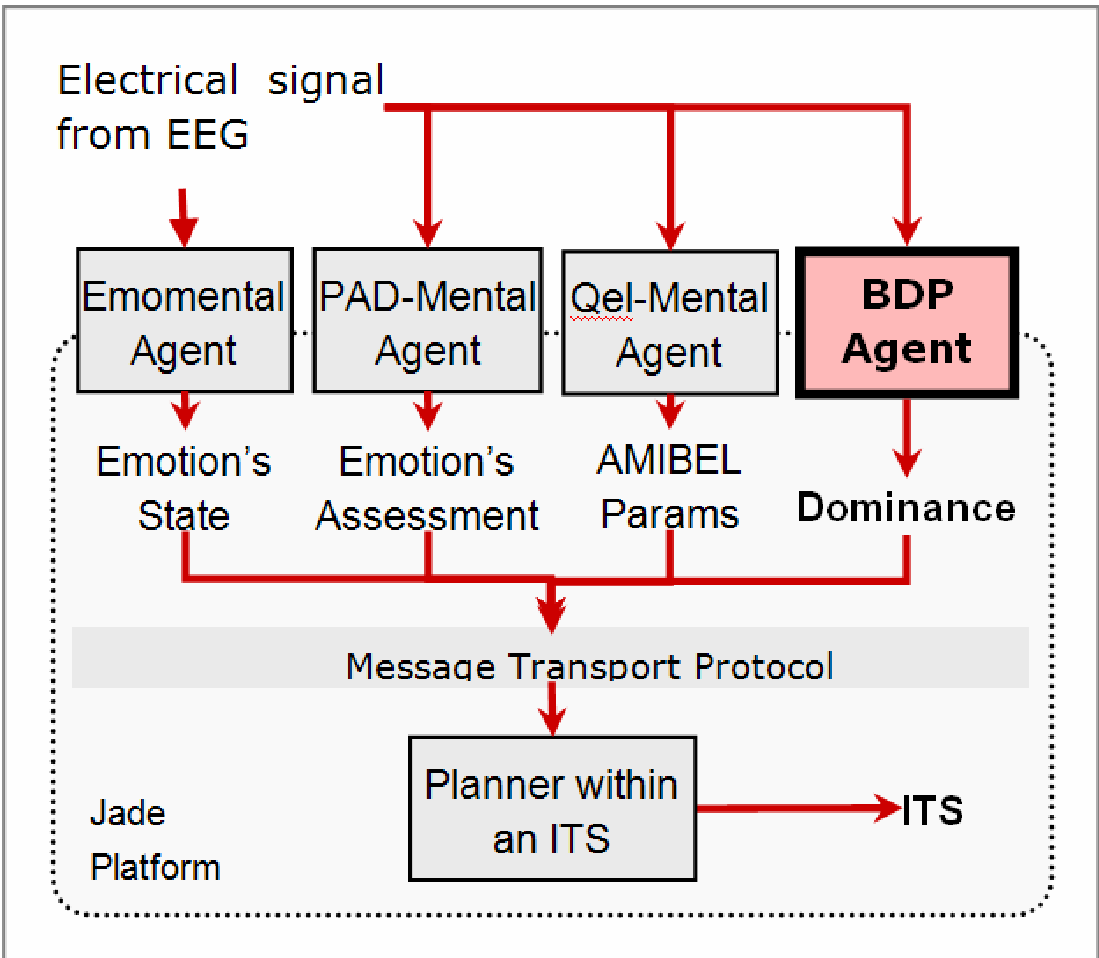 In the envisioned Multi-Agent System (MAS), a Brainwave Dominance Predictor (BDP) agent communicates with a Tutoring Module to adjust pedagogical strategies in real-time based on the predicted state.
Key Results: Can Machines Truly Read States?
The results suggest a resounding "Yes." The study tested three primary algorithms:
- Naïve Bayes: 78.02% accuracy.
- k-Nearest Neighbor (k=1): 92.52% accuracy.
- Decision Tree (C4.5): 93.82% accuracy.
The high Kappa score (0.93) for the Decision Tree indicates that these results aren't just down to luck; there is a statistically "excellent" agreement between the emotional image shown and the resulting brainwave hierarchy.
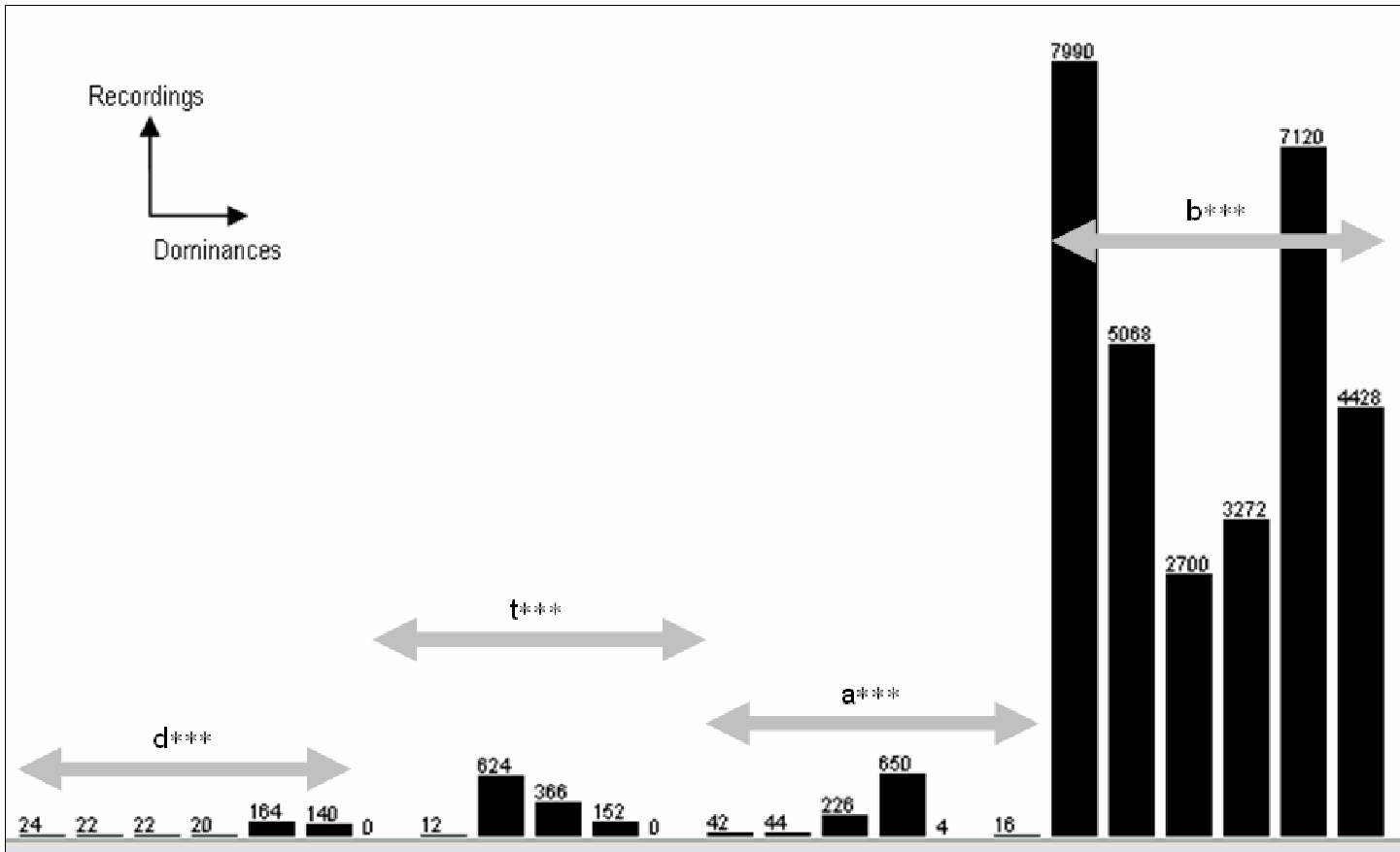 Interestingly, the Beta band (Focus/Alertness) was dominant in 92.2% of the recordings, highlighting the intense mental activity associated with processing emotional visual stimuli.
Critical Insight: Beyond the Average Learner
One of the most profound implications of this work is for inclusive education. For "taciturn" learners or those with physical disabilities who cannot use facial expressions or speech to communicate frustration or confusion, EEG provides a direct pipeline to their cognitive needs.
Limitations and Future Work
The authors acknowledge a common "elephant in the room" for EEG studies: signal noise. Physical movements (blinking, shifting in a chair) can create artifacts. While they countered this with strict participant instructions and a massive dataset, moving this technology from a controlled lab to a noisy classroom remains the "final frontier."
Final Takeaway
By proving that emotional stimuli reliably reorganize brainwave dominance, this paper provides a roadmap for Closed-Loop Learning. Imagine a computer tutor that sees your Alpha waves (relaxation) spiking when you should be in Beta (focus) and automatically changes the task to re-engage you. That future is no longer science fiction—it's a classification problem.