
Emotions on Facebook: Why "Love" Outperforms "Logic" in Digital Brand Communities
Emotions on Facebook: a content analysis of Mexico's Starbucks page
This study presents a content analysis of the "Starbucks Mexico" Facebook brand community, identifying emotions as the primary driver of digital interaction. By analyzing 13,043 comments, the research demonstrates how positive and negative emotional narratives—rather than rational information—shape member participation and brand loyalty.
TL;DR
In the digital age, consumers don't just buy a product; they join a community. This study of Starbucks Mexico’s Facebook page reveals that emotions are the lifeblood of these communities. With over 85% of community interactions being emotionally driven, the research proves that positive feelings like "desire" and "joy" trigger significantly higher engagement than rational price-point or quality discussions.
Background: The Shift from Consumers to Community Members
The paper positions its work within the shift from traditional "one-to-many" advertising to the "many-to-many" interaction of Brand Communities. In these spaces, members aren't just passive recipients; they are co-producers of meaning. The researchers argue that while rational advertising focuses on logic and benefits, emotional advertising targets the human biological need for connection and survival—making it a far more potent tool for engagement.
Methodology: Decoding the Language of Feeling
The authors meticulously analyzed 77 brand posts and 13,043 member comments over a half-year span. To bridge the gap between human sentiment and data, they utilized:
- A Custom Lexicon: Identifying high-frequency Spanish emotional markers (e.g., rico, antojo, amor).
- Categorization of Posts: Distinguishing between rational, promotional, and purely emotional brand content.
- Kappa Coefficient Validation: Ensuring that the interpretation of emotions like "joy" or "frustration" was consistent across different human coders.
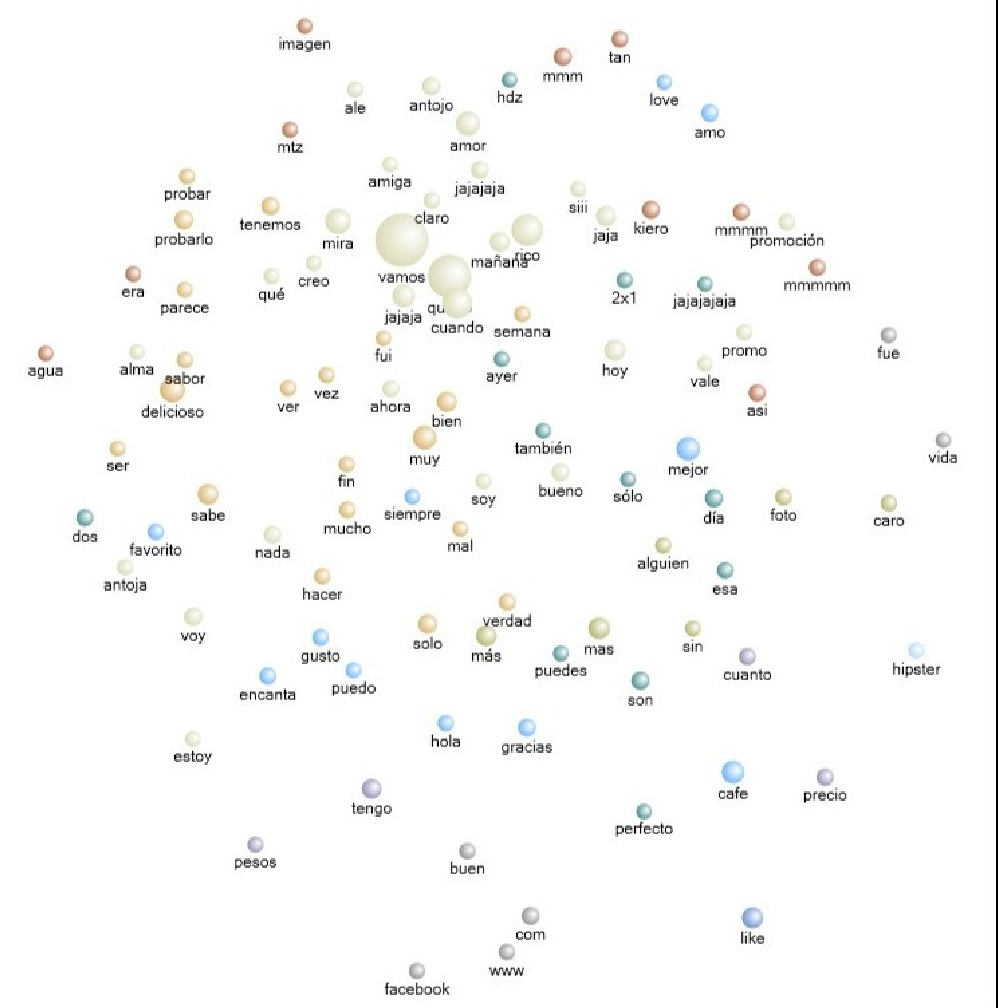 The study mapped specific Spanish keywords to secondary emotions to track how users expressed their relationship with the brand.
Key Insights: The Power of Positive Contagion
The findings offer a masterclass in social media psychology:
- Happiness is Viral: Positive emotions dominate brand communities. Specifically, 84.62% of emotional comments were positive, often linked to "desire" (the engine of action) and "pleasure."
- Rationality is a Conversation Killer: Information about price or health benefits—while necessary—generated the lowest participation. Consumers see social media as a "stage" for the self, not a classroom for product specs.
- The Role of Negative Emotions: Interestingly, feelings like nostalgia and anger still act as engagement boosters. While anger usually stems from rational failures (poor service), nostalgia can be successfully repurposed by brands to recall positive past experiences with a product.
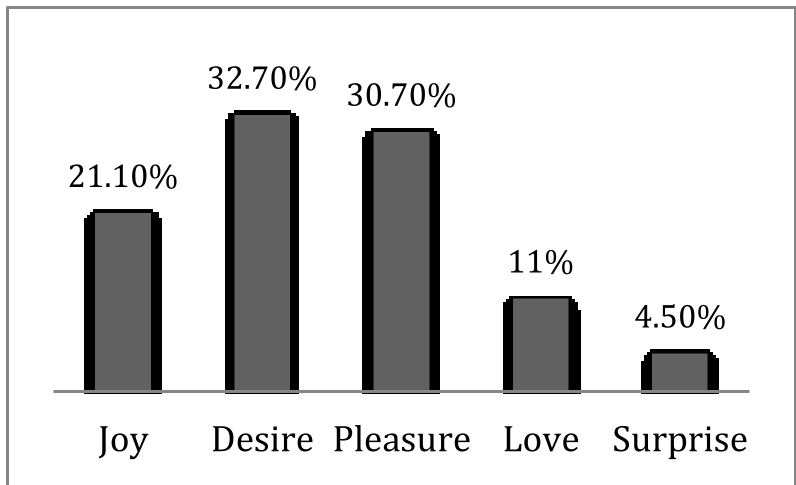 Positive emotions like Love, Pleasure, and Desire were the most frequent drivers of community participation.
Beyond Text: Paralinguistic Elements
The study highlights that in digital communities, we don't just communicate with words. We use "Paralinguistic Elements":
- Punctuation: Multiple exclamation marks to signify excitement (e.g., Vamoooooooooos!!!).
- Onomatopoeia: Sounds that convey taste or reaction (e.g., eww or mmm).
- Irony: A common tool for expressing disgust or frustration that requires cultural context to decode.
Critical Analysis & Future Outlook
While the study provides a robust framework for understanding brand loyalty through emotion, it acknowledges a significant limitation: The "Joy" Paradox. Identifying "joy" in text is notoriously difficult due to the frequent use of Irony, where the literal meaning of a word contradicts its intent.
For brand managers, the takeaway is clear: Humanize your communication. Treating the client as a person with desires and memories rather than a consumer with a wallet leads to a significant competitive advantage. Future research should look deeper into how AI and automated sentiment analysis can capture these nuances in real-time, especially across diverse cultural contexts.
Conclusion
This research confirms that on social media, the heartbeat of a brand community is purely emotional. By fostering "moments" of delight and addressing "desire," brands like Starbucks have moved beyond selling coffee—they are selling emotional narratives that members are eager to share.