
Emotive Media: Bridging the Gap Between Digital Artifacts and Human Affect
Emotive media: a review of emotional interfaces and media in human-computer-interaction
This paper introduces "Emotive Media," a new HCI paradigm where media environments and interfaces leverage consumer-priced bio-feedback devices (e.g., brain-computer interfaces, biometric sensors) to understand and respond to human emotions. It establishes a classification framework for emotional interaction and validates it through diverse application scenarios like LudoViCo and Portable Personality (P2).
TL;DR
As biometric sensors and brain-computer interfaces (BCIs) become consumer-accessible, the interface between humans and machines is evolving. This paper defines Emotive Media—a paradigm where digital objects don't just "show" content but "understand" and "react" to human emotion. By utilizing bio-feedback channels, media becomes a bi-directional emotional interaction system that evolves based on the user's psychological state.
The "Fast Line" to the Brain: Motivation
Digital interaction has historically been stagnant: the user provides an input, and the machine executes a command. However, as the author notes, "Emotions are the fast line to the brain." The motivation behind this research is to move away from manually sampled emotional data (like questionnaires or cards) toward a seamless, dual feedback loop.
The problem is that while we have the hardware (like the Emotiv Epoc BCI), we lack a conceptual framework to integrate these signals into the narrative and functional architecture of media.
Methodology: Defining the Emotive Paradigm
The author defines Emotive Media through five specific characteristics (C1-C5). The core logic is to treat the "artifact"—whether it's a robot, a smart TV, or a wearable—as a bi-directional interface.
- Neuro-mediation: Utilizing bio-sensors (EEG, heart rate, skin conductivity) as primary feedback channels.
- Higher-Level Concepts: Moving beyond raw data points to interpret "Personality," "Aesthetics," and "Sentiment."
- Emotional Plots: Content that isn't static but changes its "script" based on the user's emotional trajectory.
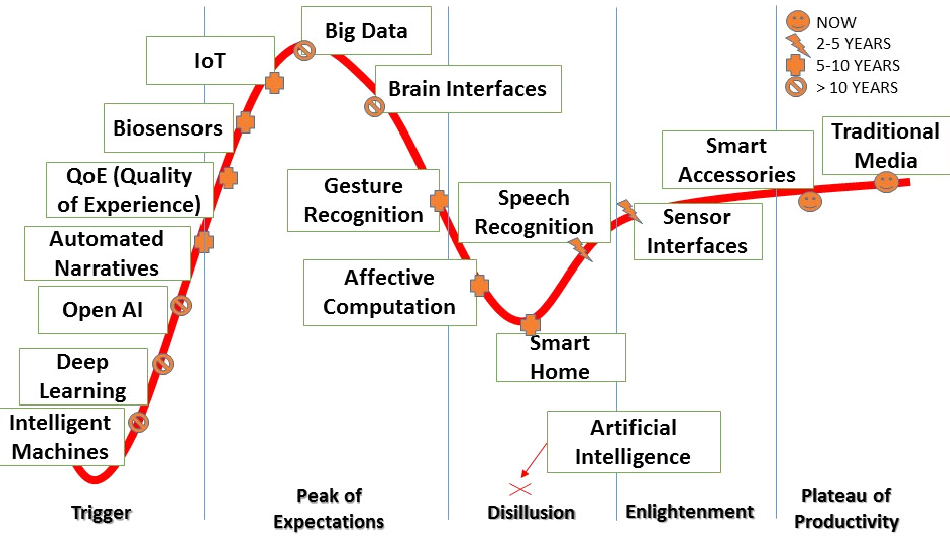 Figure 1: The cross-disciplinary nature of Emotive Media, spanning Neuroscience, QoE, and Social Signal Processing.
Key Scenarios & Implementations
The paper validates the "Emotive Media" concept through several experimental platforms:
- LudoViCo UX-Machine: A specialized tool designed to record and visualize time-series data from sensors like muscle tension and body motion. It acts as the "translator" between biological signals and digital responses.
- Ambient Responsive Character: An animated dog that reacts to human gestures and emotional states, creating an "emotional binding" between the digital pet and the user.
- Portable Personality (P2): A middleware solution that harvests user profile data to distribute "personality traits" across a network, allowing different devices to "know" the user's preferences implicitly.
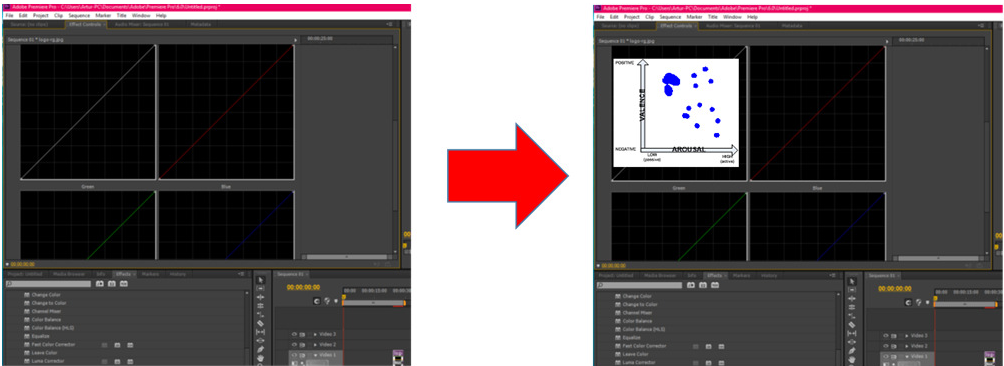 Figure 2: Mock-up illustrating how film-makers could integrate emotional bio-feedback directly into their production interfaces to gauge audience reaction.
Critical Analysis & Future Outlook
While the vision of Emotive Media is compelling, the paper acknowledges a significant hurdle: Usability for Content Creators. For these systems to reach the "plateau of productivity," they cannot be more complex than current creative tools.
Key Insights:
- Implicit Interaction is King: The goal is for the machine to adapt without the user having to consciously "tell" it to.
- Visualizing Emotion: Raw bio-data is useless to a filmmaker; it must be transformed into actionable insights via "Visualisation and Emotion Re-mediation."
Limitations: The paper is a "mini-review" and focuses more on the paradigm shift than on rigorous statistical validation of a single algorithm. However, its value lies in providing the architectural blueprint for what we now recognize in modern "Empathic AI" and personalized algorithms.
Conclusion
The future of HCI is not just in faster processors, but in "smarter" emotional resonance. Emotive Media suggests a future where our devices don't just serve us—they feel with us.