
Shallow vs. Deep: Decoding Human Emotions Through Speech Signal Processing
Empirical Analysis of Shallow and Deep Architecture Classifiers on Emotion Recognition from Speech
This paper presents a comparative empirical analysis of "Shallow" (SVM, Random Forest, Naive Bayes) and "Deep" (CNN, LSTM) classifiers for Speech Emotion Recognition (SER). Leveraging the EMODB dataset and MFCC feature extraction, the study evaluates architectural performance across four primary emotional states.
TL;DR
This research provides a rigorous empirical benchmark comparing traditional machine learning (Shallow) and neural network (Deep) classifiers for Speech Emotion Recognition (SER). By evaluating models on the Berlin EMODB dataset using MFCC features, the study reveals that while Support Vector Machines (SVM) lead the shallow category, Convolutional Neural Networks (CNN) achieve the highest overall accuracy at 95.4%, proving that hierarchical feature learning is essential for capturing the subtleties of human mood.
The Challenge: Why Speech Emotion is Hard to Crack
Emotion recognition is no longer a sci-fi concept; it is vital for medical diagnostics (e.g., Alzheimer’s detection), surveillance, and customer service optimization. However, the path to accurate detection is obstructed by:
- Signal Noise: Environmental interference degrades audio quality.
- Linguistic Complexity: Sarcasm, irony, and hyperbole often mask a speaker's true emotional state.
- Feature Representation: Choosing between handcrafted statistical features and learned representations defines the model's success.
The Pipeline: From Raw Audio to Feature Vectors
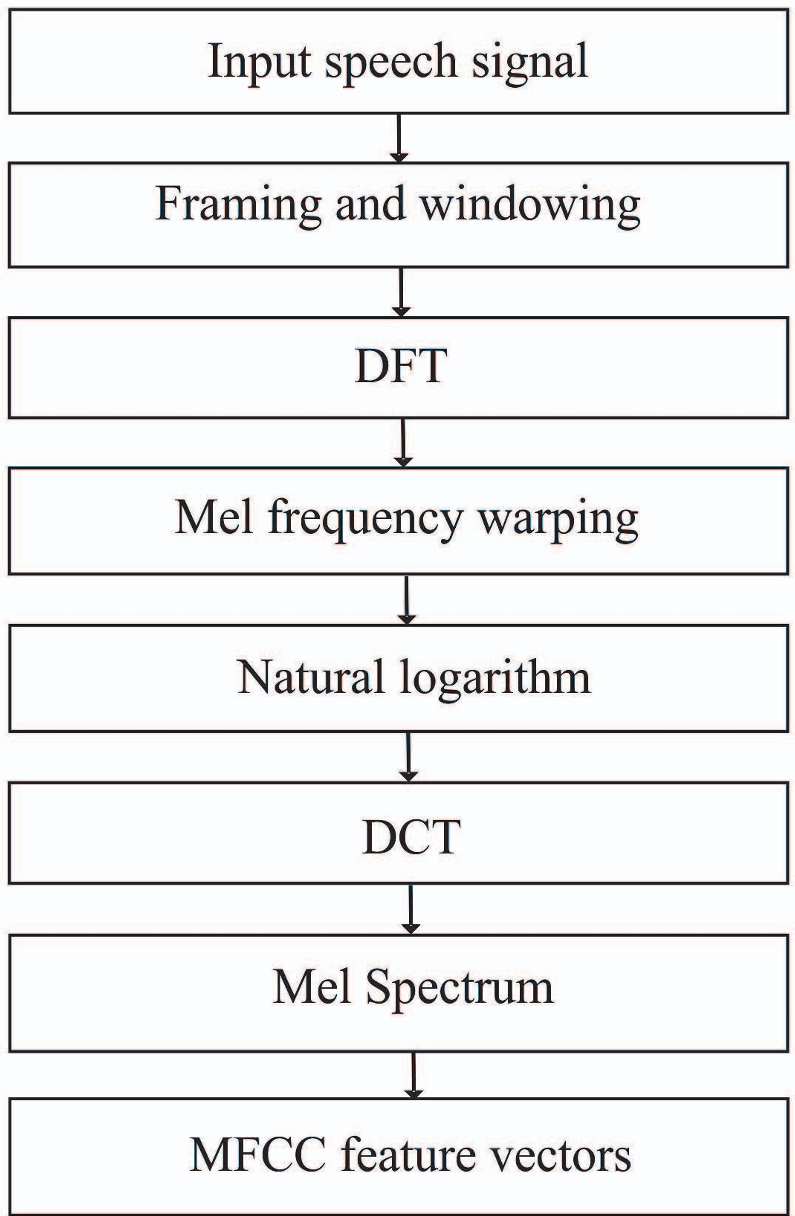
The researchers employed a systematic preprocessing pipeline to transform variable audio samples into a format suitable for mathematical modeling. The core of this process is MFCC (Mel-frequency Cepstral Coefficients), which maps the audio spectrum to the human ear's nonlinear perception of frequency (the Mel scale).
The Methodology
- Framing: Audio is split into 20ms windows.
- Spectral Analysis: Discrete Fourier Transform (DFT) converts time-domain signals to the frequency domain.
- Log-Mel Mapping: Applying a triangular filter bank and natural logarithm.
- Classification: Feature vectors of dimension 339x198x39 are fed into the comparative models.
Architectural Showdown: Shallow vs. Deep
The study analyzes two distinct philosophical approaches to AI:
1. Shallow Classifiers (Expert-Driven)
- Naive Bayes (NB): Relies on Bayes Theorem with a strong independence assumption. Low tendency to overfit but limited by its "shallow" understanding of context.
- Random Forest (RF): An ensemble of decision trees. While simple to train, it often falls behind in raw accuracy for complex audio signals.
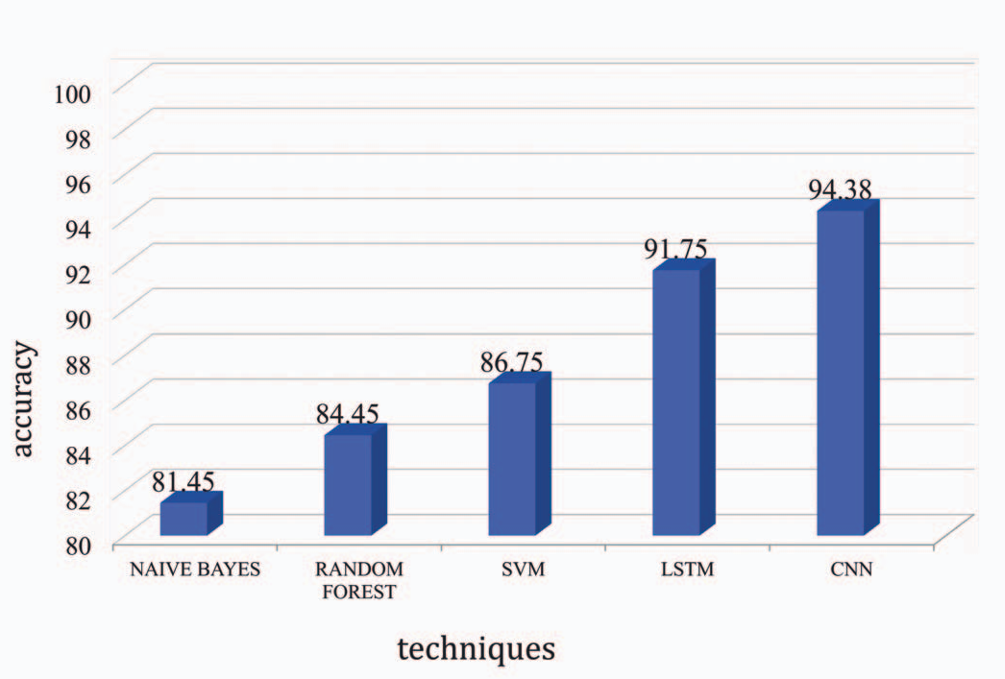
- Support Vector Machine (SVM): The champion of shallow models. By searching for the optimal hyperplane, it achieved 86.75% accuracy, showing high tolerance for feature-rich data.
2. Deep Classifiers (Representation-Driven)
- Long Short-Term Memory (LSTM): A recurrent architecture designed to remember long-term dependencies in speech sequences. It achieved 91.75% accuracy, proving that temporal context matters.
- Convolutional Neural Networks (CNN): Typically used for images, the authors applied a 2-layer CNN to the MFCC feature maps. By learning spatial hierarchies and local filters, the CNN reached a peak accuracy of 95.4%.
Experimental Results and Insights
The trade-off between accuracy and resource consumption is the paper's most significant takeaway.
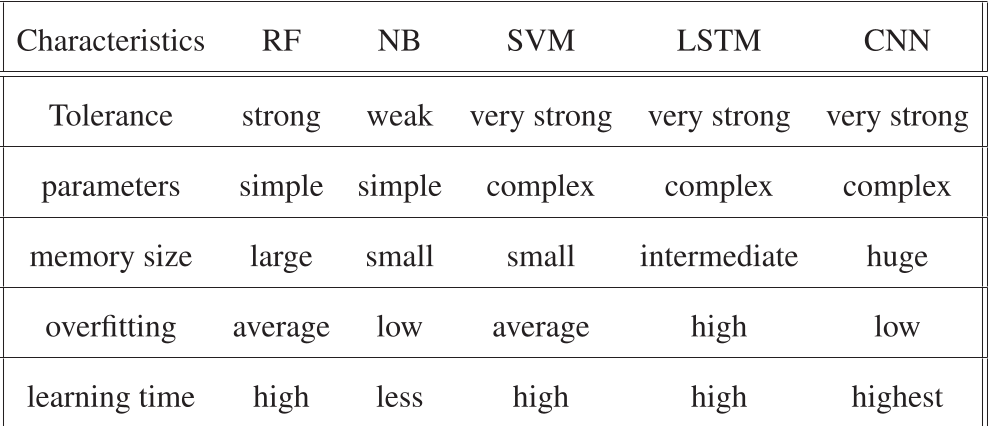
As shown in the comparison, the CNN offers the best performance and "very strong" tolerance for complex data but requires "highest" learning time and "huge" memory. Conversely, SVM offers a middle ground, providing respectable accuracy with much lower training overhead.
Critical Analysis & Conclusion
The results confirm a clear trend: Deep architectures gather insights from low-level features that manual engineering misses. The leap from 86.75% (SVM) to 95.4% (CNN) represents a paradigm shift in how we handle audio data.
Limitations & Future Work
- Data Scarcity: The study used only 339 samples. Deep learning thrives on "Big Data," and the authors suggest that larger datasets would likely push accuracies even higher.
- Emotional Range: Current models focus on basic emotions (Angry, Sad, Happy, Neutral). Future research must tackle subtle states like "Sarcasm," "Suicidal Tendency," or "Dismay."
Final Thought: For developers building real-time SER systems, the CNN approach is the gold standard for accuracy, but the SVM remains a potent candidate for edge computing where memory and latency are critical constraints.