
The Trojan Horse of ICT4D: Scaling Development via Voice-Based Entertainment
An Empirical Comparison of Technologically Mediated Advertising in Under-connected Populations
This paper presents an empirical study comparing seven technologically mediated advertising channels for scaling "Super Abbu," an IVR-based maternal health hotline for low-literate men in Pakistan. It demonstrates that voice-based entertainment services (like Polly) significantly outperform traditional media and social networks in user conversion and long-term retention.
TL;DR
How do you reach tens of thousands of low-literate, under-connected users with life-saving health information without a multi-million dollar budget? This study reveals that voice-based entertainment platforms are the ultimate "Trojan Horse," outperforming Facebook, TV, and Radio in recruiting and retaining users for a maternal health hotline in Pakistan.
The Scaling Bottleneck in HCI4D
The HCI for Development (HCI4D) community has a "pilot-itis" problem. We design brilliant interventions that work for 50 people in a controlled study but fail to reach 50,000. Why? Because traditional advertising channels are disconnected from the tool itself. If a user sees a flyer, they must remember a number, find a phone, and dial it. For those with low literacy or limited tech access, every step is a potential drop-off point.
The Experiment: Super Abbu vs. The World
The researchers launched Super Abbu (Super Dad), an IVR (Interactive Voice Response) service where expectant fathers in Pakistan can ask doctors questions about pregnancy—a topic often considered taboo in the region. To find the most effective way to scale, they tested seven channels:
- The New Guard: Sponsored Facebook ads and Robocalls.
- The Traditionalists: Flyers, Radio, and Cable TV.
- The Local Flavor: Banners on the back of Auto Rickshaws.
- The Secret Weapon: Polly, an IVR entertainment service where users play with voice recording and funny filters.
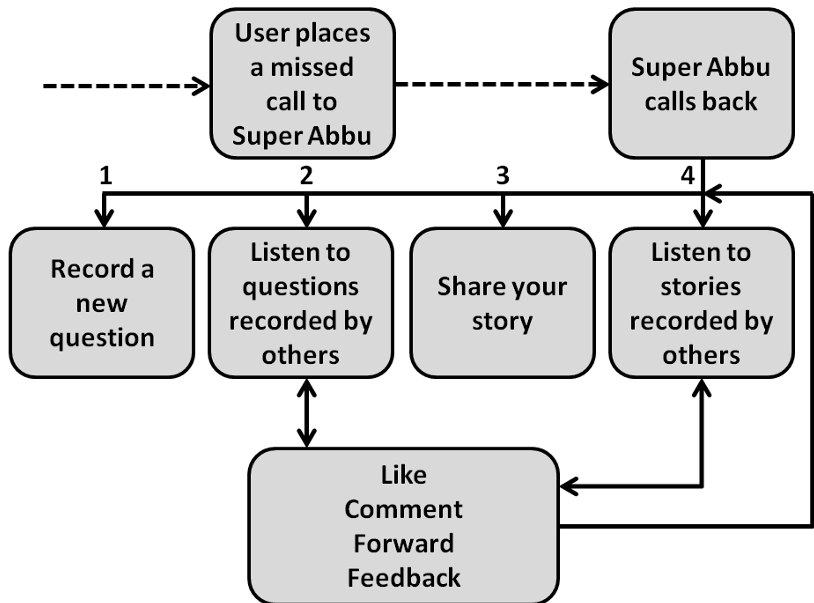 Figure 1: The Super Abbu IVR logic flow, designed for simple "missed call" interfaces.
Methodology: High-Stakes Comparison
The team maintained consistency by using the same professional ad agency and a famous Pakistani cricketer across all channels. They tracked users through unique call-in numbers to measure conversion, cost, and, most importantly, retention.
Core Insight: Why Entertainment Wins
The results were polarized. While Facebook and TV reached thousands of "eyeballs," they resulted in a conversion rate of less than 0.01%.
In contrast, Polly achieved a 50% conversion rate.
Why?
- Modality Matching: Users are already on the phone. Pressing '1' to switch from a game to a health service is frictionless.
- Implicit Training: Users who play with voice games learn how to "barge-in" (skip prompts) and navigate menus—skills they carry over to the health hotline.
- Trust through Virality: Polly users share content with friends. A recommendation from a peer carries more weight than a generic government robocall.
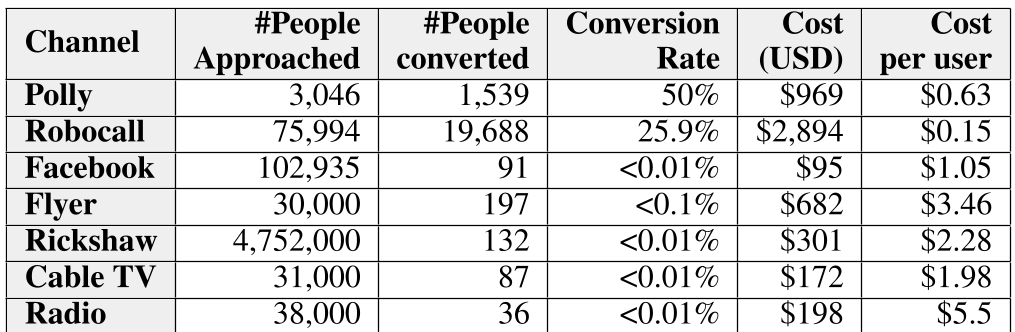 Table 1: Note the massive gap in conversion rates and the efficiency of IVR-based channels.
The "Robocall" Caveat
Robocalls were the "cheapest" in terms of raw acquisition (0.63), were 4x more likely to stick around for a month and recorded much higher quality, relevant health questions.
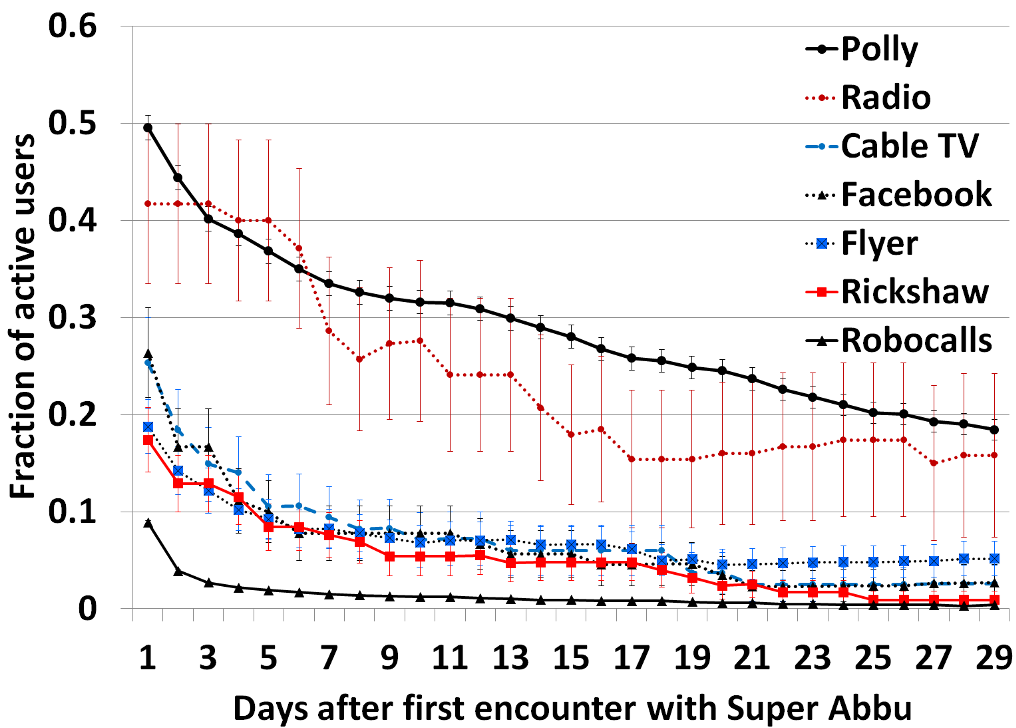 Figure 2: Retention rates over 30 days. Polly (top curve) shows sustainable engagement compared to the rapid decay of robocalls.
Critical Analysis: Beyond the Numbers
This paper challenges the silicon-valley-centric view that social media is the best way to reach the "next billion." In under-connected regions:
- Facebook is for the elite: Users recruited via Facebook had higher education and higher phone spend, but the reach to the truly marginalized was poor.
- The Gender Gap: The study primarily reached men. While the authors argue this targets the primary decision-makers in Pakistan, it risks reinforcing patriarchal structures—a trade-off the HCI4D community must grapple with.
Conclusion
If you want to scale a development service, don't just advertise it—embed it. By piggybacking on a viral entertainment service, Super Abbu solved the literacy and trust barrier simultaneously. For future researchers and product managers in the Global South, the message is clear: Engagement begins with play.