
Beyond the First Click: What Keeps Saudi Consumers Using Social Commerce?
An Empirical Examination of Factors Affecting Continuance Intention Towards Social Networking Sites
This study investigates consumer continuance intention toward Social Networking Sites (SNS) as a business tool in Saudi Arabia. Using an extended Technology Acceptance Model (TAM), it identifies trust, perceived usefulness, and perceived enjoyment as the primary drivers of long-term user retention in s-commerce.
Executive Summary
TL;DR: This study examines the "stickiness" of social networking sites (SNS) as business tools in Saudi Arabia. By surveying 304 Facebook users, the research reveals that while making a platform easy to use (PEOU) helps users find it useful and enjoyable, the ultimate decision to keep using it depends heavily on Trust, Usefulness, and Fun.
Context: This work serves as a critical bridge between classic Information Systems (IS) theory and modern social commerce (s-commerce) practices, specifically focused on the rapidly growing Saudi Arabian market.
The "Continuance" Problem: Why Adoption Isn't Enough
Most tech-adoption research focuses on the "Why did you start?" question. However, in the hyper-competitive world of s-commerce, the real battle is "Why do you stay?"
Existing models often fall short because they ignore the social and emotional layers of shopping. In Saudi Arabia—where social media penetration is among the highest in the world—traditional e-commerce is being replaced by s-commerce. The author argues that we cannot understand this shift without looking at Trust (the antidote to online uncertainty) and Perceived Enjoyment (the "window shopping" factor).
Methodology: Extending TAM
The researcher utilized the Technology Acceptance Model (TAM) as a skeleton but added two vital "muscles":
- Trust (TR): Crucial for transactions where buyers and sellers never meet face-to-face.
- Perceived Enjoyment (PE): Reflecting the shift from task-oriented browsing to experiential shopping.
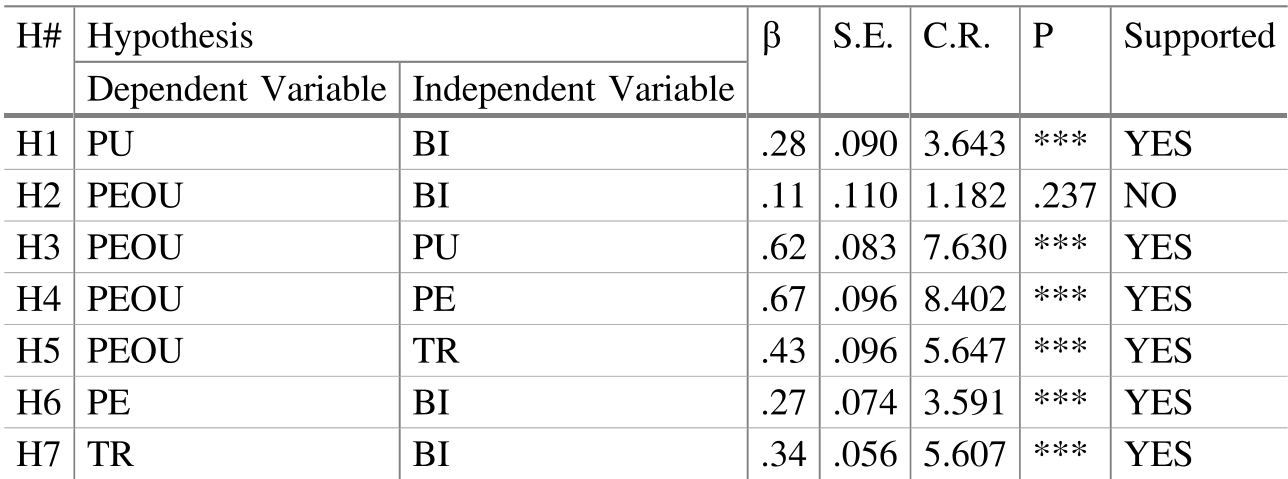 Note: The table above illustrates the structural paths and the significance of each hypothesis tested.
Key Insights & Experimental Results
Through Structural Equation Modelling (SEM), the study produced several "Aha!" moments:
- The Trust Supremacy: Trust was the most significant predictor of intention (). This highlights that in s-commerce, social proof (reviews, ratings) is more than just "feedback"—it's the foundation of the business.
- The Death of "Ease of Use" as a Motivator: Interestingly, Perceived Ease of Use had no direct effect on the intention to continue.
- The Logic: Saudi users are already "digital natives" regarding Facebook. Being "easy to use" is now a baseline requirement (hygiene factor), not a competitive advantage that encourages someone to stay.
- Enjoyment Matters: Using SNS for business is no longer just a chore; it’s an extension of social life. If the experience isn't enjoyable (), users will eventually churn.
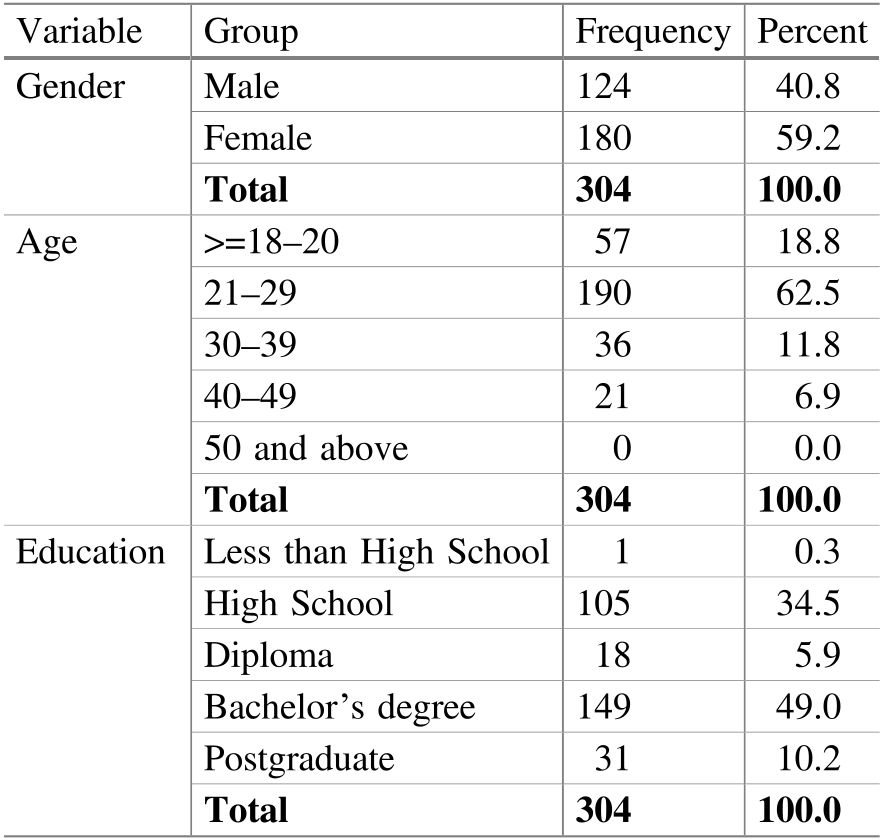 The study primarily captured the 21-29 age demographic (62.5%), representing the primary drivers of the digital economy in KSA.
Critical Analysis & Conclusion
Takeaway
For brands operating in the Middle East, the message is clear: Invest in community, not just UI. Users stay because they trust the platform and enjoy the interaction. Features like user-generated content (UGC), transparent privacy policies, and interactive media are not "extras"—they are the core drivers of s-commerce retention.
Limitations & Future Work
The study focuses on intention rather than actual behavior. While people say they intend to continue, future research should track actual purchase frequency. Additionally, as the landscape shifts from Facebook to platforms like TikTok and Instagram, the weight of "Enjoyment" (driven by video algorithms) may become even more dominant than "Usefulness."
Final Thought: In the world of s-commerce, the "Social" is just as important—if not more so—than the "Commerce."