
Hybrid Intelligence in the Lab: Why Researchers Are (or Aren't) Adopting Crowdsourcing and ML
Empirical Investigation of the Factors Influencing Researchers’ Adoption of Crowdsourcing and Machine Learning
This paper presents an empirical investigation into the factors influencing researchers' adoption of crowdsourcing and Machine Learning (ML) using an extended Technology Acceptance Model (TAM). Based on a global survey of 90 researchers, it identifies key drivers like perceived usefulness and trust, while highlighting significant barriers in data quality and ethical concerns.
TL;DR
Artificial Intelligence is transforming science, but the "human element"—specifically through crowdsourcing—remains a complex frontier. This study surveys 90 global researchers to find out what drives the adoption of hybrid human-ML systems. While the potential for "filling the gaps AI can't reach" is high, concerns over data quality, ethical transparency, and the difficulty of finding specialized experts remain significant roadblocks.
Background: The CSCW Perspective
In the field of Computer-Supported Cooperative Work (CSCW), understanding situated practices is key to designing better systems. We aren't just looking at whether a tool works, but how it fits into the messy, collaborative reality of scientific research. The authors position this work as a bridge between high-level AI capabilities and the practical socio-technical needs of the global research community.
The Problem: The Trust Gap in Hybrid Workflows
For decades, researchers have used AI to tackle "knowledge acquisition bottlenecks." However, as we move toward Human-Centered AI, a new problem emerges: Trust.
- Current Failure Points: Prior work often ignores the researcher's psychological and ethical hesitation.
- The Insight: The authors argue that adoption isn't just about "Ease of Use"—it’s about whether a researcher believes the crowd can handle specialized tasks and whether the resulting data can be trusted in a peer-reviewed context.
Methodology: Extending the Technology Acceptance Model (TAM)
The researchers didn't just ask "do you like this tool?" They used an extended version of the Technology Acceptance Model (TAM).
The Research Model
The core of the study revolves around several hypotheses linking Perceived Usefulness (PU) and Perceived Ease of Use (PEOU) to the final Decision to Use. Crucially, they added:
- Trust: Can you rely on the algorithm and the crowd?
- Privacy & Ethics: How is the data handled?
- Critical Mass: Does the platform have enough active users to be viable?
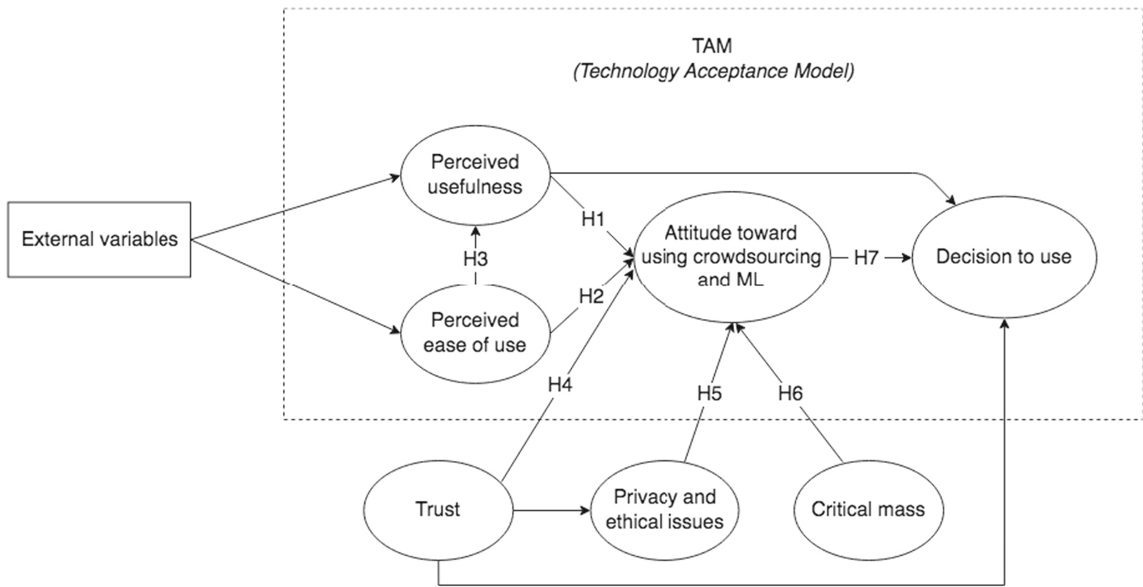 Figure 1: The extended TAM framework used to predict adoption behavior.
Experiments & Results: The Reality of the "Crowd"
The survey reached 90 researchers across 26 countries (with a strong 33.3% representation from the USA).
Key Findings
- Task Preferences: Researchers primarily use the crowd for Classification/Categorization (45.6%) and Verification (44.4%). Complex tasks like web development or deep synthesis are rarely offloaded to volunteers.
- The Funding Barrier: Interestingly, the biggest hurdle to any research activity—including adopting new tech—is funding (63.3%), followed by the difficulty of synthesizing gathered information (30%).
- Ethical Anxiety: High levels of concern were reported for Privacy (57.7%) and Accuracy (53.3%). There is a palpable fear that crowd work can be "cheap labor" or lead to "undesirable biases."
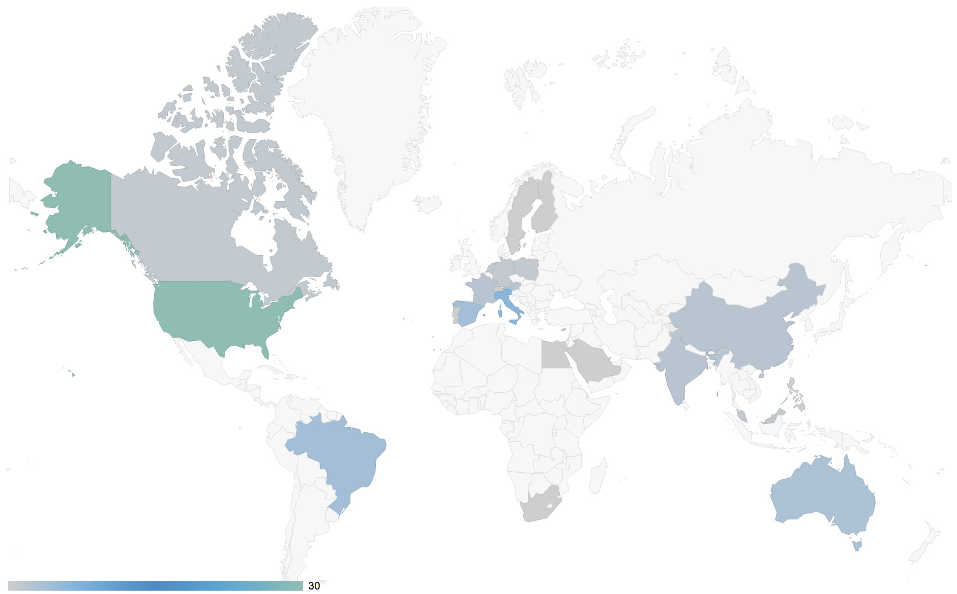 Figure 2: Barriers in research (left) and motivations for collaboration (right).
Critical Analysis & Deep Insights
The most striking takeaway is the "Unsure" Category. Nearly 17% of researchers are unsure of the usefulness of hybrid systems, and 26% are neutral. This suggests that the industry hasn't yet "proven" the value of human-in-the-loop ML for high-stakes science.
Implications for System Design
If you are building the next generation of research tools, this paper suggests:
- Incentivize Volunteers: Interest in the topic (31.1%) is a bigger driver than social status (16.7%). Gammafication is recommended.
- Feedback Loops: Humans need to see their contributions as part of a "whole" to stay motivated.
- Provenance: Systems must keep track of how a piece of data was reached—the "why" behind the label.
Conclusion
The study concludes that while researchers are optimistic about AI "filling the gap" where algorithms currently fail, the path to mainstream adoption is paved with ethical and qualitative concerns. We don't just need faster algorithms; we need more transparent, inclusive, and trustworthy human-AI interfaces.
Future Work: The authors suggest expanding the measurement scales to capture more granular behavioral data "in the wild."