
Precise Crowd Assessment: Narrowing Confidence Intervals for Worker Reliability
Empirical Study on Assessment Algorithms with Confidence in Crowdsourcing
This paper presents an optimized assessment algorithm for worker quality in crowdsourcing, specifically focusing on binary classification tasks. By localized mathematical refinement of traditional confidence intervals, the authors propose a densest probability density method to provide more precise worker error rate estimations.
TL;DR
In crowdsourcing, knowing if a worker is good is half the battle; knowing how sure you are is the other half. This paper introduces a mathematical optimization to tighten the confidence intervals of worker error rates, achieving a 41.8% reduction in interval width compared to previous methods, thereby allowing for far more precise worker selection and quality control.
Problem & Motivation: The "Wide Interval" Trap
Crowdsourcing platforms like Amazon Mechanical Turk are inherently noisy. Malicious or untrained workers often submit dirty data. Traditionally, we use models to estimate a worker's error rate (), but a single point estimate is risky.
While some prior works introduced confidence intervals (e.g., "we are 95% sure the error rate is between 0.2 and 0.4"), these intervals are often too wide to be actionable. If an interval spans from "expert" to "spammer," the assessment is effectively useless. the authors identified that this width stems from a lack of density analysis in the error distribution functions.
Methodology: Finding the Densest Point
The core innovation lies in moving beyond basic interval calculation to Probability Density Function (PDF) optimization.
1. The Peer Agreement Foundation
The model assumes tasks are binary. It uses the ratio of agreement between three entities: the target worker and two "super-workers" (aggregations of other peers).
- : The ratios of identical answers between pairs of workers.
- : The estimated error rate derived from these ratios.
2. Density-Based Optimization
Instead of accepting the default endpoints of the distribution, the authors:
- Deduce the Distribution Function of the worker error rate.
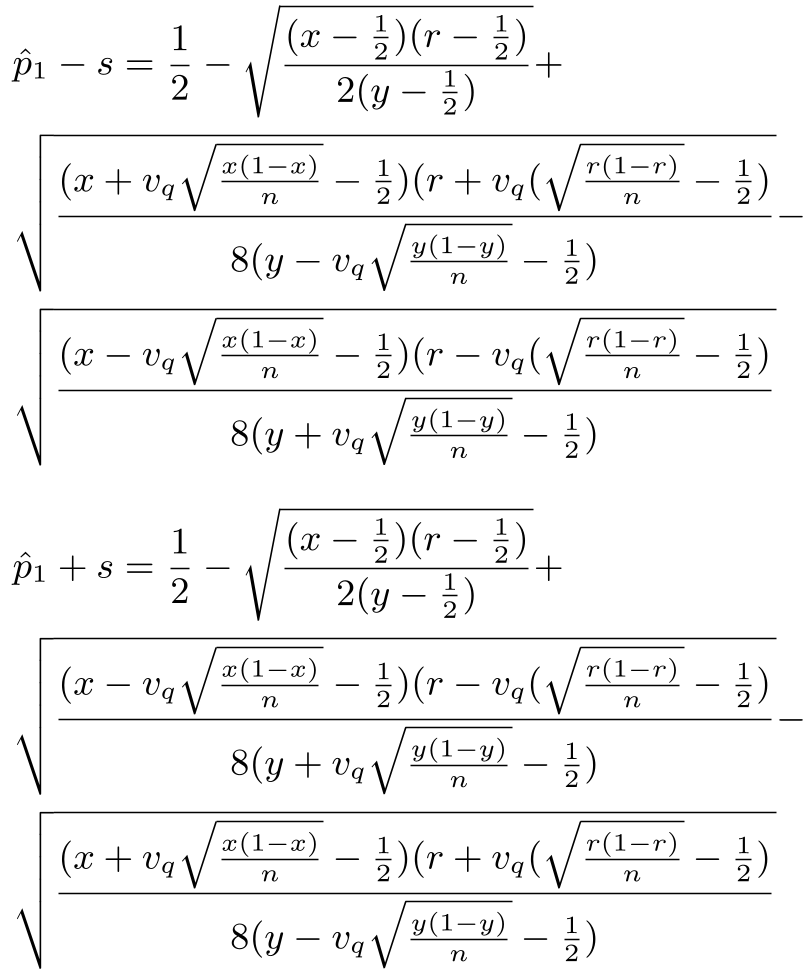
- Calculate the Partial Derivatives with respect to variables like task count () and agreement ratios ().
- Identify the densest probability density point. By centering the interval around this peak, they capture the same confidence level (e.g., 95%) within a much smaller numerical range.
Experiments & Results
The authors validated their approach using a simulated dataset involving 15 workers and 1,500 tasks (discount information labeling).
Key Findings:
- Interval Reduction: The optimized results consistently showed narrower ranges. For example, Worker 1's interval shrank from
(0.18, 0.39)to(0.24, 0.35). - Accuracy: Despite the narrower range, the intervals still effectively captured the true error rate in 80% of cases in high-noise scenarios.
- Efficiency: The average size of the interval decreased by 41.79%, significantly increasing the "resolution" of worker assessments.
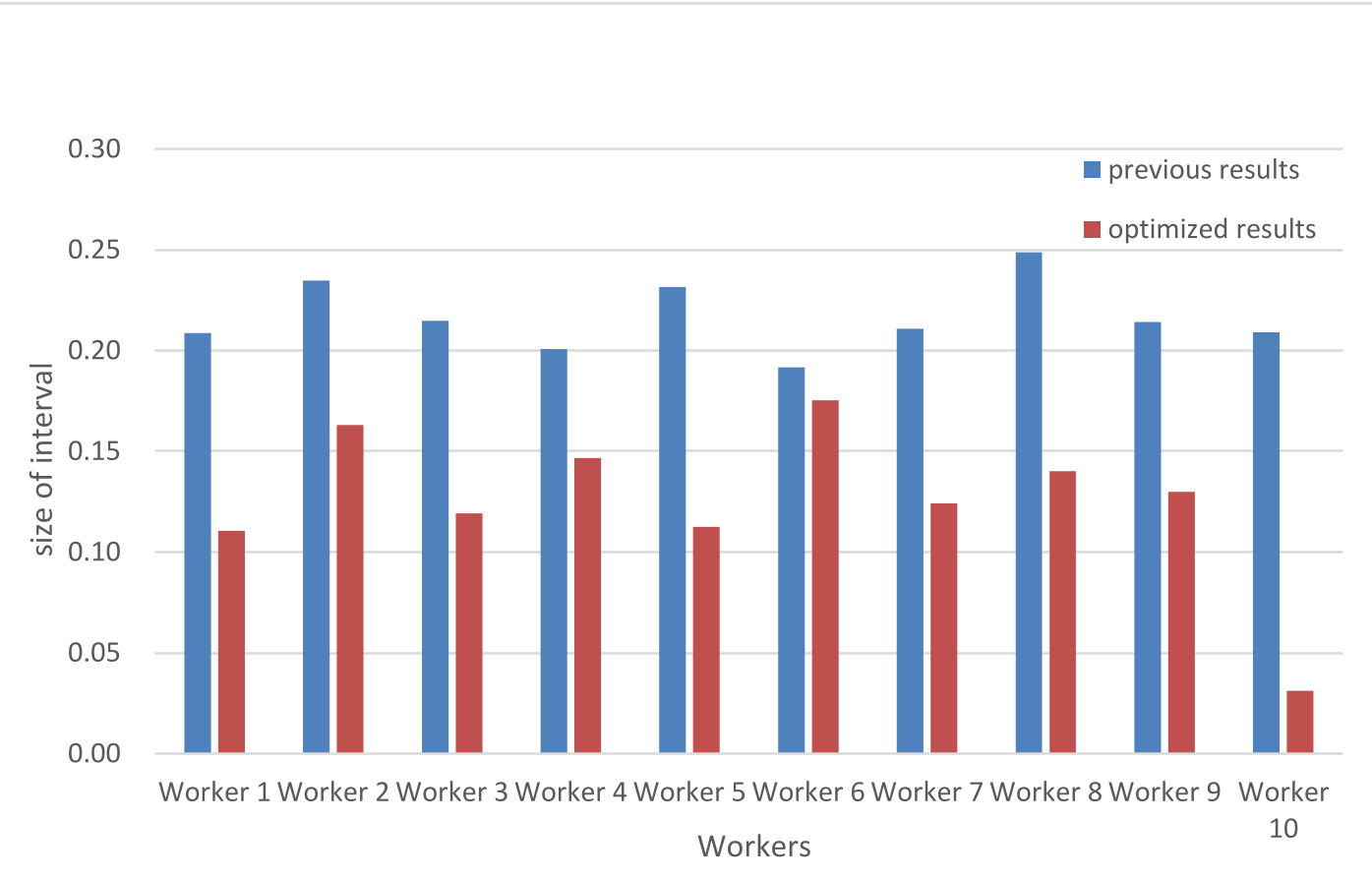 Figure 1: Visualization of previous vs. optimized results showing the tightening effect across participants.
Critical Analysis & Conclusion
Takeaway
This research provides a robust mathematical framework for improving worker modeling. By focusing on the density of the error distribution, platforms can filter out unreliable workers with much higher confidence than before.
Limitations
The study primarily focuses on binary tasks. In real-world scenarios, tasks are often multi-class or continuous (e.g., bounding boxes), which would require a significantly more complex confusion matrix evaluation rather than simple agreement ratios. Additionally, the assumption that workers execute all tasks may not hold in large-scale, open-ended platforms.
Future Work
The logical next step is extending this "density optimization" to more complex worker models (like the Dawid-Skene model) and exploring its impact on final consensus accuracy in real-time crowdsourcing workflows.