
Precise Environmental Intelligence: Redefining the U.S. Energy-Water Nexus with Machine Learning
An Empirical Study of Environmental Data Prediction in the United States Energy-Water Nexus
This empirical study develops a machine learning-based framework for the Energy-Water-Emissions Dashboard (EWED) to predict electricity generation and water usage across ~10,000 U.S. power plants. By integrating heterogeneous data from EPA and EIA, the authors utilize Artificial Neural Networks (ANN) and XGBoost to outperform traditional coefficient-based methods in predicting multi-scale environmental constraints.
TL;DR
Predicting the future of the U.S. energy grid isn't just about kilowatt-hours; it's about the gallons of water required to produce them. This study replaces outdated "coefficient-based" models with a robust Machine Learning framework (ANN and XGBoost) to predict electricity generation and water usage for nearly 10,000 power plants. The result? A massive 59% reduction in prediction error (RMSE) for water consumption.
Context: A Friction-Filled Relationship
Electricity generation is the single largest consumer of water in many regions. As climate change tightens water availability, power plants face operational risks. However, the data needed to manage this—generation, emissions, and water withdrawal—has historically been scattered across disparate federal sources with significant lag times.
The Energy-Water-Emissions Dashboard (EWED) seeks to bridge this gap. While its first iteration used a simple proportionality rule (the "coefficient method"), this research moves toward a predictive paradigm that can handle the sheer complexity of 10,000 heterogeneous facilities.
Methodology: The "Recent Performance" Breakthrough
The researchers evaluated five models: Linear Regression, Decision Trees, Random Forest, XGBoost, and Artificial Neural Networks (ANN).
The Core Insight
A pivotal technical discovery in this paper is the feature selection strategy. Initial attempts using only categorical data (location, fuel type) yielded poor results. By analyzing historical trends, the team noticed a high correlation between consecutive years of operation. By injecting "recent generation" and "recent usage" as features, the model's accuracy (R²) surged from a mediocre 0.29 to a robust 0.82 for water usage.
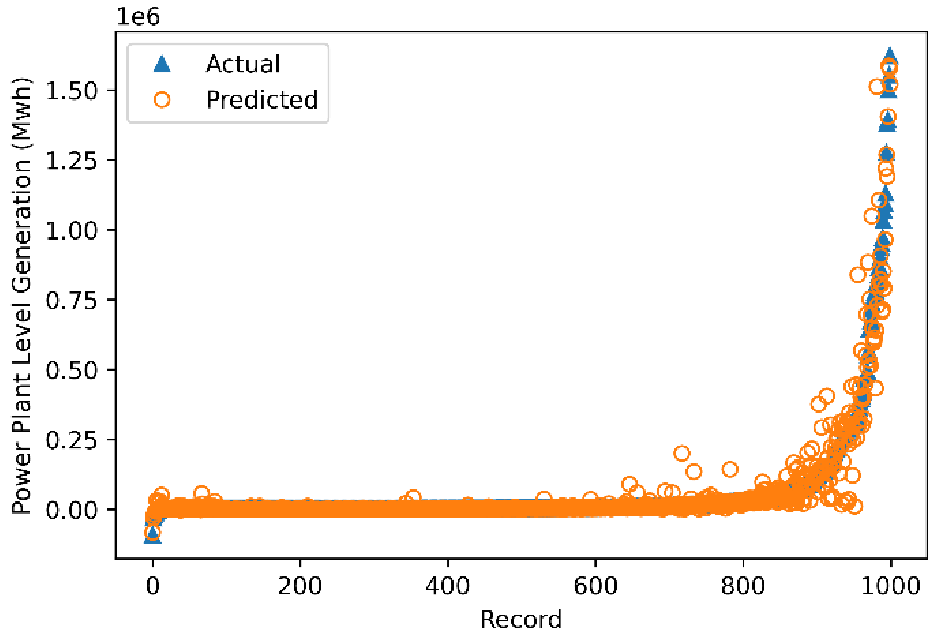 Figure 1: The ANN Architecture utilizing 64-dimensional input space after hashing encoders to predict plant-level generation.
Technical Implementation
- Data Pre-processing: Used Hashing Encoders for Plant Codes to avoid the "curse of dimensionality" that comes with 9,000+ unique identifiers.
- Architecture: The selected ANN utilized a Keras sequential model with two hidden layers (253 neurons each) and ReLU activation, optimized via the "nadam" algorithm.
Performance: ML vs. The Status Quo
The empirical results leave little room for debate. The ML models consistently outperformed the coefficient method across all EIA Annual Energy Outlook (AEO) scenarios.
| Metric | Generation (ANN) | Water Consumption (ANN) | Water Withdrawal (XGBoost) |
|---|---|---|---|
| RMSE Reduction | -8.1% | -59% | -53% |
| R² Score | 0.8597 | 0.8229 | 0.9355 |
Notably, while the model size is manageable, its ability to capture non-linear relationships in water withdrawal is where XGBoost truly shines, reaching an R² of nearly 0.94.
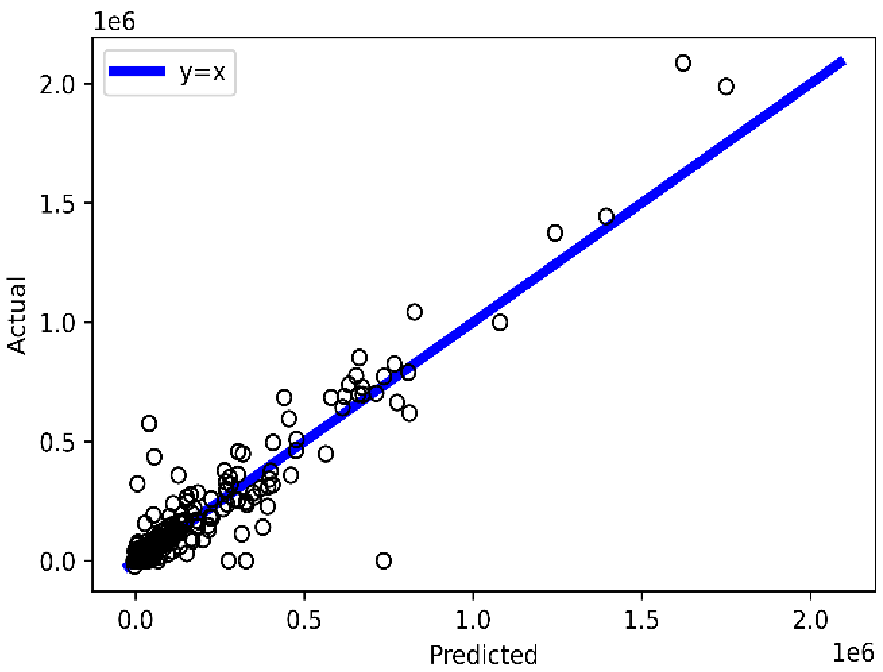 Figure 2: Tight clustering of Predicted vs. Actual values in the ANN model, demonstrating the high fidelity of the predictive engine.
Critical Insight: Why More Features Isn't Always Better
In a fascinating ablation-style test (Table 10), the authors included domain-specific features like "cooling system type" and "water source." Surprisingly, adding these features slightly decreased performance. This suggests that for large-scale grid modeling, the latent operational behavior captured by historical historical generation data is a more reliable proxy than the theoretical mechanical specifications of the plant.
Conclusion & Future Outlook
This research provides the backbone for the next generation of the EWED. By proving that consistent, ML-driven methods can scale across diverse energy technologies, it sets a new standard for national environmental monitoring.
Limitations: The model is still dependent on the accuracy of EIA AEO regional projections. If the regional "input" is flawed, the plant-level "output" will drift. Future Work: Integrating real-time climate telemetry (humidity, local drought indices) could further sharpen water withdrawal predictions in high-stress years.