
The Living Code: Unveiling the Ecological Evolution of Developer Social Networks
Empirical Study on the Evolution of Developer Social Networks
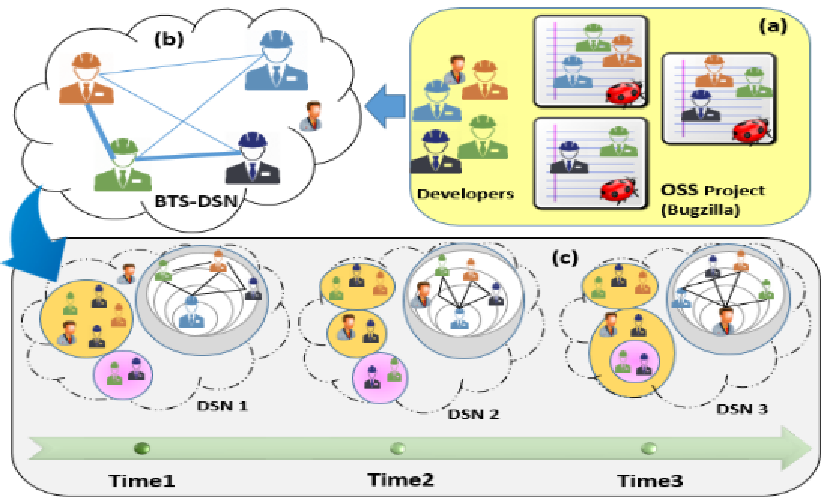
This paper presents a multi-dimensional empirical study on the evolution of Developer Social Networks (DSNs) within Open Source Software (OSS) projects on GitHub. By constructing networks based on Bug Tracking Systems (BTS), the authors apply Social Network Analysis (SNA), biodiversity metrics from ecology, and core-periphery modeling to map the structural and thematic shifts in developer collaboration over time.
TL;DR
Is a software project more than just its code? This study treats Open Source Software (OSS) projects as living ecosystems. By analyzing years of GitHub bug-tracking data, the researchers discovered that Developer Social Networks (DSNs) behave like natural habitats: they follow strict "Small-World" laws, maintain stable biodiversity, and are governed by a tiny, unwavering "core" of developers that persists even as the majority of contributors come and go.
Background: The Social Fabric of Software
In the realm of Open Source, collaboration isn't just a byproduct—it's the engine. Every bug report, comment, and code revision leaves a digital footprint creating an implicit Developer Social Network (DSN). While we often track how code evolves, we rarely track how the human network behind it shifts. This paper provides a 4-year longitudinal study (2009-2013) across major projects like Homebrew, Node.js, and Tornado to understand the "laws of physics" governing professional social coding.
Methodology: Four Lenses on Evolution
The study moves beyond simple stats by employing a multi-layered analytical framework:
- Social Network Analysis (SNA): Treating developers as nodes and collaborations as edges to find structural constants.
- Ecosystem biodiversity: Borrowing from biology to see how "evenly" talent is spread across projects.
- Community Dynamics: Identifying if sub-groups merge, split, or go extinct.
- Core-Periphery Analysis: Classifying the "elite" versus the "occasional" contributors.
Key Insights: The Hidden Constant of Social Coding
1. The Power-Law and the Small World
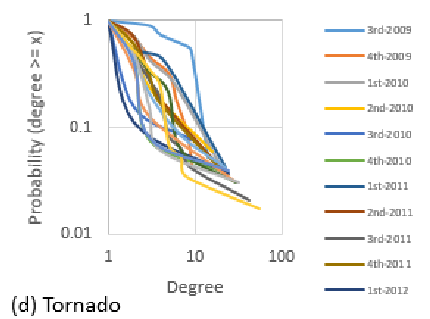
The study found that DSNs are not democratic. They follow a Power Law distribution: a few "super-connectors" handle the bulk of interactions, while the vast majority of developers have very few connections. Despite this, the "Small-World" property holds—most developers are only 2 steps away from any other contributor, ensuring that knowledge can flow quickly, even in massive projects.
2. Software as a Biodiversity Problem
By applying the Shannon Diversity Index, the researchers found that developer ecosystems (like Facebook or Twitter's OSS portfolios) maintain a 55% diversity rate. Interestingly, the "Evenness" (how equal the distribution of developers is across sub-projects) fluctuated between 70% and 80%, indicating that while developers are specialized, the overall ecosystem health remains balanced.
3. The 20/80 Rule and the "Stable Core"
Perhaps the most striking finding is the structural rigidity of these networks.
- Core Developers: Make up less than 20% of the team.
- Peripheral Developers: Make up 80%.
- Stability: Over 90% of developers never change their role. If you are a peripheral contributor, you likely stay one; if you are the core, you remain the backbone.

Critical Analysis & Conclusion
The value of this research lies in its predictive potential. By identifying the five patterns of community evolution (Emerge, Split, Merge, Extinct, Derivation), project maintainers can "diagnose" the health of their community. If a project shows a high "Extinct" pattern (like Homebrew in the study), it indicates a high-intensity environment where contributors fix and leave quickly.
Limitations: The study relies on Bug Tracking Data (BTS). While BTS-DSNs offer a higher signal for maintenance activities, they don't capture the "social" aspects of pull request reviews or documentation help.
Future Outlook: The transition toward "Social Collaboration Patterns Mining" will likely allow AI-driven tools to predict project abandonment before the code itself starts to rot, simply by watching the "biodiversity" of the developer network decline.