
Beyond Utility: Decoding Facebook Adoption in Rural India via Extended TAM
An Empirical Study of Facebook Adoption Among Young Adults in a Northeastern State of India: Validation of Extended Technology Acceptance Model (TAM)
This study investigates Facebook adoption among young adults in Sikkim, India, by validating an extended Technology Acceptance Model (TAM). By integrating Subjective Norm and Perceived Trust into the traditional TAM framework, the researchers confirmed nine significant relationships that drive social media usage in technologically lagging regions.
TL;DR
This empirical study explores why young adults in the landlocked Indian state of Sikkim adopt Facebook. By extending the classic Technology Acceptance Model (TAM) with variables like Subjective Norm and Perceived Trust, the research reveals that social pressure and community trust are just as vital as ease of use for digital adoption in remote regions.
Context: The Digital Divide in Sikkim
India is Facebook’s second-largest market, yet national statistics often mask the nuances of "straggling" states. Sikkim, located in the Himalayan mountains, presents a unique case study: a landlocked, less populous region where social media serves as a vital bridge to the global community. The researchers set out to determine if traditional adoption theories hold true in such a distinct socio-economic landscape.
The "Why": Moving Beyond Simple Usefulness
The traditional TAM focuses on two pillars: Perceived Ease of Use (PEOU) and Perceived Usefulness (PU). However, the authors argue that for a social platform, the "social" element cannot be ignored.
- Subjective Norm: Do your friends and family think you should use it?
- Perceived Trust: In an era of data leaks, do you trust the platform with your identity?
Methodology: A Structural Approach
The study analyzed 202 usable responses from college students and faculty (ages 19–39). Using Structural Equation Modeling (SEM), they mapped the interplay between seven constructs.
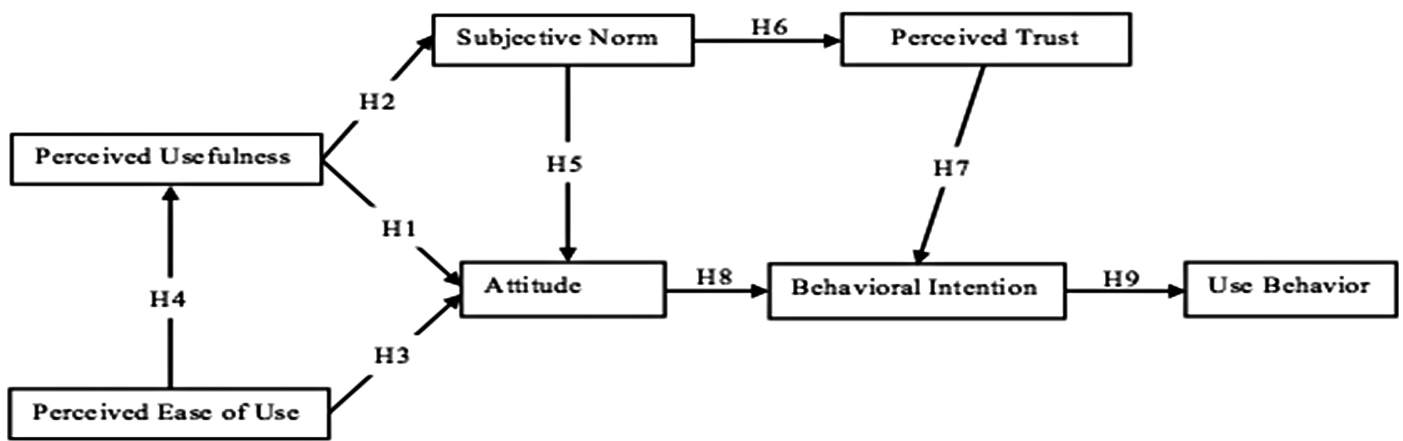 Figure 1: The proposed research model extending TAM with social and trust dimensions.
Key Findings & Results
The empirical results were strikingly robust. The model demonstrated that:
- Attitude is King: The strongest predictor of Behavioral Intention was the user's Attitude (Path Coefficient: 0.849).
- Social Influence Matters: Subjective Norm significantly impacted both Attitude and Trust. If a user’s "significant others" use Facebook, the user is more likely to trust the system.
- Trust as a Catalyst: Even in remote regions, trust significantly shapes the intention to engage (PC: 0.226).
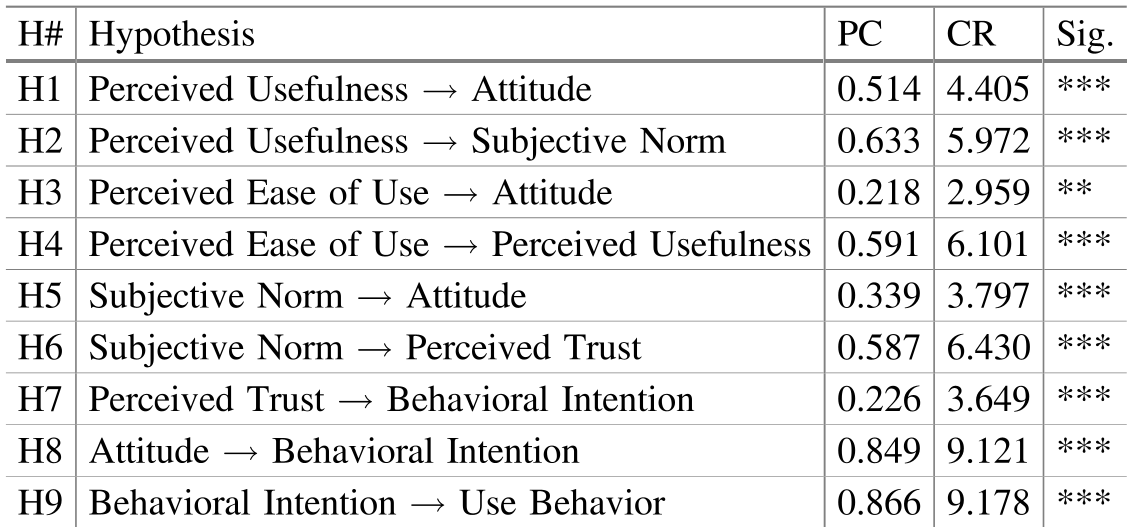 Table 6: Standardized path coefficients and significance levels for the hypothesized relationships.
Deep Insight: The Feedback Loop of Usefulness
Interestingly, the study found that Perceived Usefulness had a powerful impact on Subjective Norm (0.633). This suggesting an "advocacy effect": when young adults find Facebook useful (e.g., for education or community updates), they actively refer it to their social circles, creating a self-reinforcing loop of adoption within the community.
Limitations and Future Outlook
While the study offers a high explanatory power (84% for intention), it is limited by its focus on young adults and students. The "professional" adoption (e.g., LinkedIn) or adoption among older, less tech-savvy demographics might yield different weighting for "Ease of Use."
Conclusion
For developers and researchers, the takeaway is clear: In emerging markets, technology is not just a tool; it is a social experience. To succeed in "digitally trailing" regions, platforms must prioritize social validation and trust-building features alongside simple UI/UX improvements.