
Decoding GSN Adoption: Privacy Paradox or Social Pressure?
An Empirical Study on GSN Usage Intention: Factors Influencing the Adoption of Geo-Social Networks
This empirical study explores the determinants of user intention to adopt Geo-Social Networks (GSNs). By proposing a model centered on privacy concerns, trust, social influence, and risk perception, the authors validated their hypotheses through a survey of 396 users, identifying privacy and social pressure as dominant adoption factors.
TL;DR
Why do we share our locations on apps like Foursquare or Facebook despite knowing the risks? This paper conducts an empirical deep-dive into Geo-Social Networks (GSNs), discovering that while users are deeply worried about privacy, their final decision to use an app is steered far more by Social Influence and Provider Trust than by the actual perception of risk.
Context: The GSN Adoption Barrier
As of the study's timeframe, nearly 64% of US adults owned smartphones, yet a mere 12% utilized GSN check-in features. This gap defines a critical hurdle for developers: location data is uniquely sensitive because it reveals medical status, personal interests, and even home security vulnerabilities. The authors set out to map the psychological coordinates that lead a user to tap "Share Location."
The Psychological Map (Methodology)
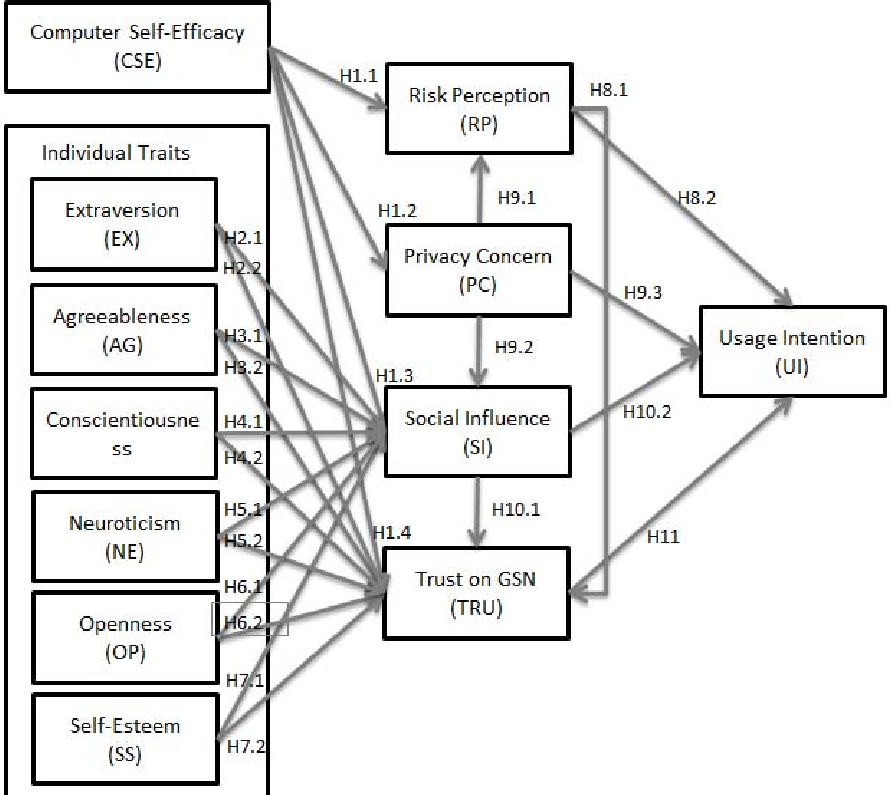
The researchers constructed a structural model linking individual prerequisites (like Computer Self-Efficacy and Personality) to the core decision-making pillars:
- Privacy Concerns: Anxiety over secondary data usage.
- Trust: Faith in the provider’s competence and benevolence.
- Social Influence: The pressure to comply with group norms.
- Risk Perception: The anticipated loss from data abuse.
Key Insights: What Drives Users?
The results from the 396-person survey revealed several counter-intuitive truths:
1. The Power of the Crowd
Social Influence had a massive positive effect on both trust (β = 0.174) and usage intention (β = 0.447). If your peers are on the platform, your brain significantly discounts the perceived risks and elevates the perceived reliability of the service.
2. The "Self-Efficacy" Double-Edge
Users with high Computer Self-Efficacy (those who know their way around technology) actually have higher privacy concerns. They understand exactly how data can be scraped and misused, making them more cautious than tech-illiterate users.
3. The Broken Link: Risk vs. Action
One of the most striking findings was that Risk Perception did NOT significantly impact Usage Intention (H8.2). While users acknowledged that sharing location is risky, those risks didn't actually stop them from using the apps. This suggests a "Privacy Paradox" where users express concern but act based on utility and social pressure.
Deep Dive: Does Personality Matter?
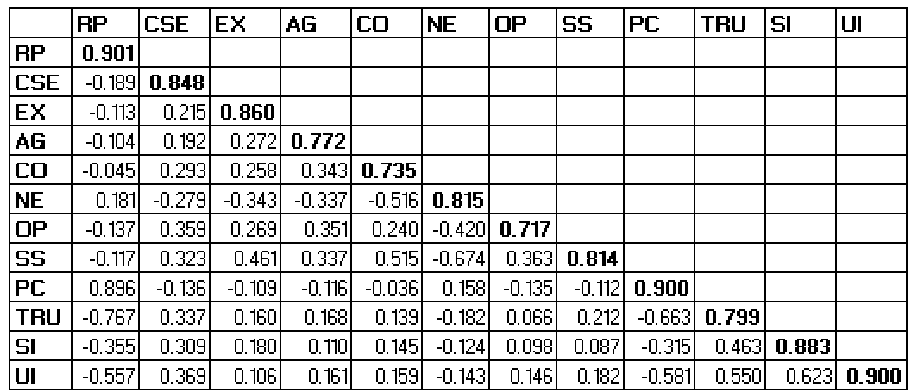
Surprisingly, the "Big Five" personality traits (Extraversion, Agreeableness, etc.) had very little direct impact on trust or social influence. The study suggests that GSN adoption is a situational and social behavior rather than one dictated by inherent personality types. Note that only Self-Esteem and Openness showed marginal significance in influencing trust.
Critical Analysis & Conclusion
Takeaway for Developers
If you are building a location-sharing app, "minimizing risk" might not be your best growth strategy. Instead, maximizing social connectivity and building brand trust are the real levers for adoption. Users are willing to overlook risks if the social reward is high enough.
Limitations
- Demographic Bias: The study was conducted via MTurk and heavily leaned toward North American participants. Privacy attitudes in Europe (GDPR-influenced) or Asia might significantly differ.
- Static Snapshots: The survey measures intention at a single point in time, failing to account for how trust fluctuates after a major data breach (e.g., Cambridge Analytica).
Final Thought
This paper serves as a foundational reminder that in the digital age, the human desire for "Social Reinforcement" often outweighs the logical instinct for "Privacy Preservation." As we move into an era of AR and ubiquitous sensing, understanding this tension is more vital than ever.