
Beyond the Screen Time Myth: Decoding the Digital Anatomy of Internet Addiction
An empirical study on symptoms of heavier Internet usage among young adults
This empirical study explores the relationship between heavy Internet usage and mental health symptoms among college students by correlating real-world network traffic data with the Internet Related Problem Scale (IRPS). It identifies specific behavioral markers—such as high application switching (entropy) and specific application usage (gaming, IM)—that serve as indicators for symptoms like introversion, craving, and loss of control.
TL;DR
Researchers from Missouri S&T and Duke University have moved beyond subjective surveys to analyze real-world network traffic as a proxy for mental health. By monitoring 69 students over two months, they discovered that it isn't just how much time you spend online that matters, but how you spend it. High levels of multi-tasking (measured by entropy) and a preference for gaming over social media are the true smoking guns of potential digital addiction.
The Problem: The Flaw of Self-Reported Data
Until now, the "gold standard" for studying Internet addiction has been the survey. However, we are notoriously bad at estimating our own digital footprints. We underestimate hours, forget the five-minute "check-ins" that happen 50 times a day, and often answer questions in ways that make us look more socially adjusted.
The authors argue that to understand the true impact of the Internet on mental health—specifically symptoms like introversion, craving, and loss of control—we need to look at the raw data: the packets, the protocols, and the literal randomness of our browsing habits.
Methodology: Passive Monitoring & Shannon Entropy
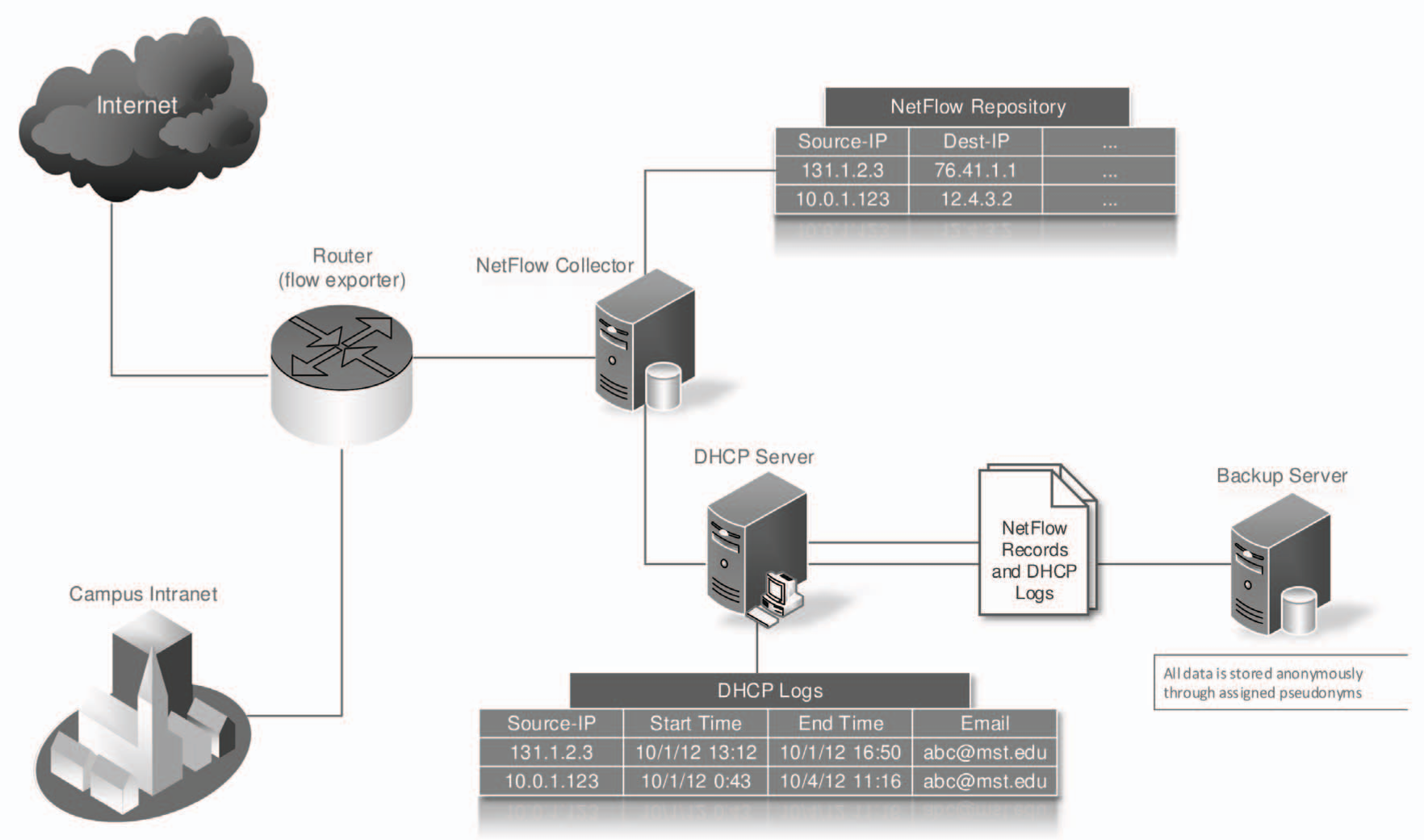
The study’s brilliance lies in its non-intrusive architecture. By leveraging Cisco NetFlow data at the campus router level, researchers could see what type of traffic was occurring (e.g., Gaming, P2P, Web) without looking at the private content of the messages.
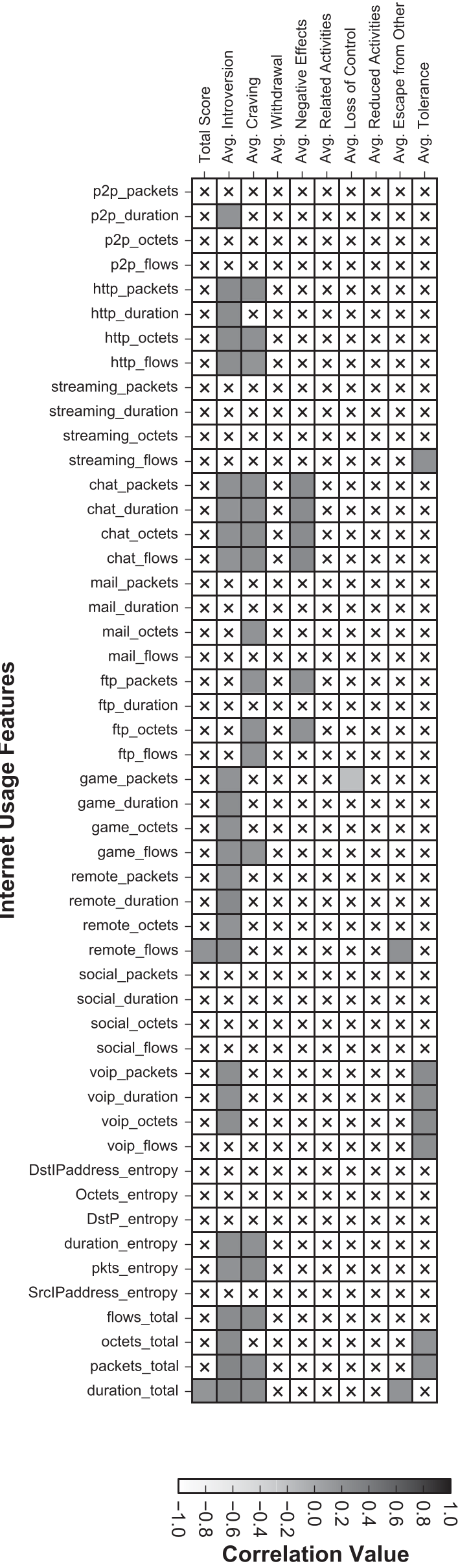
One of the most sophisticated metrics used was Shannon Entropy. In this context, entropy measures the "unpredictability" of a user's behavior. High entropy suggests a user is constantly switching between tasks—a digital restlessness that the study found to be a key marker of "craving."
Key Insights: Why Your "Social" Life Might Save You
The results provide a fascinating counter-narrative to the idea that social media is the primary driver of digital malaise.
1. The Social Networking Paradox
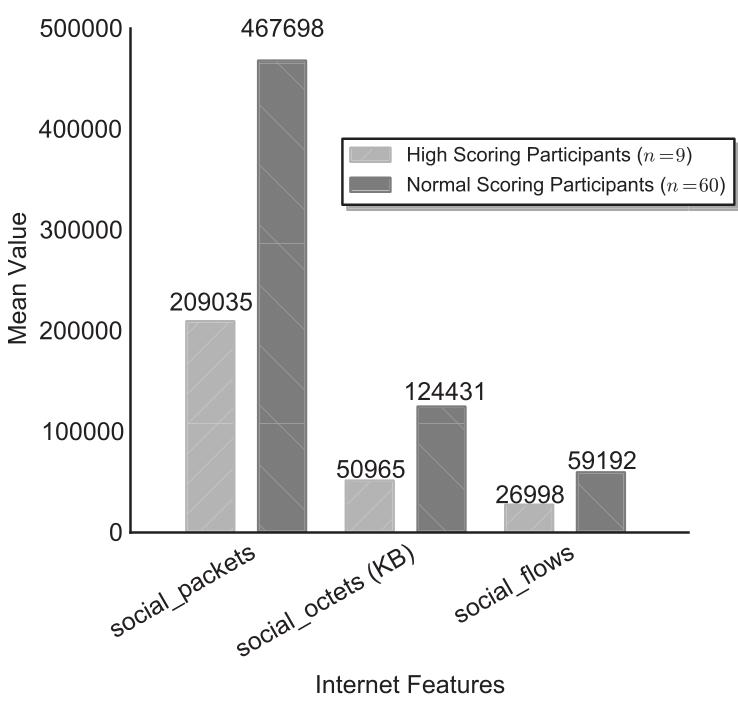
The study found that "Heavy Users" (those scoring high on the addiction scale) actually used Facebook and Twitter significantly less than normal users. Instead, they gravitated toward gaming and instant messaging.
- The Insight: Social networking (Facebook/Twitter) requires maintaining a "real-world" identity. Heavier users seem to prefer pseudo-anonymous environments (Gaming/Chat) where they can escape their physical identity—a finding highly correlated with introversion.
2. The Entropy of Craving
There was a statistically significant correlation between Duration Entropy and craving symptoms.
- The Interpretation: The "loss of control" associated with addiction often manifests as fragmented, chaotic browsing. If your digital sessions are highly randomized and lack a central focus, it is a physiological signal of "staying online longer than intended."
Experimental Results: The Data Speaks
The statistical difference in social media usage between "Normal" (Group N) and "Heavy" (Group H) users was stark. Group N users accumulated over twice the amount of bytes in social networking compared to Group H.
Critical Analysis & Conclusion
This paper serves as a vital proof-of-concept for Digital Phenotyping. Instead of asking a patient if they feel "introverted," a clinician could theoretically look at the ratio of gaming traffic to social media interactions as a more objective biomarker.
Limitations: The sample size (69 students) and the specific demographic (Computer Science freshmen) mean we cannot yet generalize these findings to the entire population. Furthermore, as encrypted traffic (HTTPS) becomes the universal standard, identifying specific applications solely via ports and IP addresses is becoming increasingly difficult.
Future Outlook: The next frontier is integrating these traffic statistics with content-aware analysis (via privacy-preserving edge computing) to see if what we read is as important as how we access it. For now, the takeaway is clear: if you find yourself compulsively switching tabs in a high-entropy loop, it might be time to step away from the router.