
The Social Broker: Bridging the Chasm Between Telco Networks and Social Graphs
Enabling opportunistic communications in a Social Communications Broker Architecture
The paper introduces a "Social Communications Broker" (SB), a gateway architecture designed to bridge the gap between Online Social Networks (OSN) and Operator Networks (ON). It enables "Social Communications"—services that integrate social graphs with telco capabilities—primarily validated through the 'Movistar Contacta' Facebook application.
TL;DR
Telecommunications and Social Networks have long been parallel universes. This paper proposes the Social Communications Broker (SB), a middleware architecture that merges the "Communication Identity" (your phone number) with your "Social Identity" (your Facebook ID). By doing so, it enables "opportunistic communications"—spontaneous calls or texts triggered by social interactions—while keeping private data like phone numbers hidden.
Background: The Identity Silo Problem
In 2011, your social life lived on Facebook, but your communication life lived on your SIM card. The authors identify a missed opportunity: Social Networks are rich in context (shared interests, FOAF relationships) but lack synchronicity (direct, real-time calling). Conversely, Telco Operators provide the ubiquity of voice and text but lack the social intelligence to know why or when you might want to reach out to someone.
The technical bottleneck? A "Social Identity" is often a meaningless URI in a telco context, and an "MSISDN" (phone number) is a privacy-sensitive string of digits that shouldn't be blasted across social networks.
Methodology: The Social Broker Architecture
The proposed solution is a three-tier gateway that acts as a translator and security guard.
1. Social Network Adaptors (SNA)
These are the specialized "front-ends." They talk to OSN APIs (like Facebook’s Developer Platform) to fetch user data and authenticate social requests.
2. Operator Services Adaptors (OSA)
These are the "back-ends." They translate high-level requests (e.g., "Start a call") into specific telco protocols like SOAP, Parlay X, or SIP.
3. The Social Broker Core (SBC)
The "brain" of the operation. It maintains the critical mapping between social IDs and phone numbers. It also enforces "Terms of Service" (e.g., daily call limits) to prevent spam.
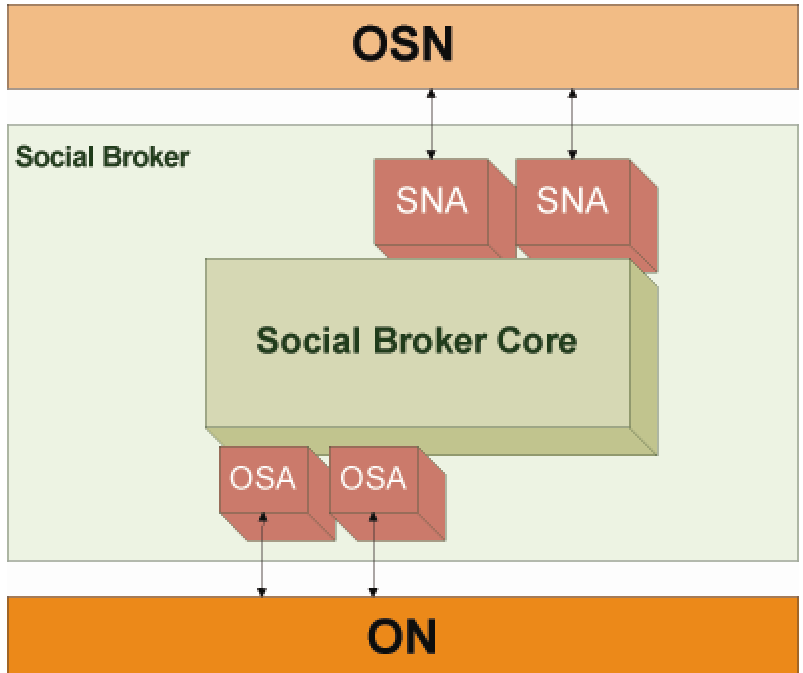 Figure 1: High-level generic architecture of the Social Broker.
Validating the Model: Movistar Contacta
To prove the SB works, the authors deployed Movistar Contacta (MC) on Facebook.
- The Workflow: A user clicks a "Call" button on a friend’s profile.
- The Magic: The SB maps the Facebook ID to a phone number and initiates a click-to-dial sequence. The network calls both users and joins them.
- Privacy: Neither user ever sees the other’s phone number; the network acts as a trusted intermediary.
The Service Flow in Action
The process involves a complex handshake across the three modules to ensure the user hasn't exceeded their daily free call limit and that the privacy settings of the "callee" are respected.
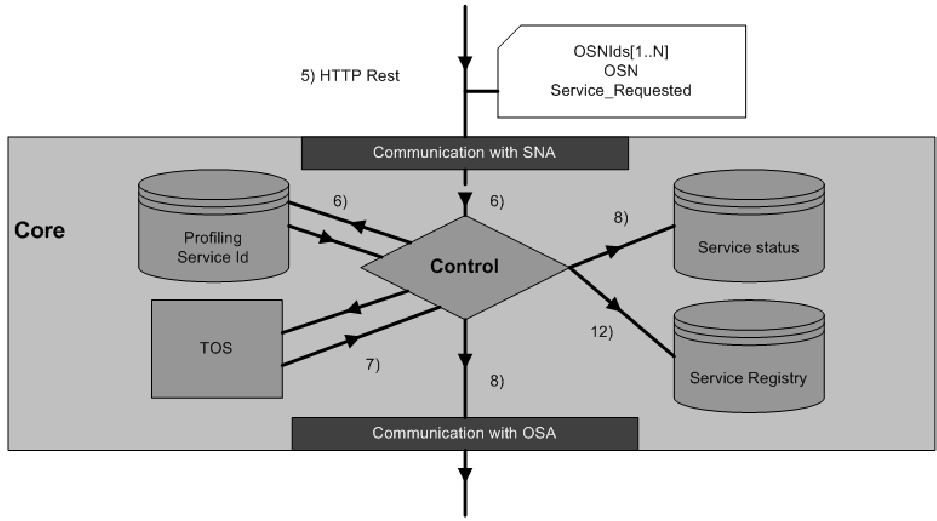 Figure 2: The request flow through the Social Broker Core.
Critical Analysis: Why This Matters
The real value of this paper isn't just the Facebook app—it's the Bi-directional Integration.
- OSN to ON: Adding a "human touch" to the digital wall.
- ON to OSN: Using telco triggers (like an SMS or location change) to update social contexts. Imagine your phone automatically notifying your "Family" group on Facebook when you land in a new city—this is the "Opportunistic Communication" the authors envision.
Limitations
While the architecture is robust, it relies heavily on telcos having access to social APIs. In the modern era of "closed gardens" and heightened data privacy regulations (like GDPR), the SBC would need a much more sophisticated decentralized identity (DID) layer to function without being a central point of failure for privacy.
Conclusion
The Social Broker provides a blueprint for how legacy infrastructure (Telco) can stay relevant in a social-first world. By turning a phone number into a social asset rather than just an address, operators can move further up the value chain from "bit pipes" to "social enablers."
Takeaway: The "social graph" is the most powerful routing table ever created. Any communication architecture that ignores it is destined for obsolescence.