
TSE: Building Trust in Decentralized Mobile Social Networks without a Middleman
Enabling Trustworthy Service Evaluation in Service-Oriented Mobile Social Networks
This paper proposes a Trustworthy Service Evaluation (TSE) system tailored for Service-Oriented Mobile Social Networks (S-MSNs). It introduces two frameworks, bTSE and SrTSE, which utilize hierarchical and aggregate signatures to ensure review integrity and detect Sybil attacks without a centralized authority.
TL;DR
Trust is a luxury in decentralized mobile networks. This paper introduces the TSE (Trustworthy Service Evaluation) system, which allows users to review local vendors (like restaurants or shops) in a way that the vendors cannot delete negative feedback or fake positive ones. By using hierarchical aggregate signatures and a clever Sybil-resisted pseudonym design, the system ensures that "cheaters" (both vendors and users) are revealed by the math itself.
The Problem: The "Vendor-in-the-Middle" Paradox
In a typical Mobile Social Network (S-MSN), a vendor provides a service and hosts the review system locally. This creates a massive conflict of interest:
- Rejection Attacks: A restaurant might "drop" a packet containing a 1-star review.
- Modification Attacks: The vendor could edit the content of stored reviews or insert fake praise.
- Sybil Attacks: Malicious users could use 100 different pseudonyms to tank a competitor's reputation.
Without a central authority like Yelp or TripAdvisor to verify these interactions, how do we know the reviews are real?
Methodology: Chains, Tokens, and Math as Law
1. The Power of User Cooperation (bTSE)
The core insight of the basic TSE (bTSE) is that the vendor shouldn't handle reviews alone. Instead, reviews are submitted in an integrated chain form.
- Tokens: The vendor issues a limited number of "synchronization tokens." A user can only submit a review if they hold a token.
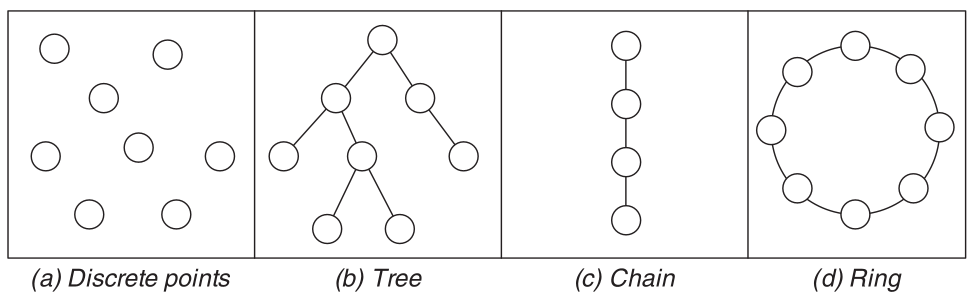
- The Chain: When User A finishes, they pass the token and their review to User B. User B aggregates their review with User A's and submits both to the vendor.
- Hard to Break: Because each review is cryptographically linked to the previous one (like a mini-blockchain), the vendor cannot delete a middle link without breaking the entire chain.
2. Hunting Sybils with Trapdoors (SrTSE)
To solve the Sybil problem, the authors developed SrTSE. Each user is given pseudonyms that look random but contain a mathematical "trapdoor."
- Identity Exposure: If a user signs two different reviews in the same time slot, a third party can combine the two signatures to solve for the user's real identity. This "solve-for-x" approach makes Sybil attacks self-defeating.
Experiments: More Speed, More Accuracy
The authors tested the system using real-world mobility traces. The results prove that cooperation isn't just safer—it's faster.
- Submission Rate (SR): Under rejection attacks (where the vendor actively tries to block bad news), bTSE maintained a significantly higher success rate (nearly 100% improvement over non-cooperative systems).
- Submission Delay (SD): Even with the overhead of passing tokens between peers, the cooperative nature allowed reviews to "hop" to the vendor more efficiently, reducing delay by 75%.

Critical Insight & Conclusion
The beauty of this work lies in how it turns user mobility—usually a challenge for network stability—into a security feature. By relying on opportunistic encounters between users to "audit" each other's reviews, the system creates a self-healing web of trust.
Takeaway: Future decentralized apps (DApps) shouldn't just look for "lighter" encryption; they should look for "smarter" cooperation protocols where the physical movement of users provides the foundation for digital trust.