
Leveraging the "Friendship" Factor: A New Frontier in Mobile Cloud Energy Efficiency
Energy Consumption Optimization Using Social Interaction in the Mobile Cloud
The paper proposes a social-aware resource offloading framework designed to optimize energy consumption in mobile opportunistic clouds. By leveraging the Social Centrality principle and a "Friendship" degree model, it dynamically migrates partitionable, energy-intensive tasks from resource-constrained mobile nodes to more capable peers or cloud infrastructure.
TL;DR
To tackle the chronic battery drain of mobile devices, this research moves beyond simple hardware fixes. It introduces a Socially-Oriented Offloading Framework that uses human social patterns (Centrality) to decide when and where to "borrow" processing power from nearby devices, extending battery life by up to 48%.
Background: The Mobile Energy Crisis
As we shift toward resource-heavy applications like mobile gaming and real-time multimedia, our smartphones hit a physical wall: the battery. While "Cloud Offloading" (sending tasks to a server) is a known solution, it often fails in mobile environments where users move unpredictably. The authors of this paper argue that the secret to reliable offloading isn't just better signal—it's Social Trust.
The Core Insight: Social Centrality as a Network Anchor
The paper's "Aha!" moment is the application of the Social Centrality Principle. In a crowd, certain individuals act as "hubs"—they are socially connected to many others and follow predictable movement patterns.
By modeling these interactions using a weighted graph, the system calculates a Friendship Degree (). This isn't just a label; it’s a mathematical metric that estimates the probability of a neighbor remaining within range long enough to complete a task.
The Methodology: Friendship + Physics
The framework operates on two key pillars:
- Mobility Modeling: Using Fractional Brownian Motion (FBM), the system predicts node movement without assuming a fixed path.
- Interaction Matrix: A dynamic matrix (in the simulation) tracks the "Ageing" of social ties. If you haven't "interacted" with a node recently, its reliability score decays.
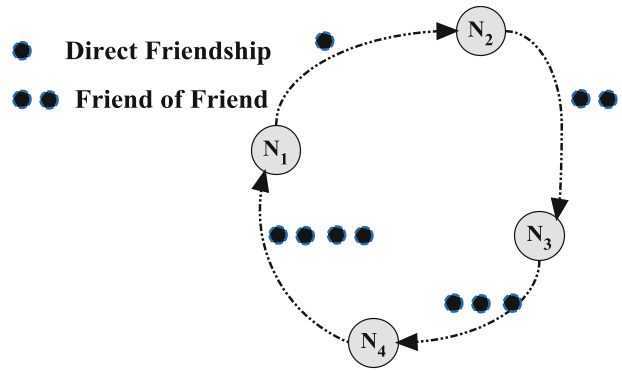 Fig 1: The Social Interaction and Offloading Logic.
Experimental Battleground: Gaming on the Edge
The authors tested their hypothesis by simulating 150 mobile users playing interactive games—an environment that is notoriously "GPU/CPU hungry."
Key Breakthroughs:
- Lifetime Extension: While standard offloading helps, the Social-Aware version outperformed prior SOTA methods by nearly 50% in high-density scenarios (150 nodes).
- Execution Efficiency: By offloading tasks to socially "stable" peers via Wi-Fi/WLAN, the execution time was slashed significantly compared to using cellular (GSM/GPRS) or non-social ad-hoc connections.
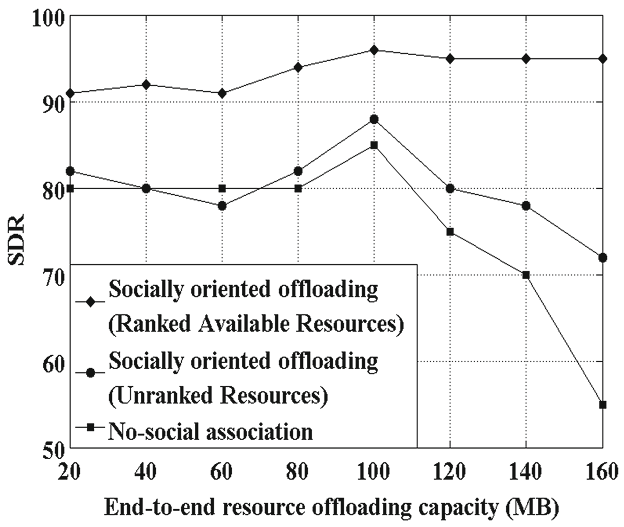 Fig 2: Comparative Analysis of Successful Delivery Rates vs. Friendship Degree.
Critical Analysis: Why This Matters
Most offloading research treats every node as a faceless entity. This paper treats nodes as entities with history. By prioritizing "Friends" (nodes with high interaction frequency), the system naturally gravitates toward more stable, lower-latency connections.
The Limitations:
- Privacy & Security: The paper assumes nodes are willing to share their "Centrality" data, which raises significant privacy concerns in a real-world deployment.
- Incentives: Why should a "Friend" node use their battery to process your task? A future iteration would need a "Social Credit" or "Token" economy to reward the provider.
Conclusion
This work highlights a shift in Cloud Computing: the "Cloud" is no longer just a distant data center; it is the collective power of the people standing next to you. By mapping the digital topology onto social structures, we can create more resilient, energy-efficient mobile ecosystems.
Takeaway for Devs/Researchers: If you are building for the edge, stop looking only at the RSSI (Signal Strength). Look at the Temporal Stability and Social Context—that’s where the real reliability hides.