
To Cooperate or Not: Solving the Reliability-Energy Dilemma in Dense WSNs
Energy efficiency of dense wireless sensor networks: to cooperate or not to cooperate
This paper investigates binary decentralized detection in dense Wireless Sensor Networks (WSNs), comparing Parallel Fusion Architecture (PFA) with a newly proposed Cooperative Fusion Architecture (CFA). Research focuses on optimizing energy efficiency and reliability under bandwidth constraints using a "consensus flooding protocol" for node collaboration.
TL;DR
In a dense Wireless Sensor Network (WSN), is it better for sensors to speak directly to the base station or talk among themselves first? This paper presents a rigorous comparison between Parallel Fusion (PFA) and Cooperative Fusion (CFA) architectures. By introducing a novel consensus flooding protocol, the authors demonstrate that cooperation is the ultimate "safety net" for detecting weak signals, provided the energy cost of talking to neighbors (inter-node overhead) is kept under control.
Background: The Decentralized Detection Challenge
In massive WSNs—think of chemical leak sensors in a factory or acoustic sensors tracking vehicles on a battlefield—nodes are usually cheap, battery-powered, and bandwidth-limited. The goal is "Decentralized Detection": individual nodes make a local observation, compress it to 1-bit (Yes/No), and send it to a Fusion Center (FC).
The catch? In PFA, if the Phenomenon of Interest (PoI) is weak, most nodes miss it, leading to a high global error rate. While Cooperative Diversity suggests nodes should help each other, doing so over a large scale often leads to a "broadcast storm" that drains batteries instantly.
Methodology: The Consensus Flooding Protocol
The authors propose a Cooperative Fusion Architecture (CFA). Instead of every node shouting at the FC, nodes use a regulated voting system.
The Core Mechanism:
- Local Sensing: Nodes detect the PoI.
- Consensus Flooding: Only nodes that detect the PoI broadcast a packet.
- Voting Threshold (): Neighboring nodes listen; they only switch their decision to "Present" if they hear more than neighbors. This prevents a single faulty node from triggering a false-alarm chain reaction.
- Final Reporting: After a few iterations, nodes send their agreed-upon decision to the FC.
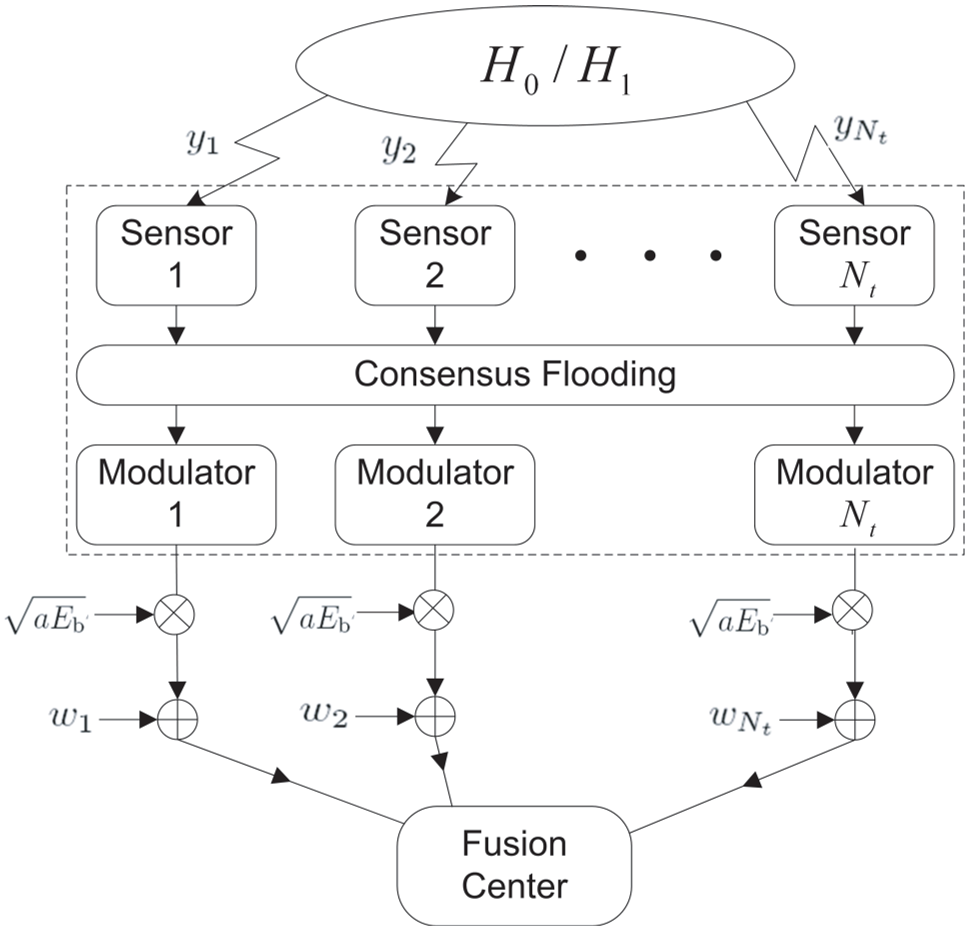 Figure 1: The Cooperative Fusion Architecture (CFA) allows nodes to reach a consensus locally.
The study uses a realistic Log-Normal Shadowing model for inter-node links, unlike many theoretical papers that assume a perfect "disk" model. They derive the "Degree of Connection" (), which is critical for ensuring the network is connected enough to reach a consensus but sparse enough to save energy.
Performance: When Does Cooperation Win?
The results reveal a fascinating trade-off governed by PoI intensity and node density.
1. The Reliability Gain
When PoI intensity is weak (only a few nodes are near the source), PFA's error rate is unacceptably high. CFA, however, leverages spatial diversity through neighbor communication, drastically reducing the probability of error ().
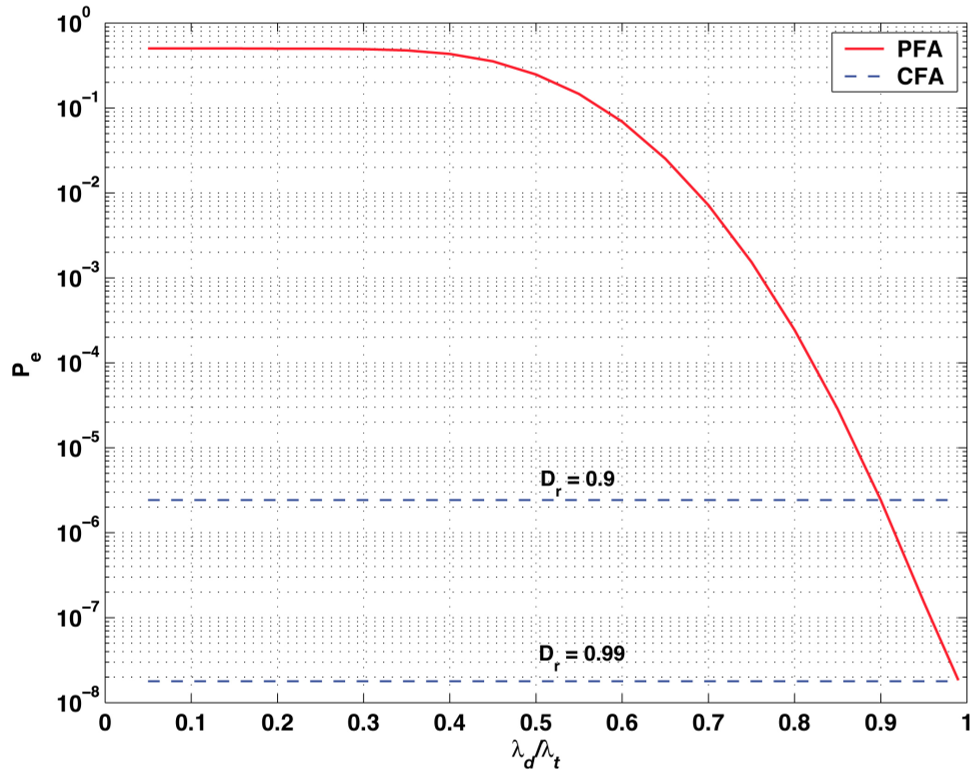 Figure 2: CFA maintains high reliability even when PoI intensity is low, whereas PFA fails.
2. The Energy "Sweet Spot"
Cooperation isn't free. The authors introduce , the ratio of flooding energy to transmission energy.
- Low : Cooperation is almost always better.
- High (): If broadcasting to neighbors consumes 10x more energy than reaching the FC, PFA is more efficient for strong signals.
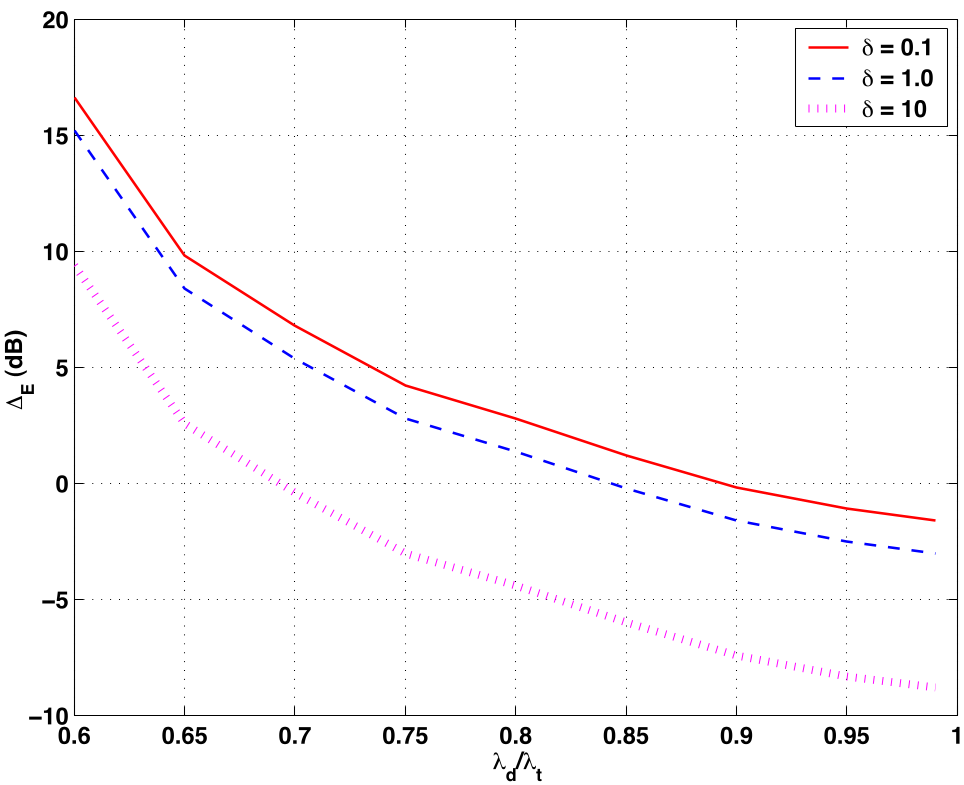 Figure 3: Energy gain vs PoI Intensity. Note how the gain drops below 0dB (meaning PFA is better) as the flooding cost increases.
Critical Insight & Conclusion
The genius of this work lies in quantifying the Inductive Bias of the network: in dense clusters, the probability of multiple neighbors experiencing a false alarm simultaneously is low. By setting an appropriate voting threshold , the network acts as a distributed low-pass filter, smoothing out noise and amplifying the true signal.
Takeaway for Engineers: If you are designing a WSN for "Black Swan" events (rare, weak signals), implement CFA. If your target is always loud and clear (strong signal), PFA is the leaner, greener choice.
Limitations & Future Work
The model assumes the Fusion Center is at a fixed distance with identical path loss for all nodes. In real-world deployments (e.g., urban canyons), fading to the FC varies. Future extensions should look at Opportunistic Relaying, where nodes dynamically choose to cooperate only when their direct link to the FC is shadowed.