
OEERBC: Balancing Energy and Delay in Mobile Social Networks via Optimal Stopping
A Routing Strategy with Energy Optimization Based on Community in Mobile Social Networks
The paper introduces OEERBC (Optimal Energy Efficiency Routing strategy Based on Community), a single-copy routing protocol for Mobile Social Networks (MSNs). It leverages community structures and Optimal Stopping Theory to select relays that minimize a joint cost function of energy and delay.
TL;DR
Researchers have developed OEERBC, a routing strategy that treats mobile users as part of social "communities." By applying Optimal Stopping Theory, the system mathematically determines the best moment to hand off a message to a relay node, drastically reducing energy consumption while maintaining high delivery rates.
Context: The Social Fabric of Data
In Mobile Social Networks (MSNs), human movement isn't random. We follow patterns: classrooms, offices, and coffee shops. These are "communities." While traditional "Epidemic" routing floods the network with copies (high energy cost), and "PROPHET" uses history (high overhead), OEERBC looks at the Expected Reward of waiting for a better relay.
The Problem: The Cost of Opportunism
In opportunistic networks, you never know when you'll meet the "perfect" relay.
- If you pass the message too early, you might pick a sub-optimal path with high delay.
- If you wait too long, the carrier's battery dies or the message times out.
Existing SOTA methods like CAOR or SimBet focus heavily on utility metrics but lack a rigorous mathematical framework to decide when to stop looking for a better relay.
Methodology: Markov Chains & Optimal Stopping
The authors break their solution into three sophisticated layers:
1. The Community Connectivity Network
Nodes are mapped to communities based on visit probability . A "bridge" is formed when a user visits multiple communities, enabling inter-community routing.
2. Markov Chain Modeling
The authors use a continuous-time Markov Chain to calculate the Expected Energy () and Expected Delay ().
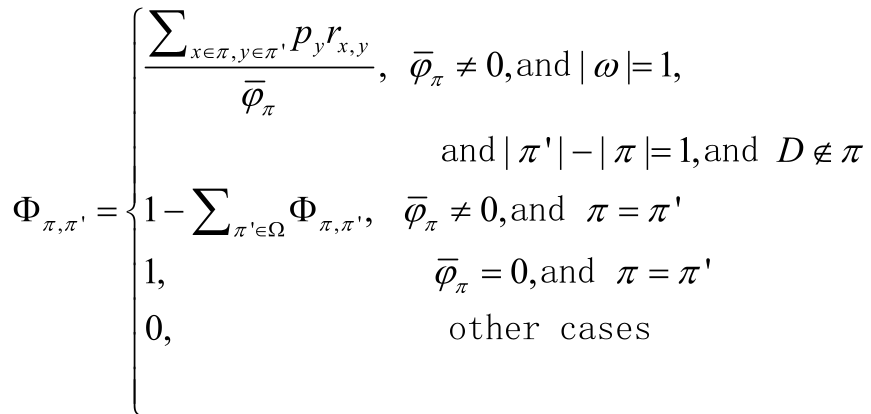 The transition matrix calculates the probability of moving from one community state to another.
3. The Optimal Stopping Rule
This is the "secret sauce." The relay selection is treated like the "Secretary Problem." A carrier observes a sequence of potential relays. For each, it calculates a Comprehensive Cost: The carrier stops and hands over the message only if the current relay's optimized value exceeds the Optimal Expected Reward .
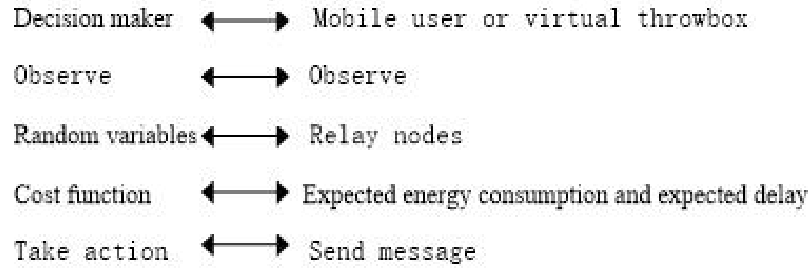 Figure 1: Mapping the routing problem to Optimal Stopping Theory.
Experimental Validation
The authors compared OEERBC against Epidemic, SimBet, and CAOR.
- Energy Consumption: OEERBC showed a clear advantage. As the number of communities increased, the average energy remained significantly lower than competitors because it avoids redundant flooding.
- Average Delay: While Epidemic has the lowest delay (due to flooding), OEERBC significantly outperforms SimBet. It effectively prunes long-delay paths by using the Markov model to predict future encounters.
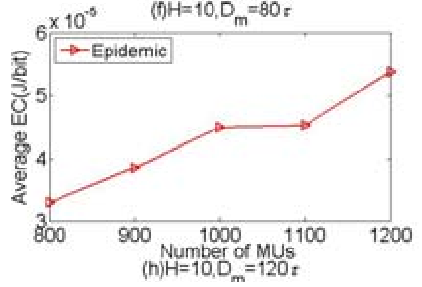 Figure 2: Energy consumption comparisons showing OEERBC's superiority across different node counts.
Critical Insight & Summary
The brilliance of this work lies in the mathematical rigor applied to behavioral intuition. Instead of relying on simple heuristics (like "meeting frequency"), it uses Optimal Stopping Theory to provide a stopping time . This ensures that every hand-off is statistically justified.
Limitations: The model assumes users are generally willing to help (Help Probability in simulations). In real-world scenarios, selfish nodes or exhausted batteries could disrupt the Markovian transitions.
Future Outlook: Integrating Load Balancing (ensuring one popular "social butterfly" node doesn't do all the work) is the next logical step for this framework.