
Gamifying Trust: How Rewards Can Solve the Writer's Dilemma in Social Networks
Engagement and Cooperation in Social Networks: Do Benefits and Rewards Help?
This paper proposes a game-theoretic model to investigate how gamified mechanisms, specifically point-based rewards, influence user engagement and cooperation in online social networks. By simulating a "write-rate game" in a forum-like setting, the study demonstrates that rewarding honest interactions significantly increases active participation and mutual trust compared to traditional or non-reflective point systems.
TL;DR
Researchers from CSIRO have developed a game-theoretic model proving that "positive reinforcement" for honest behavior is the key to thriving online communities. By rewarding honest members even when they are attacked by "trolls" or "defectors," the system can increase engagement by over 300% and significantly boost the overall trustworthiness of the network.
The Social Network Stalemate: Why Engagement Withers
Building a successful online community is a balancing act. Every time a user posts (the Writer) or another user reacts (the Rater), they face a strategic choice. Should I be honest, or should I "game" the system for quick popularity?
Traditional forums often ignore this underlying tension. When a member's honest contribution is met with unfair negative ratings, their Engagement drops—they lose interest. Conversely, if a malicious writer can gain massive popularity through hoaxes before being caught, the community's Cooperation (Social Capital) is eroded. The authors argue that modern networks need more than just a "like" button; they need a mechanism that makes honesty the most profitable strategy.
Methodology: The Write-Rate Game
To test their hypothesis, the authors modeled a social forum as a series of interactions between Writers and Raters, similar to the Prisoner's Dilemma. They compared four settings:
- No Points: The baseline "low-stakes" environment.
- Non-Reflective: Points are earned for any action, regardless of quality.
- Reflective: Your points depend on how the other person reacts to you (punishing victims of trolls).
- Reward for Honesty: The proposed solution where honest actors are protected and rewarded regardless of the opponent's choice.
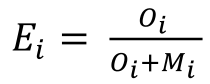
In the Reward for Honesty model, if you are honest and your partner is dishonest, you still receive your points, while the "attacker" gets zero. This removes the "temptation to defect" that plagues most social interactions.
Experimental Results: The Multiplier Effect
The simulation involved 400 members in a grid layout performing 160,000 interactions. The results were stark:
- Engagement Explosion: The engagement factor in the rewarded setting hit 0.56, compared to a dismal 0.12 in the no-points setting.
- Trust Building: The Cooperation Factor reached 0.81, suggesting that when honesty pays off, the community naturally filters out toxic behavior.
- Social Recognition: Using "Badges" as a metric, the study showed that the population of consistently honest users grew from 16% to 61.5% under the reward model.
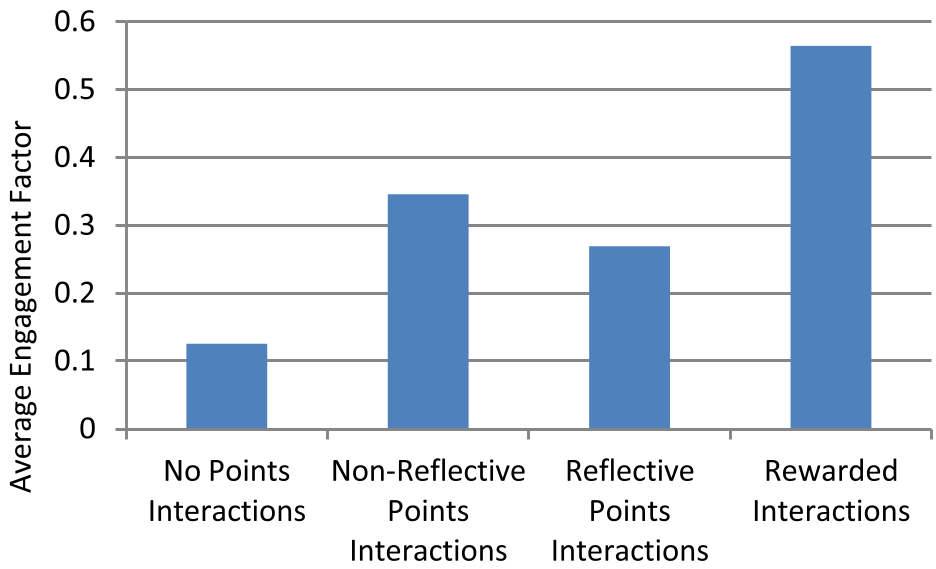 Figure 1: Comparison of Engagement Factors across different point settings.
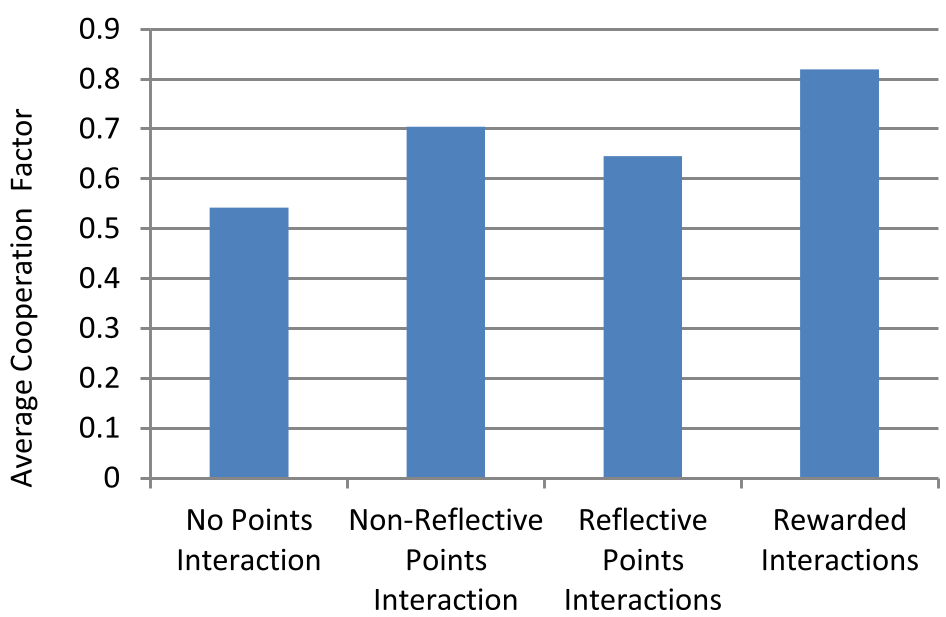 Figure 2: The growth of average point earnings as a function of interaction cycles.
Critical Insight: Why "Reflective" Points Aren't Enough
The most interesting finding is that merely having "Reflective" points (where a negative rating reduces your score) actually decreases engagement compared to simple non-reflective points. Why? Because users become "risk-averse." They stop posting for fear of being unfairly penalized. The "Reward for Honesty" model circumvents this by providing an insurance policy for honest users, ensuring that trolls cannot destroy a member's motivation to contribute.
Conclusion & Future Look
The study proves that gamification is a precision instrument. If you reward all actions, you get noise. If you penalize bad reactions, you get silence. But if you specifically reward honest interactions, you build a robust, engaged community.
Limitations: The current model focuses on 1-on-1 interactions. As the authors note, the next step is applying this to multi-party interactions (like a post with hundreds of comments) and integrating it with real-world trust assessment algorithms.
Takeaway for Platform Designers: Stop measuring "vanity metrics" like raw post counts and start designing "Reflective Reward" systems that protect your best contributors from the friction of unfair social feedback.