
Digital Diplomacy or Digital Billboard? Analyzing Nigerian Governors' Social Media Engagement
Engaging citizens through social media: how state governors in Nigeria are doing
This study investigates the use of Facebook and Twitter by the 36 State Governors in Nigeria to assess their level of citizen engagement. Using content analysis and descriptive statistics, the authors identify a significant correlation between high social media activity and perceived governance performance, although overall engagement remains superficial.
TL;DR
Is a Governor's Twitter activity a sign of transparency or just a high-tech billboard? This research examines 36 Nigerian State Governors to see if "likes" correlate with "leadership." While presence is high, engagement is surprisingly periodic and heavily skewed toward political posturing rather than policy dialogue.
The Performance Gap: Bandwagon vs. Benefit
In 2014, Nigeria was already established as one of Africa's most active social media hubs. However, the study identifies a crucial friction point: Government culture remains steeped in traditional public relations.
The authors argue that most Governors joined social media not to foster a two-way dialogue, but as a "bandwagon" response to the medium's popularity. The core problem identified is that while the public's expectations for government transparency have shifted, the actual responsiveness of leaders remains trapped in a monthly "broadcast" cycle rather than a daily "interactive" one.
Methodology: Measuring the Digital Pulse
The researchers didn't just count followers; they looked at the quality of the interaction. They focused on:
- Presence: Who is even online? (7 Governors had zero presence).
- Responsiveness: Do they reply to "Chat"? (Twitter had a 79% response rate vs. Facebook’s dismal 23%).
- Content Nature: What are they talking about? (Over 50% was purely political).
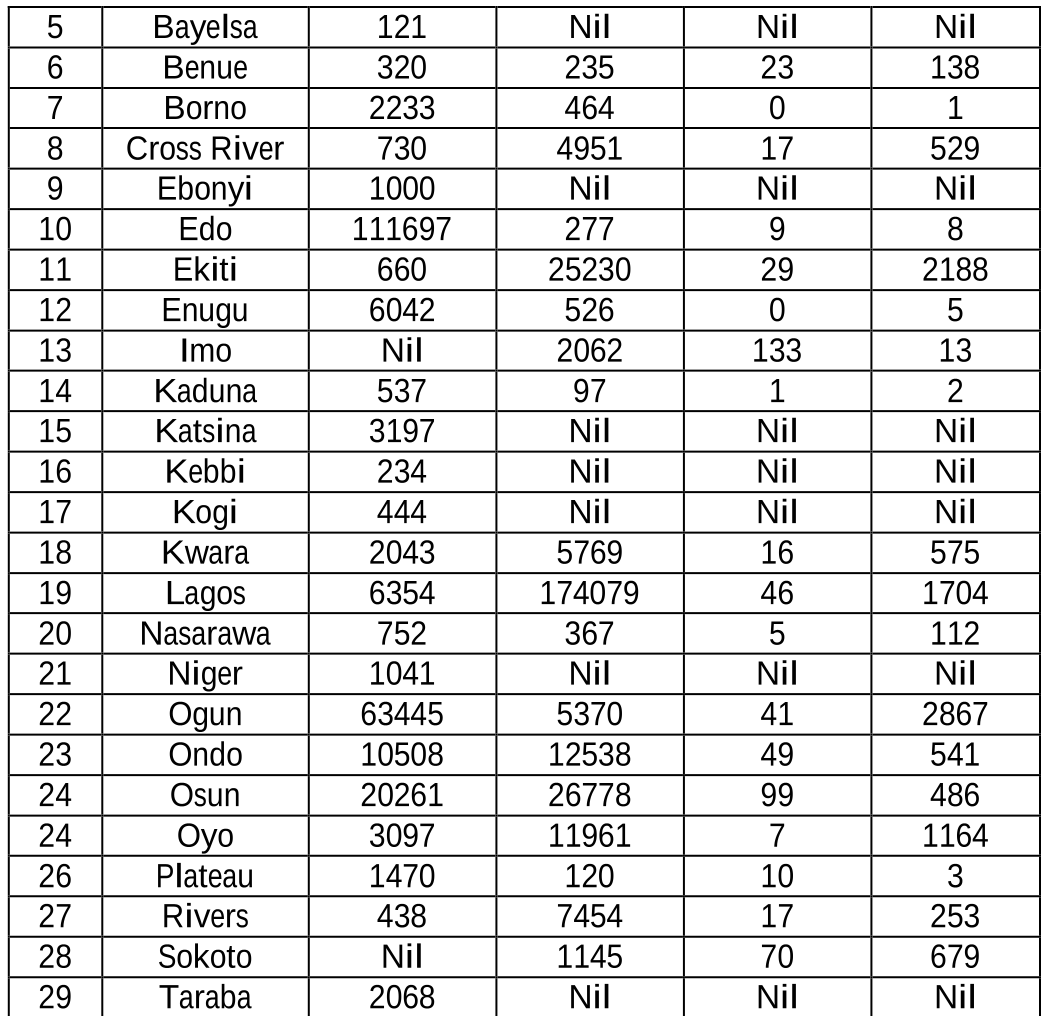 The table above highlights the sharp disparity in social media footprints across different states, showing a heavy concentration of activity in the Southern regions.
Key Insights: Does Activity Equal Ability?
One of the most provocative findings is the alignment between social media activity and governance performance rankings.
1. The Regional Divide
95% of the most active Governors were from the Southern part of Nigeria. This suggests that digital engagement is closely tied to states with higher socio-economic indicators and educational development.
2. Frequency vs. Substance
Despite having thousands of followers, most Governors are "Monthly Posters."
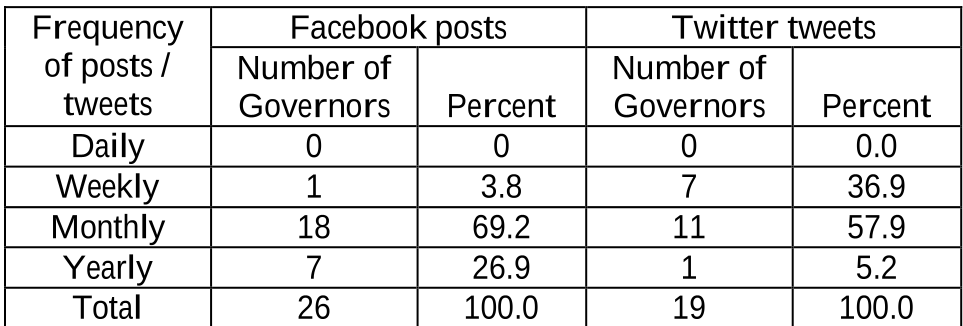 Table 3 reveals a lack of daily engagement, suggesting that social media is used more for sporadic announcements than for ongoing governance.
3. Missing the Policy Mark
The study found that issues like the budget, education, and child abuse received negligible attention (often <5% of total discourse) compared to political campaigning. This indicates that social media is viewed as a tool for "Smart Politics" rather than "Smart Governance."
Critical Analysis & Conclusion
The study concludes that there is an emerging, though not yet causal, link between a Governor’s digital proactiveness and their perceived performance in office. Most "top-performing" Governors (as ranked by the Nigeria Governors’ Forum) were also those with the most robust social media profiles.
Limitations: The study acknowledges that rankings are subjective and that high activity might simply be the work of skilled media aides rather than the Governors themselves.
Future Outlook: For social media to move from a PR tool to a tool for economic development, the "academe and civil society" must build the capacity for citizens to demand accountability through these digital channels. The era of the "unreachable leader" is ending; the next step is ensuring the "reachable leader" actually listens.