
SPOD: Turning Static Open Data into Social Conversations
Engaging Citizens with a Social Platform for Open Data
This paper introduces SPOD (Social Platform for Open Data), a collaborative ecosystem designed to bridge the gap between static public administration datasets and active citizen engagement. By integrating social networking features with data visualization tools, SPOD facilitates "Data-Driven Discussions" and co-creation of knowledge among diverse local communities.
TL;DR
Open Data is currently a "supply-side" success but a "demand-side" failure. While governments pump out datasets, citizens rarely use them. SPOD (Social Platform for Open Data) fixes this by wrapping raw data in a social networking skin, allowing users to co-create datasets and conduct evidence-based debates through interactive "Datalets."
The "Open Data" Disconnect
Governments release thousands of datasets under the banner of transparency. However, for the average citizen, a 50MB CSV file is not "transparent"—it is invisible. The authors identify three main barriers:
- Lack of Engagement: Data feels like it's for experts, not locals.
- Low Data Quality: Typos and missing values prevent simple analysis.
- Context Gap: Repositories often lack the specific local data communities actually care about.
Methodology: The SPOD Ecosystem
SPOD isn't just a forum; it's a collaborative workbench. Its architecture relies on the DEEP (Dynamic Evaluation of Electronic Papers) framework, utilizing Edge-centric computing. This means all data processing—filtering, grouping, and rendering—happens in the user's browser, ensuring high scalability for public administrations.
1. The Controllet & Datalets
To solve the "expert-only" barrier, the authors created the Controllet. It acts as a wizard that guides a non-technical user through selecting a dataset, applying heuristics to guess data types (e.g., identifying a date or a currency), and cleaning the data on the fly. The output is a Datalet: a reusable, interactive visualization component that can be embedded anywhere on the web.
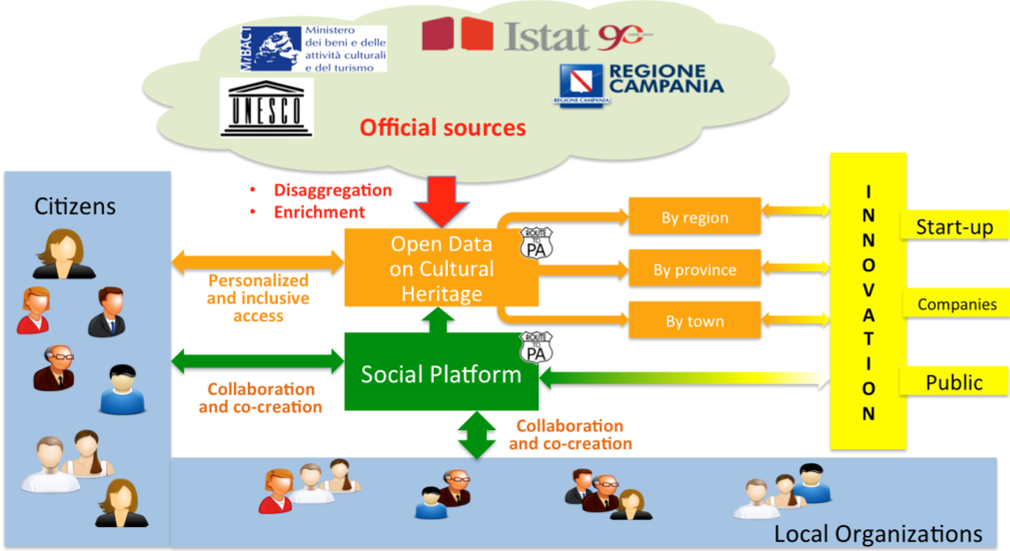 Figure 1: The Hetor project architecture using SPOD, showing the flow from official sources to enriched, community-specific datasets.
2. Agora and Co-Creation
- Agora: A public "town square" where discussions are strictly data-driven. Participants don't just state opinions; they must post Datalets to support their arguments.
- Data Co-Creation: A collaborative spreadsheet (think Google Sheets but for Open Data) where citizens can fix errors in government data or combine multiple sources into a new community dataset.
Evidence of Success: The Hetor Case Study
The researchers deployed SPOD in the Campania region of Italy. One of the most compelling examples came from a high school in Avellino. Students took the "Central Political Registry" (a dataset of political subversives from 1800-1946) and enriched it.
By splitting merged columns and adding geographical coordinates, they created a map of surveillance. They discovered a massive spike in surveillance between 1938 and 1943—an objective observation extracted directly from raw data through collaborative effort.
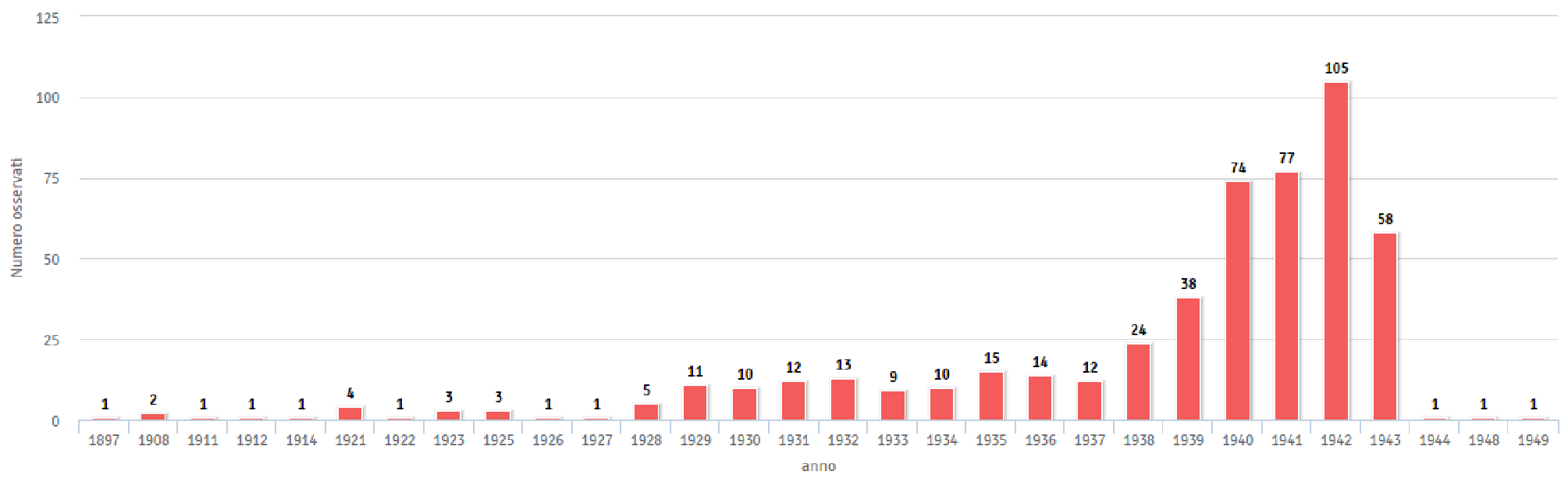 Figure 2: A Datalet created by students showing the historical trend of political surveillance in Italy, proving the power of data-driven storytelling.
Performance Metrics
The impact of the platform across four communities was quantified:
| Community | Co-created datasets | Discussion posts | Datalets |
|---|---|---|---|
| Master Students | 8 | 231 | 74 |
| High School Students | 2 | 494 | 50 |
| Citizen Associations | 2 | 160 | 21 |
Critical Insight: Data is a Social Artifact
The true value of this paper lies in its rejection of the "build it and they will come" philosophy of data portals. By introducing Data Disaggregation, the authors acknowledge that a citizen in Fisciano doesn't care about national averages; they care about the "Palazzi Gentilizi" (aristocratic buildings) in their own street. SPOD empowers them to take national data and "localise" it.
Conclusion and Limitations
SPOD successfully transitions Open Data from a static archive to a living conversation. However, the reliance on user-generated heuristics for data cleaning remains a challenge; if the source data is too "noisy," even the Controllet struggles. Future work should look at how AI could further automate the data-cleaning process to ensure even lower barriers to entry for civic participation.
Takeaway: To make Open Data work, we must stop treating it as an Information Technology problem and start treating it as a Social Computing opportunity.