
Breaking Echo Chambers: A Structural Hole Approach to Opinion Control
Engineering Applications of Artificial Intelligence
The paper introduces the SHCPO (Structural Hole-based approach to Control Public Opinion) method, which leverages structural hole spanners as strategic bridges to guide opinion evolution. By integrating an improved Friedkin–Johnsen (FJ) model with structural balance theory, it effectively steers community opinions toward a positive polarity across diverse social datasets.
TL;DR
The SHCPO approach (Structural Hole-based approach to Control Public Opinion) is a novel framework that uses "bridge nodes"—known as structural hole spanners—to manage public sentiment. By mathematically modeling how these bridges interact with different communities and applying structural balance theory, the authors successfully shifted negative community polarities toward a positive consensus, outperforming traditional opinion leader-based methods by up to 17%.
Problem & Motivation: The Echo-Chamber Trap
In modern social networks, we often fall into "echo-chambers"—closed environments where similar opinions are amplified and dissenting voices are filtered out. This lead to extreme polarization, making social stability fragile.
Existing interventions typically try to inject "informed agents" (bots or volunteers) or strengthen "opinion leaders." However, the authors argue that these methods are often "local." They ignore the Structural Holes—the empty spaces between disconnected groups. The individuals who bridge these holes (Structural Hole Spanners) have the unique power to gatekeep and transfer information across boundaries. Burt’s theory suggests that the top 1% of these spanners control 80% of cross-group information.
Methodology: The SHCPO Framework
The core of the SHCPO approach lies in how it treats different types of nodes:
1. Differentiated Update Rules
- Ordinary Agents: These nodes follow an improved Friedkin–Johnsen (FJ) and Hegselmann–Krause (HK) hybrid, where they only listen to neighbors if the opinion difference is within a "bounded confidence" range ().
- Structural Hole Spanners: Because they exist between communities, they are modeled to accept information from diverse sources without the same confidence constraints, acting as high-capacity information processors.
2. Identifying Connection Types
The authors categorize the "bridging" behavior into three types based on who the spanner connects:
- Connecting two opinion leaders.
- Connecting two ordinary agents.
- Connecting one opinion leader and one ordinary agent.
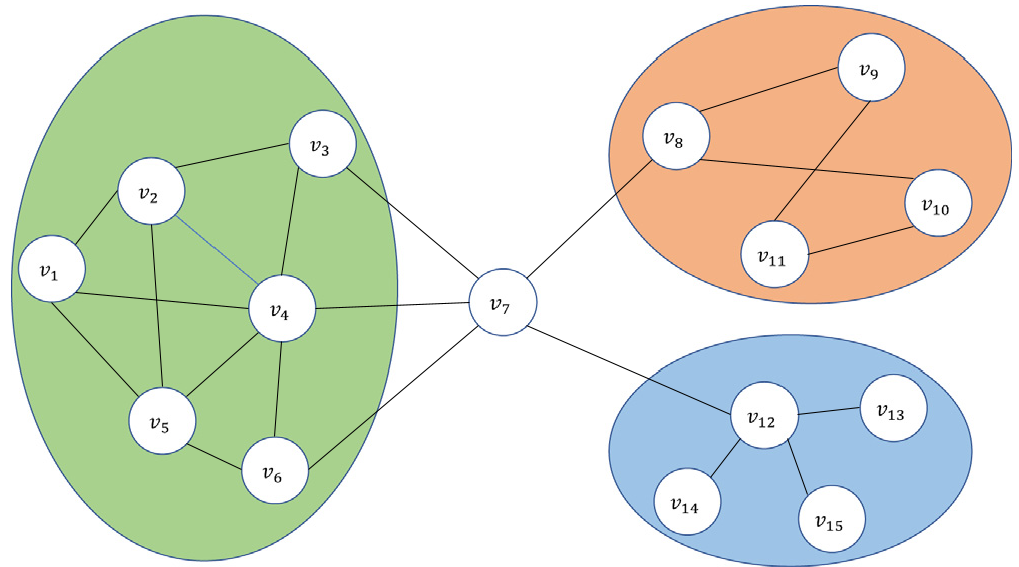
3. Structural Balance Reconstruction
Using the principle that "a friend of my friend is my friend," the algorithm (SHCPO) identifies communities with negative polarities and creates new "positive" connections via the spanners to rebalance the network's social equilibrium.
Experiments & Results
The researchers tested SHCPO on three datasets: a small Health Club network (34 nodes), a mid-sized Email network (986 nodes), and a large Microblog dataset (10,006 nodes).
Quantitative Improvements
SHCPO consistently pushed the average opinion of negative communities toward the positive range. In the Microblog dataset, where the structure is clear, SHCPO showed a significant lead:
- +17% improvement over AIA (Informed Agents).
- +10% improvement over AE (Adding Edges).
- +1% improvement over VSP (Varying Susceptibility).
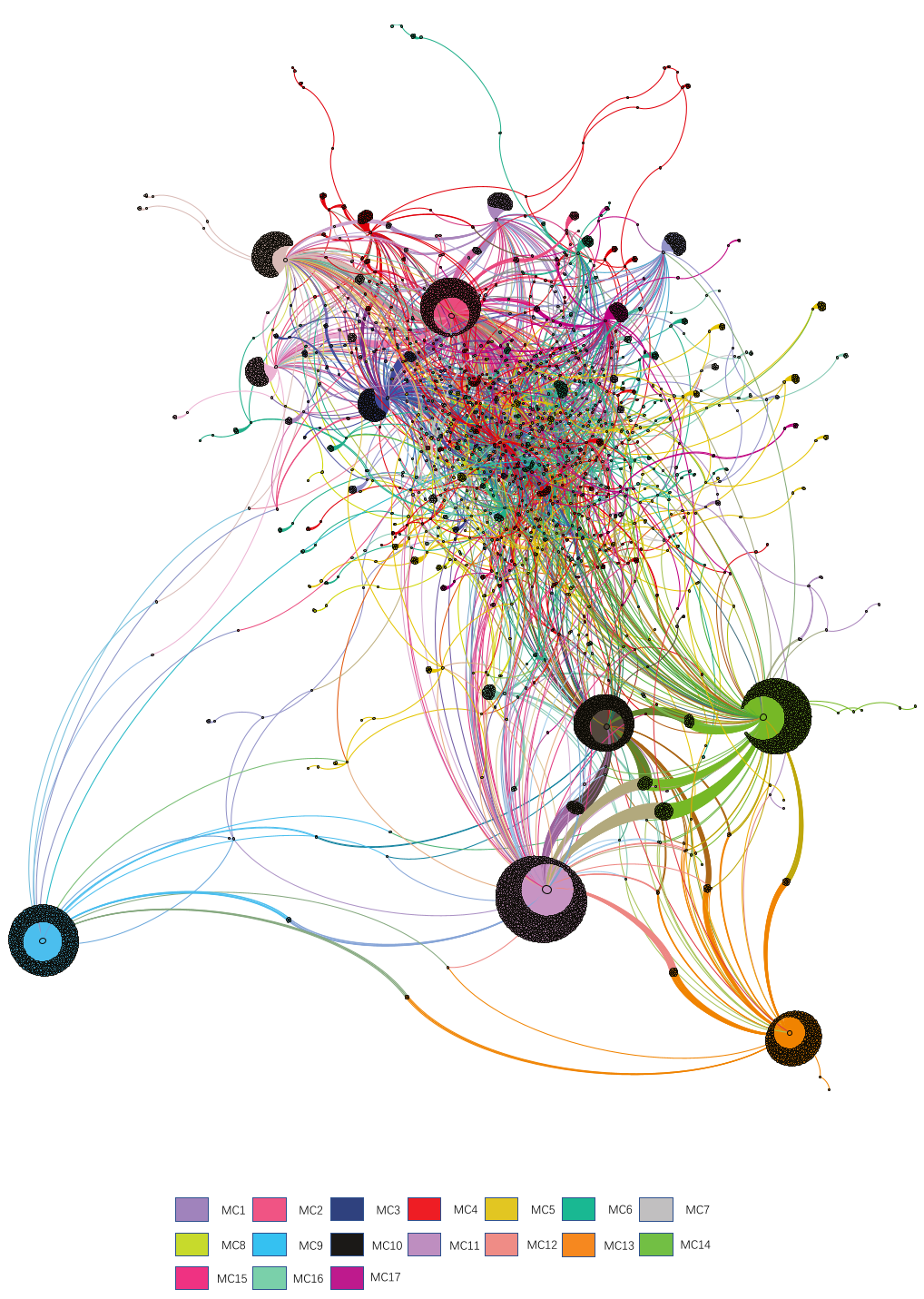
As seen in the results, SHCPO (the rightmost bar in Fig 14) maximizes the "Percentage of Positive Opinions" (darker bars) while minimizing negative ones.
Critical Analysis & Conclusion
Takeaway
The research proves that where you intervene in a network is just as important as how you intervene. By targeting the "bridges" rather than the "hubs," SHCPO effectively breaks the isolation of echo-chambers.
Limitations
The authors admit that in highly complex, dense networks (like the Email dataset), identifying distinct structural holes is difficult. Furthermore, the "Microblog" experiment showed that if the network structure is incomplete (data sparsity), the spanners lose their effectiveness.
Future Outlook
This work opens the door for recommendation systems that don't just show you what you like (which creates echo-chambers) but strategically show you "bridge" content to maintain a healthy, balanced public discourse.