
Beyond Density: The Socio-Cognitive Revolution in Visual Crowd Analysis
Engineering Applications of Artificial Intelligence
2024-04-15
Summary
Problem
Method
Results
Takeaways
Abstract
This paper provides a comprehensive survey and a novel theoretical categorization of socio-cognitive crowd behavior analysis for visual surveillance. It proposes a taxonomy consisting of Individualistic, Group, Social Interaction, and Leader-Follower behaviors, linking low-level computer vision features to high-level psychological modeling.
## TL;DR
While traditional surveillance focuses on "how many" people are in a scene, the real value lies in understanding "why" they move. This survey by Zitouni et al. redefines crowd analysis by categorizing behaviors into four socio-cognitive pillars: **Individualistic, Group, Social Interaction, and Leader-Follower**. It shifts the focus from simple physics-based models to complex psychological interactions, offering a roadmap for more intelligent disaster response and security systems.
## The Missing Link: Psychology in Machine Vision
For decades, computer vision treated crowds like fluids—modeling them through density maps and flow fields. However, humans aren't just particles; they are agents driven by social bonds and cognitive intentions. This paper argues that ignoring the socio-psychological aspects results in a "semantic gap" where a system might see a crowd running but cannot distinguish between a marathon and a panic-induced evacuation.
The authors suggest that by identifying interacting agents and the social forces between them, we can build autonomous systems capable of true situational awareness.
## Methodology: A Four-Tier Taxonomy
The core contribution of this work is a unique mapping of technical methods to behavioral categories:
1. **Individualistic Behavior**: Focusing on unique motion patterns of single entities (best for sparse crowds).
2. **Group Behavior**: Analyzing spatially associated individuals as a single entity (practical for medium-to-high density).
3. **Social Interaction Behavior**: Modeling the "forces" of attraction and repulsion between groups and individuals.
4. **Leader-Follower Behavior**: Identifying influential agents who dictate the trajectory of others—a critical but underserved area in research.
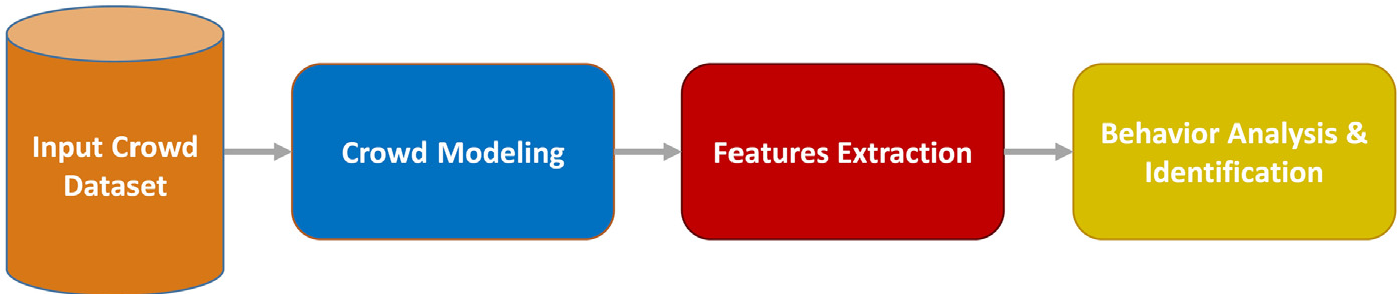
*Fig 1: The standard pipeline from raw modeling to behavioral identification.*
## Technical Landscape
The survey breaks down the "How" into five technical domains:
* **Social Force Models (SFM)**: Inspired by Helbing, these use "virtual forces" (attractive/repulsive) to predict trajectories.
* **Motion & Appearance**: Using standard descriptors like HOG, Optical Flow (KLT), and Background Subtraction (GMM/ViBe) to feed behavioral classifiers.
* **Deep Learning**: Emerging as the powerhouse for scene understanding (CNNs, LSTMs), though the authors note a current lack of deep models that specifically target *cognitive* features.
* **Simulation**: Using Agent-Based Models (ABM) to validate theories in virtual "stress tests," such as stadium evacuations.
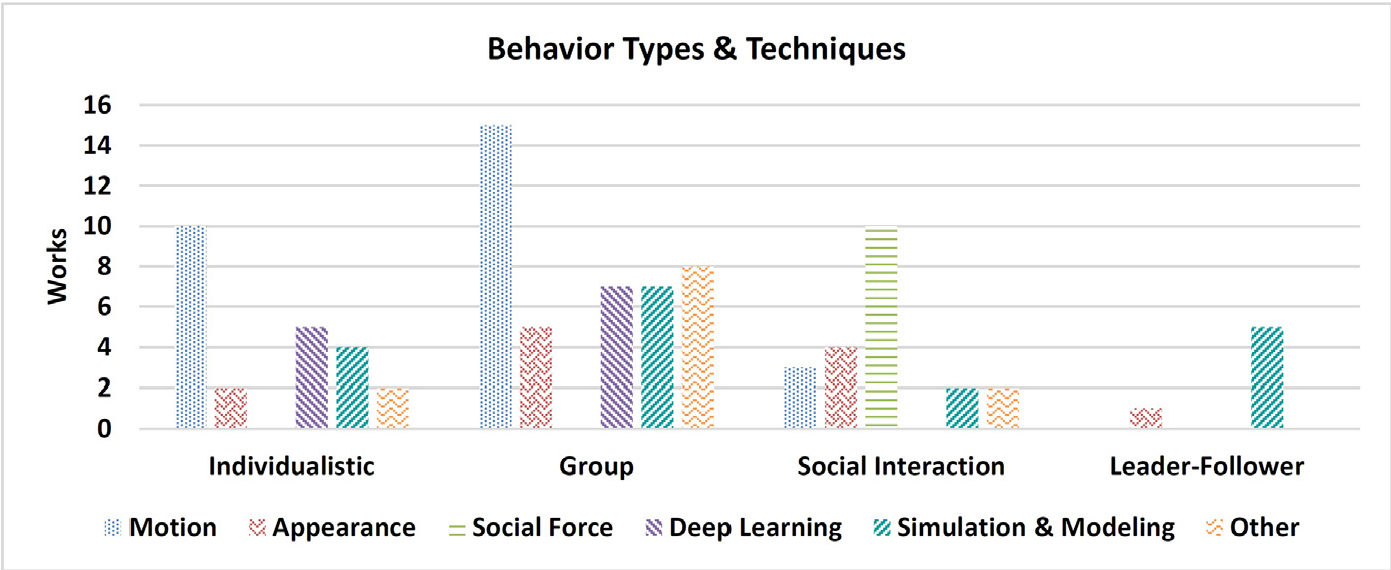
*Fig 2: Distribution of techniques shows a heavy reliance on motion-based analysis for group behaviors.*
## Critical Insights: Comparison of Levels
One of the most profound observations in the paper is the disconnect between **Micro** (individual) and **Macro** (holistic) analysis.
* **Micro methods** fail in high-density scenes due to occlusion.
* **Macro methods** lose the nuance of individual intent (e.g., a leader changing direction).
The authors advocate for **Hybrid Models**. For instance, understanding a group's deformation is impossible without recognizing the individual "social group" attributes or head poses of its members.
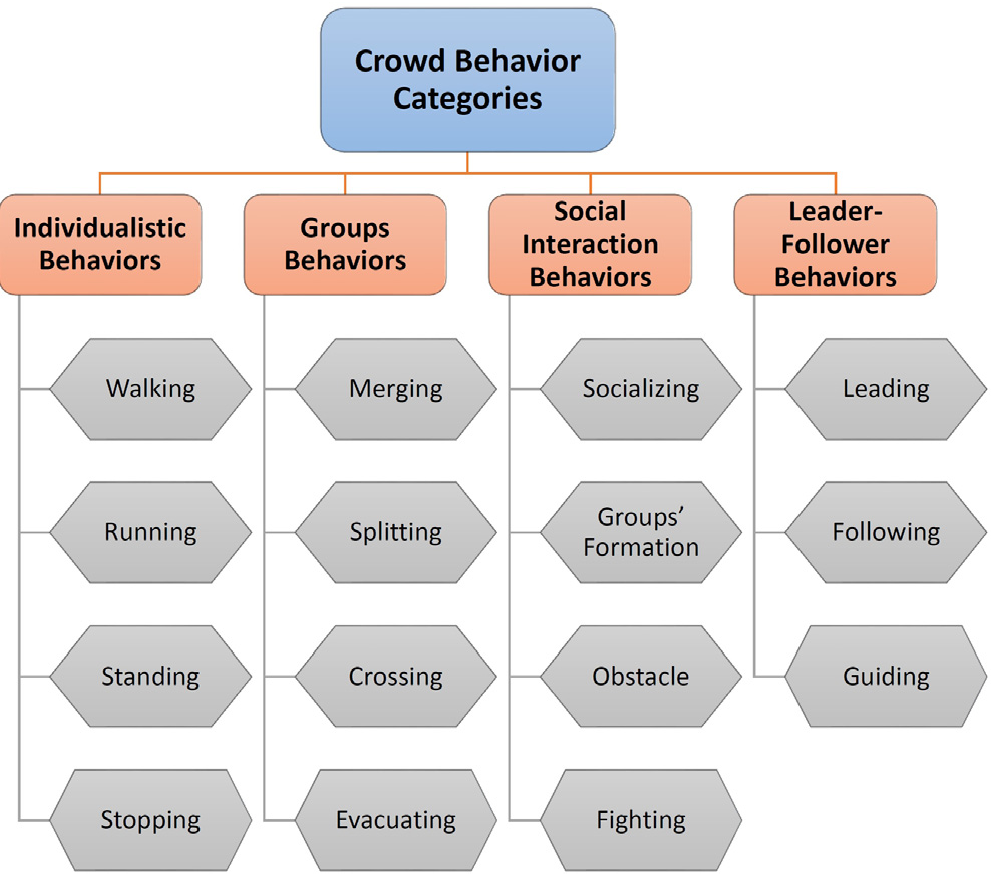
*Fig 3: Visual definitions of the proposed socio-cognitive categories.*
## Deep Dive: The Benchmarking Problem
The survey provides a detailed look at datasets like **PETS (2009-2012)** and **WWW (10,000+ videos)**. A hard truth revealed is that many "State-of-the-Art" (SOTA) methods only work on specific datasets (e.g., UMN for escape detection) and fail to generalize to real-world clutter. The paper emphasizes that performance metrics like AUC and MOTA (Multiple Object Tracking Accuracy) vary wildly depending on the socio-cognitive complexity of the scene.
## Conclusion & Future Outlook
The paper concludes that we are at a crossroads. To move forward, the industry must:
* **Generalize**: Stop building one-behavior-per-model systems.
* **Cognitive Deep Learning**: Use Neural Networks to learn *behavioral descriptors* (like "collectiveness" or "conflict") rather than just raw pixels.
* **Focus on Interactions**: Explore the "Leader-Follower" dynamics further, as these are the true precursors to large-scale crowd shifts.
In essence, the future of surveillance isn't just seeing; it's understanding the invisible social threads that bind a crowd together.