
Bayesian Networks: The Probabilistic Brain of Future Farming
Engineering Applications of Artificial Intelligence
This paper provides a comprehensive survey of Bayesian Networks (BNs) applied within the agricultural domain, covering literature from 1984 to 2016. It identifies BNs as a superior framework for "Computational Agriculture" due to their ability to handle uncertainty and incomplete data, establishing a clear taxonomy of applications including automated monitoring, prediction, and decision support systems.
TL;DR
Agriculture is entering a data-driven era, yet the unpredictability of nature makes rigid algorithms fail. This seminal survey argues that Bayesian Networks (BNs)—probabilistic graphical models that mimic human reasoning under uncertainty—are the missing link for "Smart Farming." By centralizing decades of research, the authors map out how BNs transform messy sensor data into actionable decisions for crop yields, disease control, and farm economics.
Background: Why Agriculture is a "Probabilistic Problem"
Farming isn't a laboratory. It is a chaotic system influenced by climate change, soil variability, and biological evolution. Traditional machine learning often treats variables as independent, but in a field, "Rainfall" affects "Soil Moisture," which affects "Pest Growth," which finally impacts "Yield."
The authors position BNs as the ideal tool because they:
- Model Causality: They don't just find correlations; they map cause and effect.
- Handle Missing Data: They can provide an answer even if a sensor fails.
- Fuse Knowledge: They allow the "gut feeling" of a veteran farmer to be mathematically combined with satellite data.
The Anatomy of a BN Project
The paper breaks down how these models are built, noting a shift from "expert-opinion" models to "data-driven" discovery.
1. Construction Methodology
- Manual: Experts draw the nodes and edges. While intuitive, it is prone to human bias.
- Data-Driven: Algorithms "learn" the structure from databases. This is becoming the gold standard as precision agriculture explodes.
- Hybrid: The most robust approach—using data to find the skeleton and experts to verify the logic.
2. Structure Learning (Finding the "Why")
A major highlight of the paper is CaMML (Causal Discovery via Minimum Message Length). Based on Occam’s Razor, this method seeks the simplest model that explains the data. As shown in the survey, structure learning often uncovers "hidden" relationships that even experts might miss.
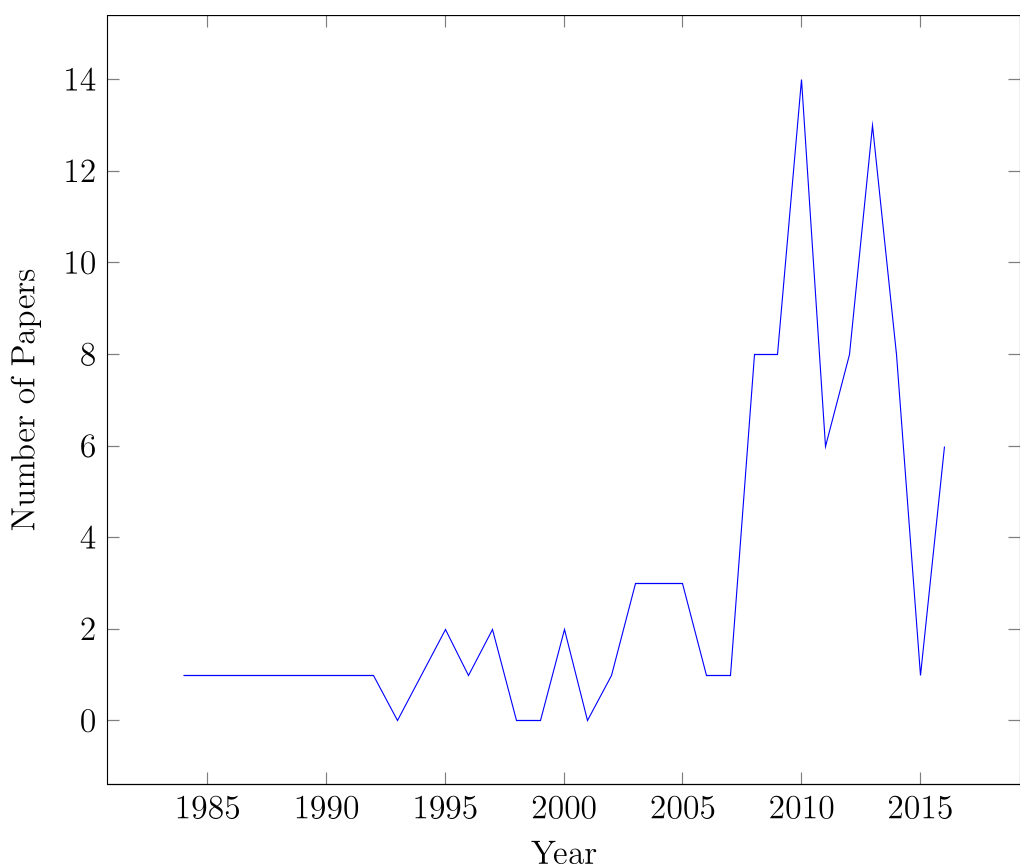 Figure: The fundamental process of moving from Bayes' Theorem to a Directed Acyclic Graph (DAG).
Core Applications: From Sensors to Decision Support
The survey identifies five "Battlegrounds" where BNs are winning:
- Automated Monitoring: Using milking machine sensors to predict Mastitis in herds before it becomes a crisis.
- Prediction: Estimating energy crop yields in fluctuating climates.
- Cause Identification: Tracing the 2007 Equine Influenza outbreak in Australia back to specific bio-security failures.
- Decision Support: Developing irrigation systems that simulate "What if?" scenarios regarding water prices and soil types.
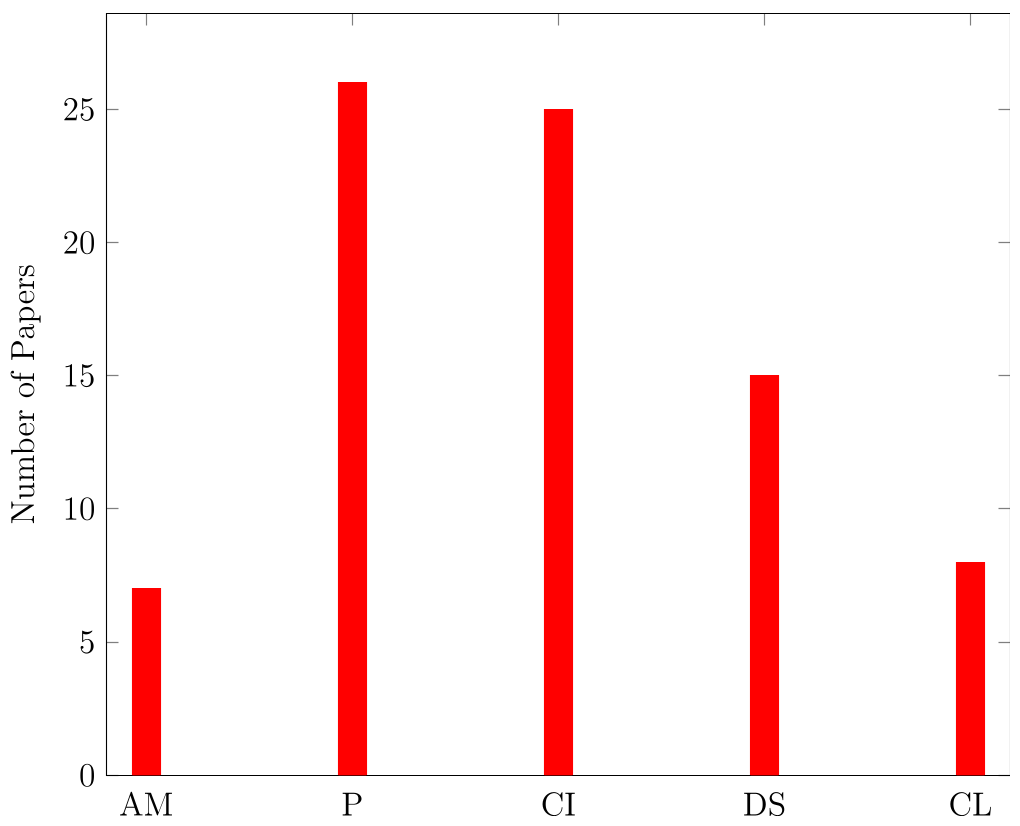 Figure: Popularity of research areas. Prediction and Cause Identification lead the pack due to the BN's unique ability to reason through uncertainty.
Critical Analysis: The Evaluation Gap
If there is a "red flag" in the paper, it’s the current state of evaluation. The authors note that many researchers use BNs for "illustrative purposes" rather than rigorous testing. To move the industry forward, BNs must be validated against SOTA baselines using metrics like ROC curves and Cross-Validation.
Future Horizons: DBNs and Text Mining
The paper concludes with a roadmap for the next decade of Agricultural AI:
- Dynamic Bayesian Networks (DBNs): Unlike static models, DBNs account for time. Since agriculture is seasonal, DBNs can model how a "heavy rain" is good in May but disastrous in September.
- Text Mining: Automatically building networks by reading thousands of research papers and news reports, capturing knowledge that isn't stored in spreadsheets.
Summary
This survey is a call to action. In an industry facing a leveling off of yields and a changing climate, Bayesian Networks offer a way to make sense of the noise. By moving toward systematic structure learning and dynamic modeling, computational agriculture can evolve from simple monitoring to truly intelligent, autonomous decision-making.