
E-ELITE: Redefining Short-Term Load Forecasting with CMPSOATT Methodology
Enhanced ELITE-Load: A Novel CMPSOATT Methodology Constructing Short-Term Load Forecasting Model for Industrial Applications
The paper introduces E-ELITE, a two-layer hybrid neural network framework for short-term load forecasting (STLF). It leverages a novel CMPSOATT methodology—combining Consensus-based PSO, TRUST-TECH, and local optimization—to construct a diverse ensemble of optimal Artificial Neural Networks (ANNs) that achieve SOTA accuracy on industrial utility datasets.
TL;DR
Short-term load forecasting (STLF) is the backbone of power grid stability and market pricing. This paper presents E-ELITE, a framework that treats neural network training as a global optimization challenge. By combining a consensus-based Particle Swarm Optimization (CPSO) with the "TRUST-TECH" methodology, the authors systematically find global-caliber local optima. The result? A MAPE of 1.18%—a massive leap in precision over traditional ANN baselines.
Background: Why is Load Forecasting So Hard?
Electric load curves are notoriously nonlinear and sensitive to variables like temperature, humidity, and day-type indices. While Artificial Neural Networks (ANNs) are the go-to solution, they are a double-edged sword:
- Structural Sensitivity: Too few neurons cause underfitting; too many lead to overfitting.
- Optimization Traps: The error surface of a load-forecasting ANN is riddled with local minima. Standard training often settles for a "good enough" solution that fails during volatile peak periods.
Methodology: The Three-Stage E-ELITE Framework
The researchers moved beyond simple weight tuning by introducing a hierarchical "Consensus-based Mixed-Integer Particle Swarm Optimization-assisted TRUST-TECH" (CMPSOATT) approach.
1. Structure & Seed Exploration (Stage I)
Instead of assuming a fixed architecture, the model uses a mixed-integer PSO. It treats both the weights (continuous) and the existence of connections (binary) as variables. The "Consensus" part ensures the swarm doesn't just wander but clusters into promising sub-regions of the search space.
2. Deep Exploitation via TRUST-TECH (Stage II)
This is the "secret sauce." Most optimizers stop at a local minimum. TRUST-TECH uses the mathematical properties of Stability Boundaries to "jump" from one Tier-0 local optimum to neighboring Tier-1 or Tier-2 optima. This ensures that the individual forecasting "members" are not just random, but high-quality local specialists.

3. The Neural Ensemble (Stage III)
The final output isn't a simple average. E-ELITE uses a top-layer "Meta-Network" that learns how to weigh the opinions of different sub-models. If Model A is better at predicting Sunday morning troughs and Model B excels at summer heatwave peaks, the ensemble learns to switch focus accordingly.
Experimental Showdown: Utility-Scale Validation
The model was put to the test using ISO New England data (2003–2006).
Accuracy and Consistency
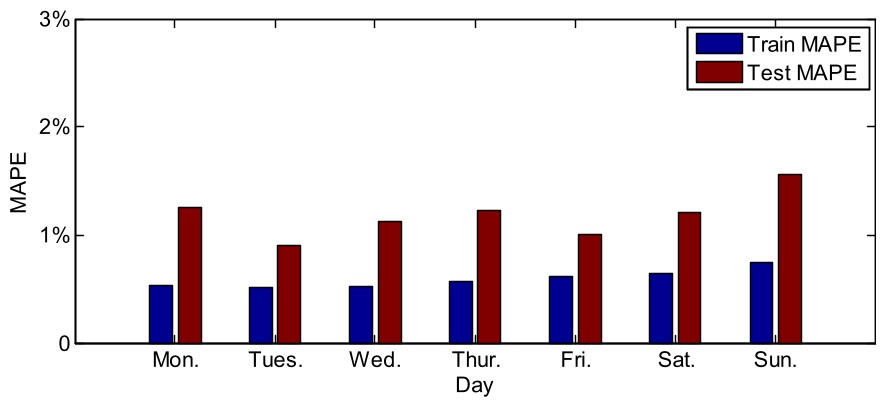
E-ELITE achieved a MAPE of 1.18%, which is roughly a 20% improvement over its predecessor (ELITE) and a staggering 84% improvement over a standard ANN trained with traditional methods.
Efficiency and Scalability
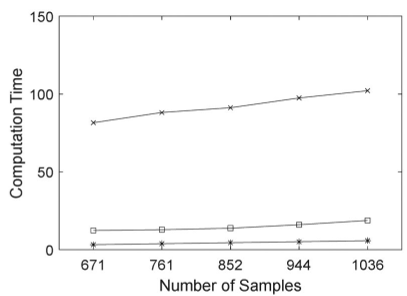
A major breakthrough here is computational speed. Despite being more complex, E-ELITE is 4.77x faster than the original ELITE model. By using the consensus-clustering to identify "promising sub-regions" early, it avoids the redundant search time that plagues most global optimization algorithms.
Critical Insight: The "Stability Boundary" Advantage
The core takeaway is that in industrial applications, diversity matters. By systematically searching across stability boundaries, the authors ensure the ensemble members are truly "diverse" (occupying different valleys in the loss landscape) rather than just minor variations of the same solution. This leads to a model that isn't just accurate on average but is robust against seasonal shifts and weird load patterns.
Conclusion & Future Outlook
E-ELITE proves that the marriage of classical dynamical system theory (TRUST-TECH) and modern meta-heuristics (PSO) can solve the "local minima" problem in industrial AI. While the paper focuses on power loads, this methodology is perfectly suited for any high-stakes time-series task, from financial forecasting to supply chain logistics. The next frontier? Applying this "Tiered" search logic to Deep Learning architectures with millions of parameters.