
eDGP: Overcoming Data Imbalance in Human Emotion Recognition with Single-Channel EEG
An enhanced fitness function to recognize unbalanced human emotions data
This paper introduces eDGP, a novel framework based on Genetic Programming (GP) and an enhanced fitness function called eD-score to recognize two-class human emotions (positive/negative) from EEG signals. By utilizing Fast Fourier Transformation (FFT) for feature extraction and a tanh-activated distance-based fitness function, the method achieves state-of-the-art results on both a custom-generated dataset and benchmark datasets (DEAP, SEED).
Executive Summary
In the evolving field of Affective Computing, the ability to accurately "read" human emotions via physiological signals is often hampered by two factors: the clunkiness of multi-channel EEG equipment and the statistical "bias" of datasets where certain emotions are overrepresented.
This paper presents eDGP (enhanced D-score Genetic Programming), a robust framework that utilizes a custom-built fitness function to achieve 87.61% accuracy in emotion recognition using just a single-channel portable EEG headset. By focusing on the distance of classification outputs from a decision boundary, the authors have created a model that doesn't just chase high accuracy numbers but genuinely understands underrepresented emotional states.
The "Imbalance" Problem: Why Traditional AI Fails
Most emotion datasets are inherently unbalanced. In this study, for instance, participants recorded significantly more "positive" emotional instances than "negative" ones.
When you train a standard Support Vector Machine (SVM) or Multilayer Perceptron (MLP) on such data, the model takes a "shortcut." It learns that by simply predicting the majority class (Positive) most of the time, it can achieve a high accuracy score—even if it fails miserably at identifying the minority class (Negative). In psychological monitoring, this is unacceptable; missing a "Negative" state is often more critical than misidentifying a "Positive" one.
Methodology: The Power of eD-Score
The core innovation lies in the eD-score fitness function. Unlike standard loss functions that minimize error, eD-score treats the minority and majority classes as equals through a distance-weighted harmonic mean.
1. Feature Extraction (FFT)
Raw EEG signals from a NeuroSky MindWave 2 (sampling at 512 Hz) are transformed using Fast Fourier Transformation (FFT). This breaks the signal down into five frequency bands: Delta, Theta, Alpha, Beta, and Gamma. These, alongside proprietary "Attention" and "Meditation" metrics, form the 10-feature input for the classifier.
2. Genetic Programming & Tanh Activation
The framework uses Genetic Programming (evolutionary algorithms) to "evolve" the best mathematical tree for classification.
- The Tanh Advantage: While previous iterations (DGP) used Sigmoid, this study employs tanh. Because tanh is zero-centered and steeper, it prevents "saturation" and allows the model to learn non-linear patterns in brain waves more effectively.
- Distance Weighting: The algorithm calculates how far a prediction is from the threshold (0). A prediction that is "correct and far" from the boundary is given more weight, reinforcing the model's confidence in identifying subtle emotional shifts.
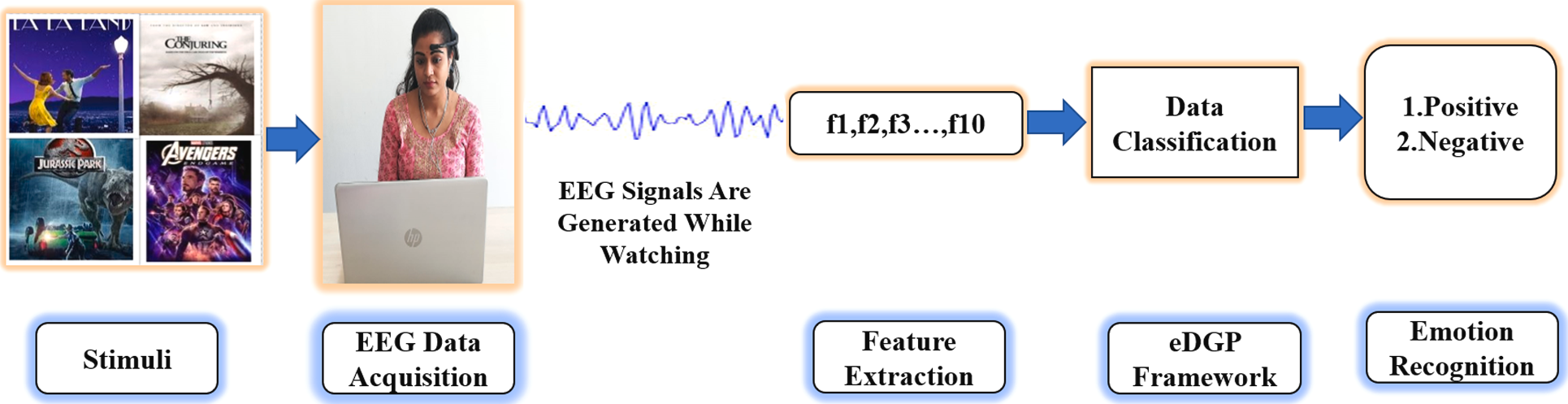 Figure 1: The eDGP Framework Workflow - from Signal Acquisition to Emotion Classification.
Experimental Results & Insights
The authors tested eDGP against four major baselines (MLP, KNN, SVM, and the original DGP).
| Classifier | Max Accuracy (10-Fold CV) | Avg. Inference Time |
|---|---|---|
| MLP | 76.27% | 14.6s |
| SVM | 81.83% | 12.5s |
| eDGP (Proposed) | 87.61% | 8.3s |
Key Discoveries:
- High Generalizability: The model wasn't just "overfit" to the authors' data; it achieved 88.34% on the SEED dataset and 86.25% on DEAP.
- Age and Gender Demographics: The research found that the 26-35 age group provided the cleanest emotional signals. Furthermore, females were found to be more emotionally "active" and overt in their physiological responses to visual stimuli compared to males.
- Attention Correlation: A direct link was established: positive emotions (Amusement/Happy) were associated with 2x higher attention levels compared to negative ones.
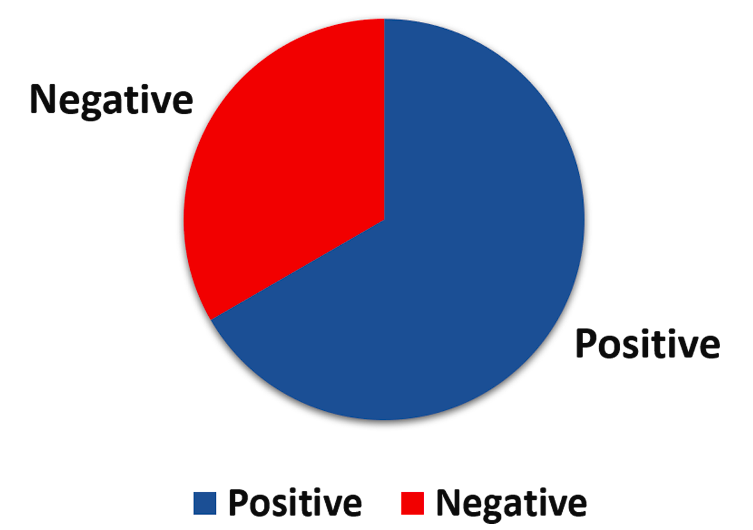 Figure 2: Emotion recognition accuracy peaks in the 26-35 years age bracket.
Deep Insight & Conclusion
The eDGP approach proves that hardware complexity is not a prerequisite for high performance. By using sophisticated evolutionary mathematics (Genetic Programming) to solve the "unbalanced data" problem, we can move emotion recognition out of the lab and into the real world using simple, single-channel headsets.
Limitations & Future Work: While the results are impressive, the study is limited to 10 features extracted via FFT. Future iterations could integrate Empirical Mode Decomposition (EMD) or Ant Colony Optimization for even finer feature selection. Furthermore, moving from binary classification (Positive/Negative) to multi-class (Happy, Sad, Angry, Fear) will be the next true test for the eD-score's robustness.