
Probabilistic Reputation: Redefining Trust Prediction in the Age of Big Data OSNs
An enhanced trust prediction strategy for online social networks using probabilistic reputation features
The paper introduces an enhanced trust prediction strategy for Online Social Networks (OSNs) using a Probabilistic Reputation Feature model. By moving beyond raw reputation data and incorporating indirect witness-based paths, the method significantly improves Trust/Distrust classification on benchmark datasets including Wikipedia, Epinions, and Slashdot.
TL;DR
Trust in Online Social Networks (OSNs) is harder to build than to break. This paper proposes an Enhanced Trust Prediction Strategy that replaces "raw" reputation scores with Probabilistic Reputation Features. By analyzing how trust flows through multiple "witnesses" (intermediaries), the framework achieves near 100% accuracy in predicting whether user A should trust user B, effectively solving the "Cold Start" problem for new users.
Background: The Trust Fragility in Virtual Spaces
In a world of billions of virtual connections, how do you verify a stranger? Whether it's an administrator election on Wikipedia or a product reviewer on Epinions, trust is the "soft security" that keeps OSNs functional.
The authors identify two critical hurdles:
- The Cold Start Problem: New users have no track record, making them indistinguishable from malicious actors.
- Class Imbalance: In real-world social data, "Trust" edges usually outweigh "Distrust" edges (often 80/20), causing standard machine learning models to ignore potential threats just to achieve high nominal accuracy.
Methodology: From Direct Links to Probabilistic Paths
The core innovation lies in the shift from Raw Features (simple ratings) to Conditional Probabilities derived from multi-witness paths.
1. The Multi-Witness Architecture
Traditional models often look at a single intermediary (). This paper extends this to a two-witness chain ().
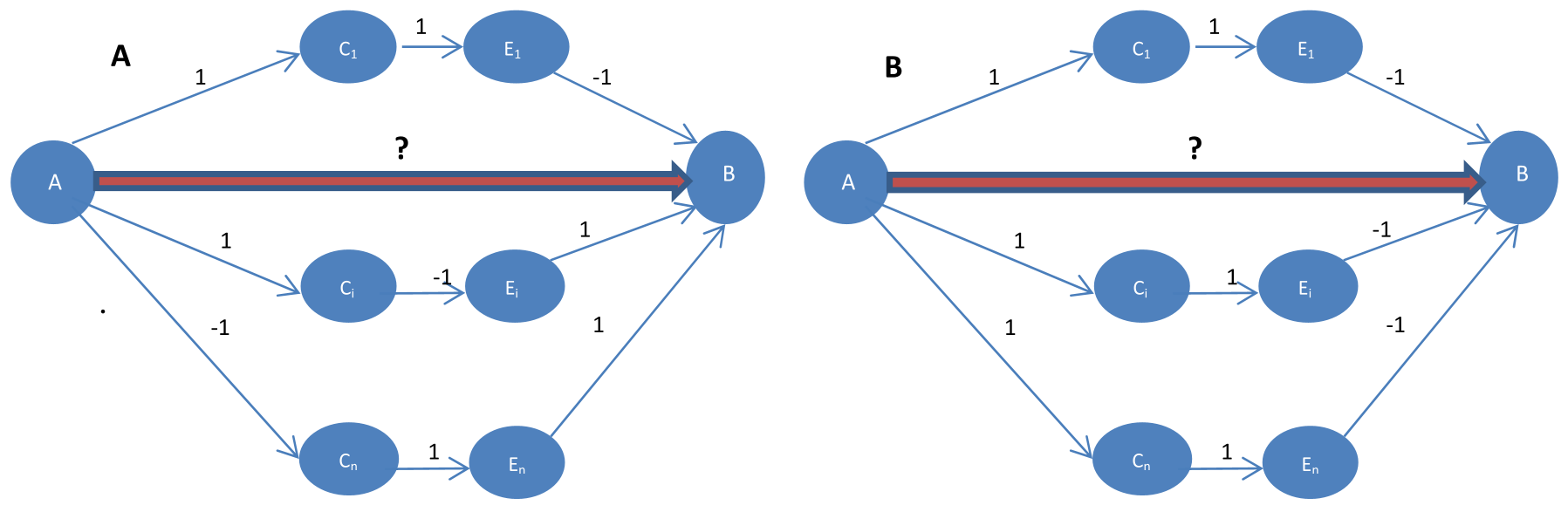 Fig 1: The structural complexity of trust labels used for probabilistic features.
By defining 8 distinct sets (e.g., representing Trust Distrust Trust), the model captures the "nuance" of social vetting. The probability of trust is calculated as the ratio of specific path types to the total witness set .
2. Handling Imbalance with SMOTE Boost
Because "Distrust" is the minority class, the authors used SMOTE Boost. This doesn't just oversample the minority class; it synthetically creates new instances and uses Boosting to focus the learner on difficult cases (the malicious users).
Experimental Results: Breaking the 99% Barrier
The framework was stress-tested on three major datasets: Wikipedia, Epinions, and Slashdot.
- Baseline vs. Proposed: Using raw features, accuracy hovered around 90-93%. Switching to probabilistic features pushed metrics across the board—frequently hitting 99.9% OA.
- Robustness: Even with the class imbalance of the Slashdot dataset, the model maintained high F1-scores, indicating that it wasn't just "guessing" the majority class.
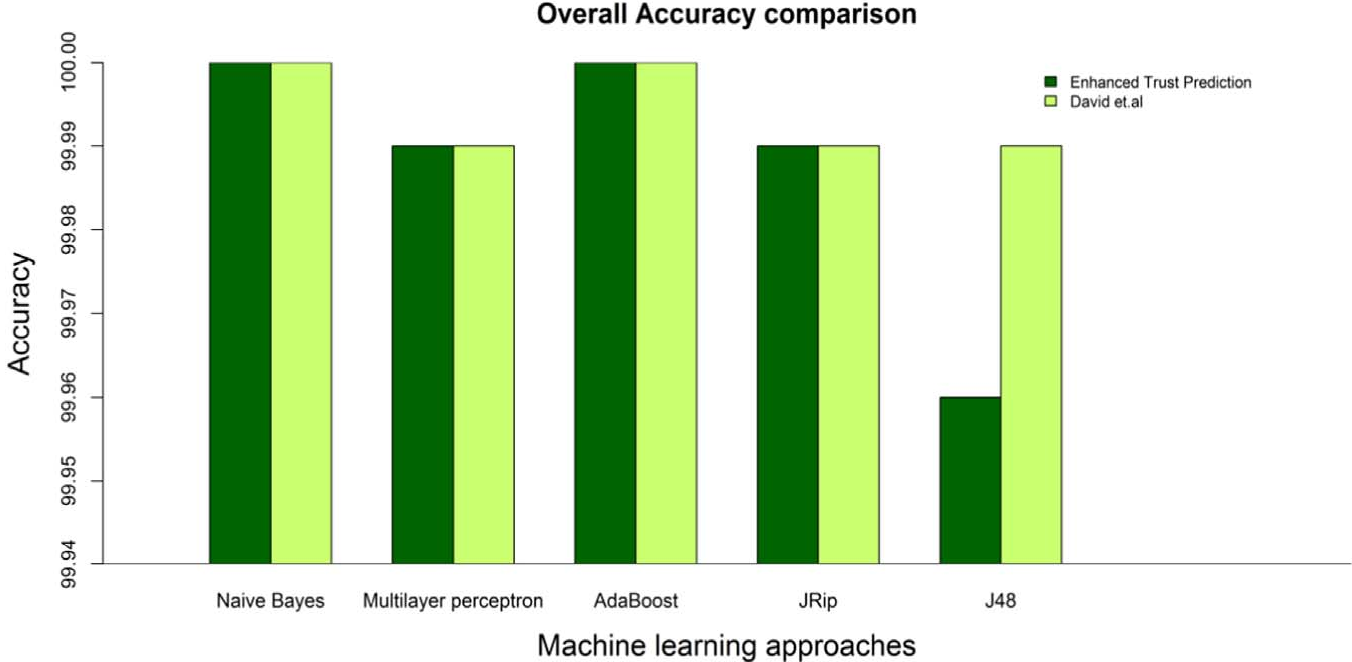 Fig 2: Comparison showing the proposed method outperforming traditional SOTA techniques in overall accuracy.
Deep Insight: Why Probabilities Matter
Why does this work so much better than raw scores? Raw scores are "static snapshots." Probabilities, however, capture Contextual Reliability. If a user is trusted by people who are themselves untrustworthy, the probabilistic model discounts that "trust" much more effectively than a simple sum of ratings.
Conclusion & Future Outlook
This work provides a highly efficient "soft security" layer for social platforms. Key Takeaways:
- Witness chains are more predictive than direct interactions.
- Probabilistic modeling successfully abstracts away the noise of individual biased ratings.
While highly effective, future work could explore the computational overhead of calculating these paths in real-time for networks with billions of nodes, possibly leveraging MapReduce/Spark for real-time stream processing of trust scores.