
Periodic Fable: Transforming Abstract Chemistry into Spatial Play via AR
Enhancing Children Spatial Skills with Augmented Reality Serious Games
This paper introduces "Periodic Fable," a suite of two Augmented Reality (AR) serious games designed to enhance spatial skills and chemistry knowledge in children aged 9-13. By transforming 2D textbook concepts into interactive 3D AR models, the study achieves high engagement and positive affect in preliminary pilot testing.
TL;DR
Chemistry is often a "flat" subject trapped in 2D textbooks, making it a nightmare for students with developing spatial skills. Periodic Fable is a research project featuring two AR serious games that bring the Periodic Table to life. By allowing children to explore 3D molecular worlds and scan real-life objects to see their atomic "DNA," the researchers are proving that AR can turn a "dull" subject into an engaging, spatial-reasoning playground.
Problem & Motivation: The "Chemophobia" Barrier
Why do many students find Chemistry daunting? The authors point to a specific cognitive bottleneck: Spatial Reasoning. Chemistry requires students to visualize, rotate, and manipulate 3D models of atoms and molecules in their minds. When children are forced to learn these concepts via 2D diagrams, the cognitive load often leads to frustration and a lack of interest—a phenomenon known as "chemophobia."
The research team's intuition was simple yet powerful: if the cognitive leap from 2D to 3D is the problem, why not provide the 3D models directly in the student's physical environment?
Methodology: Two Flavors of AR Learning
The researchers developed Periodic Fable, which consists of two distinct gameplay paradigms developed through participatory design with teachers and students.
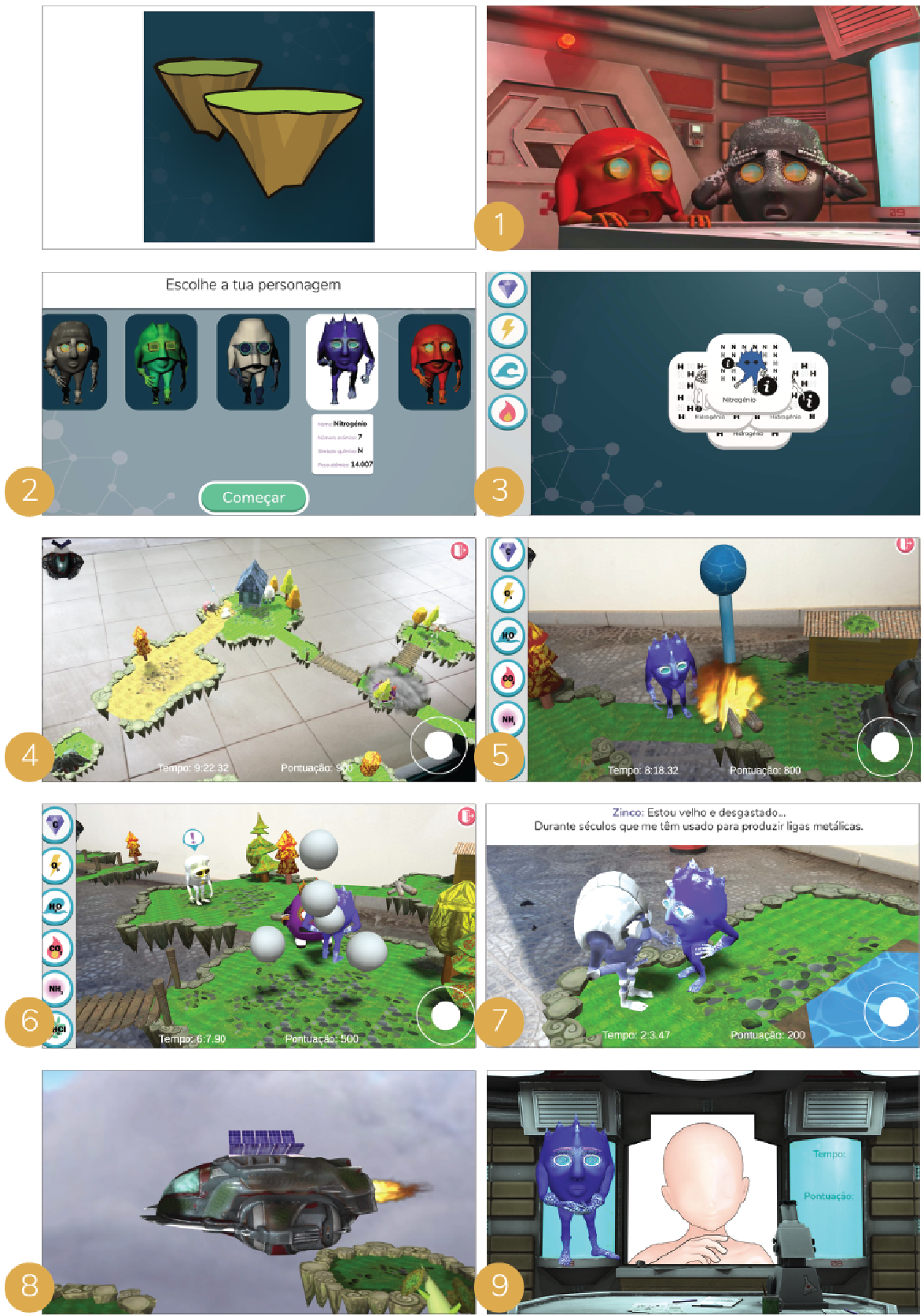
1. PF: An Augmented Journey (Narrative-Driven)
This game focuses on storytelling. A group of chemical characters crashes onto Earth, and the player must help them return home.
- Mechanic: Players use a digital joystick to navigate a 3D world anchored in the real environment.
- Learning: To overcome environmental obstacles (like high UV rays), players must select the correct chemical reaction (e.g., creating Ozone).
- Spatial Skill: Map exploration and navigating a 3D space.
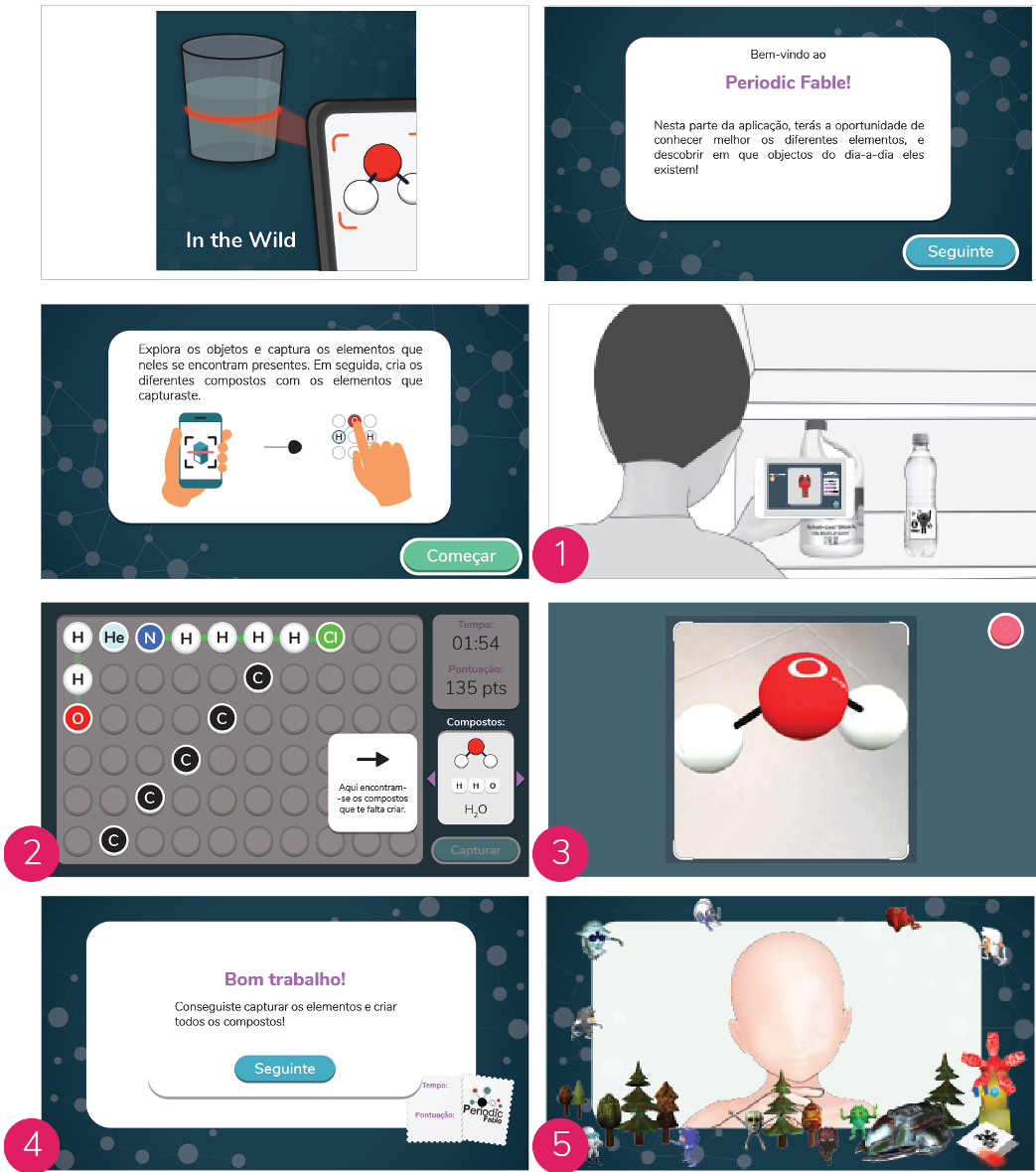
2. PF: In the Wild (Situated Learning)
This game bridges the gap between the classroom and the kitchen pantry.
- Mechanic: Players scan markers on real products (like water bottles or balloons) to "collect" the atoms they are made of.
- Learning: A mini-puzzle requires players to reconstruct the chemical formula (e.g., connecting H and O for Water).
- Spatial Skill: Visualizing 3D molecular structures anchored to physical objects.
Experiments & Results: High Engagement, Minor Friction
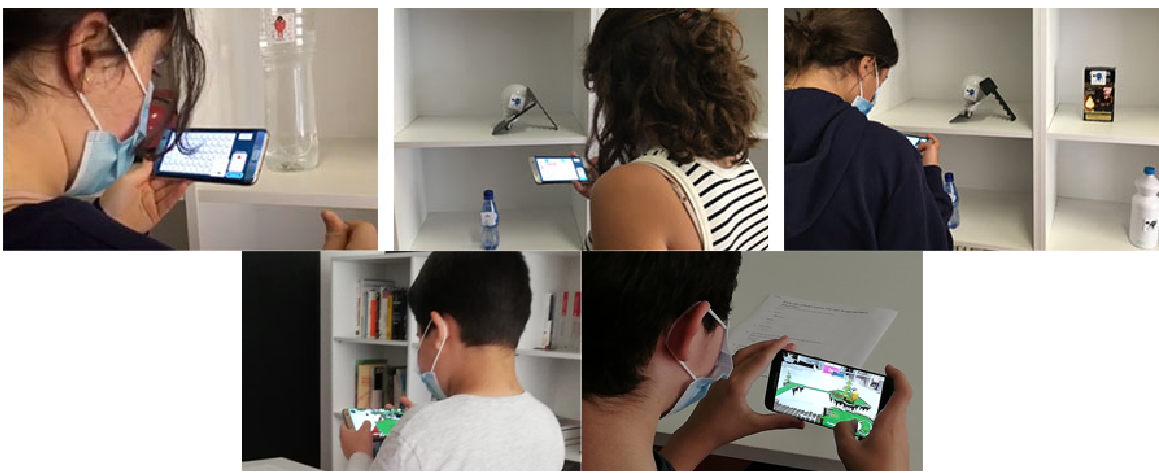
The pilot study involved 7 children (ages 11-13) and utilized a mix-method approach with the PANAS-C (Positive and Negative Affect Scale) and usability surveys.
- Emotional Impact: Both games recorded significantly higher Positive Affect (PA) than Negative Affect (NA). "An Augmented Journey" was particularly successful, with a PA Mean of 18.57.
- Usability: While the games were rated as "fun" and "useful" (M=5.0 for Journey), researchers identified that the digital joystick was unintuitive for some, and the "atom joining" puzzle in the second game became repetitive.
- Knowledge Transfer: Even in this short pilot, students demonstrated recall of specific facts, such as the composition of ammonia and the fact that carbon is the primary component of diamonds.
Critical Analysis & Conclusion
Takeaway: Periodic Fable demonstrates that AR is more than just a "gimmick" for education; it is a vital scaffolding tool for spatial cognition. By spatializing abstract data, we lower the entry barrier for STEM subjects.
Limitations: The study's sample size (N=7) is small, and the "In the Wild" game suffered from a "scanning without reflecting" issue, where students would scan markers too quickly without absorbing the educational content.
Future Outlook: The researchers plan to expand this to a larger controlled study using the Purdue Spatial Visualization Test Rotation (PSVT:R) to quantify exactly how much these games improve a child's ability to rotate mental objects. This could pave the way for AR to become a standard tool for "spatial training" in early science curricula.