
Engineering Collective Wisdom: Trust Models in Communities of Practice
Enhancing the Computational Collective Intelligence within Communities of Practice Using Trust and Reputation Models
This paper proposes an integrated agent-based framework to enhance Computational Collective Intelligence (CCI) within Communities of Practice (CoP). By adapting the FIRE (Fides and Reputation) model, the authors simulate how trust and reputation mechanisms facilitate knowledge sharing and self-organization in multi-agent systems.
TL;DR
In the knowledge economy, the "lone genius" is a myth. This paper explores how Computational Collective Intelligence (CCI) can be engineered by modeling Communities of Practice (CoP) as multi-agent systems. By implementing a sophisticated trust and reputation framework (FIRE), the authors prove through simulation that automated reputation metrics can significantly boost the problem-solving utility of decentralized groups.
The Core Challenge: Navigating Tacit Knowledge
Most organizations focus on explicit knowledge (manuals, documents), but the real value lies in tacit knowledge—the experience-based "know-how" of individuals. Communities of Practice (CoP) are informal groups where this knowledge is shared. However, without a formal hierarchy, how do members decide who to listen to?
The authors identify that Trust is the primary coordinating device in these environments. Yet, trust is:
- Subjective: Based on personal bias and experience.
- Dynamic: It decays over time or changes based on new interactions.
- Incomplete: Members often have limited visibility into the whole system.
Methodology: The FIRE Model Integration
To solve the coordination problem, the researchers adapted the FIRE model (Interaction, Witness, Role, and Certified reputation). This creates a multi-dimensional metric for every "agent" in the community.
The Formal Trust Metric
The model calculates trust as a weighted mean of interactions and roles. A critical feature is the Reliability Weight Function (), which uses an exponential decay parameter ():
This ensures that recent successful collaborations carry more weight than successes from years ago, reflecting the volatile nature of expertise.
System Architecture: Team Assembly
Using the NetLogo framework, the paper simulates how teams self-assemble based on two key parameters:
- Newcomer Proportion: Bringing in fresh perspectives.
- Incumbent Propensity: Leveraging established expertise.
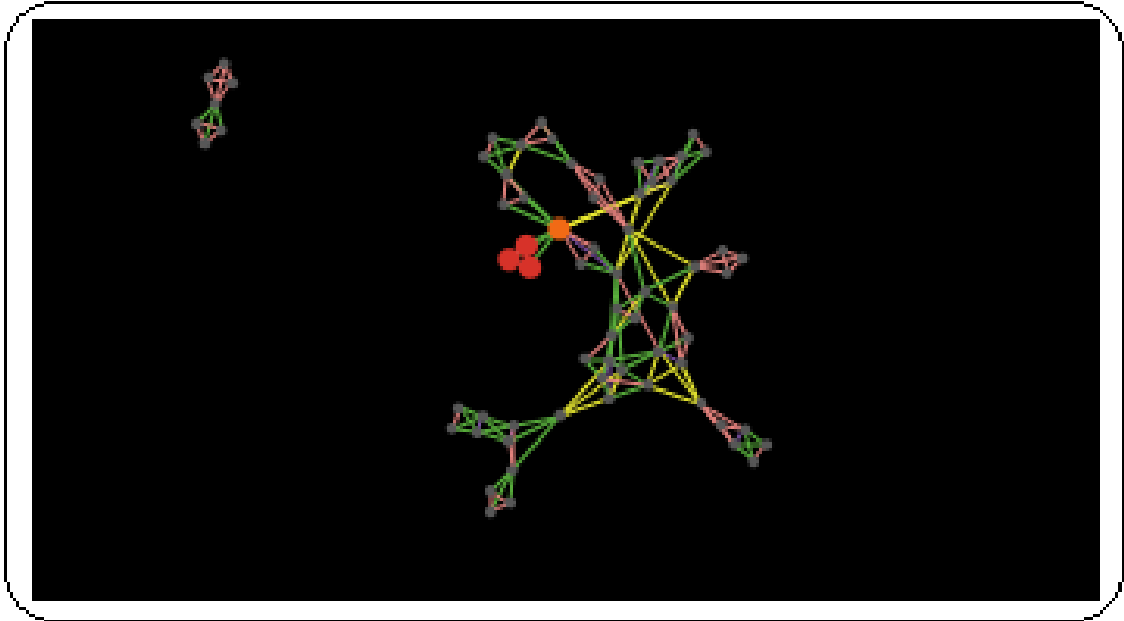 Figure 1: The logic of team assembly where links represent different types of collaboration (Newcomer vs. Incumbent).
Experimental Results: Reputation as a Utility Multiplier
The researchers conducted a hypothesis test comparing a Group with the Trust/Reputation Model (TRM) against a Group with No Trust Model (NTRM).
The Findings:
- Performance Gap: By the 5th interaction, TRM agents reached a utility mean of 7.28, while NTRM agents fell to -1.72.
- Statistical Significance: The p-value was , allowing the rejection of the null hypothesis with nearly 100% confidence.
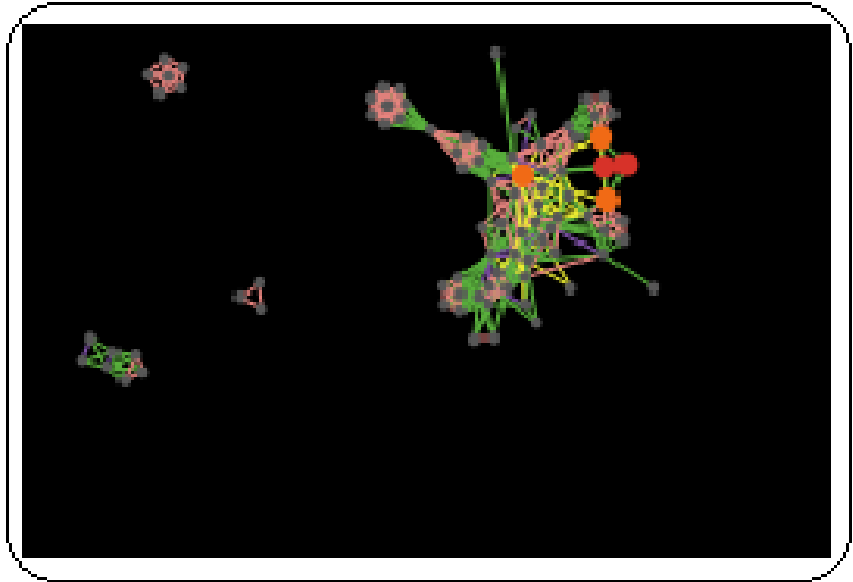 Figure 2: Simulation of emergent network structures. New collaborations move toward the center, while disconnected or low-performing clusters are repelled.
Deep Insight: Why It Works
The model's success stems from its ability to simulate Legitimate Peripheral Participation. In a CoP, newcomers start at the "periphery" and move to the "core" as their reputation grows. The FIRE model provides a mathematical ladder for this movement.
The simulation (Figure 5 in the paper) reveals that agents naturally gravitate toward high-reputation nodes, creating a "Rich-Get-Richer" effect for expertise. This might seem exclusionary, but the authors argue it actually increases the "Collective Intelligence Quotient" of the group by filtering for the most reliable knowledge sources.
Conclusion and Future Outlook
This work demonstrates that collective intelligence isn't just a social phenomenon; it's a computational one. By quantifying reputation, we can design systems where large groups of professionals make better decisions than any single expert.
Limitations: The current model assumes agents are honest in sharing witness information—a risky assumption in competitive corporate environments. Next Steps: Future research will explore "adversarial" reputation—how the system holds up when agents lie about their peers to gain a competitive edge.
Takeaway for Tech Leaders: To scale innovation, stop trying to manage people and start managing the reputation protocols that allow people to trust each other.