
This paper introduces AnimalHaze3k, a physics-based synthetic dataset for wildlife dehazing, and IncepDehazeGan, a novel GAN architecture for atmospheric restoration. The method achieves state-of-the-art performance (0.8914 SSIM, 20.54 PSNR), significantly outperforming existing models in restoring hazy animal imagery.
TL;DR
Wildlife monitoring via camera traps is often blinded by atmospheric haze, rendering detection models useless. This paper introduces AnimalHaze3k, a first-of-its-kind dataset specifically for hazy wildlife imagery, and IncepDehazeGan, a GAN-based restorer. The model achieves SOTA restoration quality (0.8914 SSIM) and effectively doubles the detection accuracy (mAP +112%) of downstream YOLOv11 models in foggy conditions.
Background: The Blind Spot in Conservation
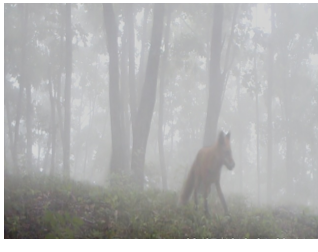
Automated animal detection is a cornerstone of modern ecology, yet it has a "fair-weather" bias. In humid or mountainous habitats, haze scatters light, washing out the unique markings and anatomical features needed for species identification. The core challenge hasn't just been the architecture—it's been the lack of data. You cannot ask a tiger to pose twice—once in the fog and once in the sun—to create a training pair.
From Physics to Pixels: The AnimalHaze3k Dataset
To solve the data scarcity, the authors built a pipeline grounded in the Atmospheric Scattering Model:
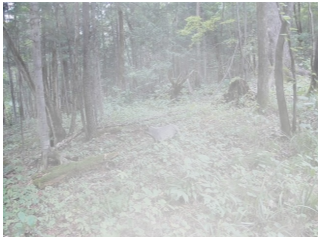
They utilized the HybridDepth model to extract precise depth information from the NTLNP (Northeast Tiger and Leopard National Park) dataset. By simulating light attenuation and scattering coefficients () across various levels, they transformed 1,159 clear images into 3,477 realistic hazy variations.
Methodology: Why Inception Matters
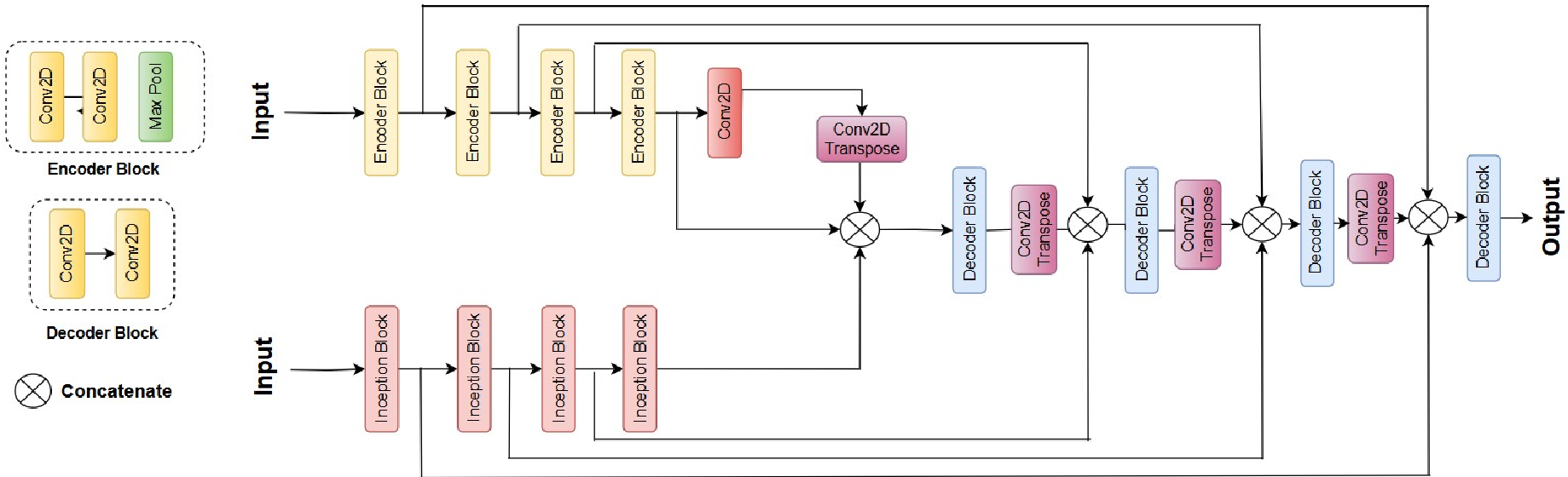
The IncepDehazeGan generator moves away from standard uniform convolutions.
- Multi-Scale Perception: By using Inception Blocks, the encoder simultaneously looks at the image through 1x1, 1x3, 3x1, and 3x3 kernels. This is crucial for haze, which affects both fine textures (animal fur) and global gradients (background fog).
- Information Preservation: Residual skip connections bridge the encoder and decoder, ensuring that low-level spatial details aren't lost during the downsampling process.
- Adversarial Rigor: The PatchGAN-style discriminator forces the generator to produce sharp, realistic textures rather than the "blurry-but-clean" images often produced by pure L1 loss models.
Experimental Breakthroughs
The model was pitted against heavyweights like FFA-Net and DehazeFormer. IncepDehazeGan dominated across all metrics:
- PSNR: 20.54 (Highest)
- SSIM: 0.8914 (Highest)
- LPIPS: 0.1104 (Lowest perceptual error)
The Ultimate Test: Downstream Detection
The most impressive result isn't a math score—it's the functional utility. Using raw hazy images, YOLOv11 achieved a dismal 0.3216 mAP. After passing those images through IncepDehazeGan, the mAP soared to 0.6842. This 112% improvement represents the difference between a failed survey and a successful population count.
Critical Analysis & Conclusion
IncepDehazeGan proves that architectural inductive bias (Inception blocks) combined with physically-informed data is a winning strategy for niche domains.
Takeaway: For ecologists, this provides a "software upgrade" to existing camera traps, allowing surveillance to continue through adverse weather. Limitations: The dataset is still synthetic. Future work should explore Unsupervised Domain Adaptation (UDA) to bridge the remaining "sim-to-real" gap, testing the model on naturally occurring hazy camera trap footage without ground truths.
The AnimalHaze3k dataset is publicly available, marking a significant contribution to the intersection of AI and biodiversity conservation.