
InCircle: Revolutionizing Cross-Cultural Interaction in the Language Classroom
Enhancing Learners’ Cross-Cultural Understanding in Language and Culture Class Using InCircle
This paper introduces InCircle, a closed-network chat system designed for language and culture classes to facilitate student-centered learning. Evaluated in a Japanese university setting, the system significantly outperformed traditional blogging tools in engagement and cross-cultural knowledge sharing.
TL;DR
To move beyond passive, teacher-centered lectures, researchers developed InCircle, a dedicated mobile chat system for university language and culture classes. By providing a secure, private alternative to public social networks like Facebook or LINE, InCircle boosted student engagement by over 800% compared to traditional blogging tools, proving that real-time, peer-to-peer interaction is the key to deep cross-cultural understanding.
Context & Motivation: The Problem with Public SNS
Intercultural competence is best built through social construction—where knowledge is co-created by students rather than just delivered by a professor. However, modern educators face a dilemma:
- The Blog/LMS Barrier: Static platforms like Google Blogger feel formal and "one-way." As the authors noted, a teacher's post might get comments, but these comments rarely spark discussions between students.
- The Privacy Conflict: Using Facebook or LINE in class is problematic. Many students are unwilling to share personal profiles with classmates, and teachers lack the administrative power to moderate interactions or pre-register non-users.
InCircle was built to be a "Walled Garden" that combines the ease of use of WhatsApp with the security and oversight required for an academic environment.
Methodology: Designing for the Classroom
The InCircle System is a client-server architecture serving iOS, Android, and PC users. Its design centers on four high-level academic requirements:
- Teacher-as-Administrator: Full visibility and ability to manage student accounts.
- Pre-registered Accounts: No need for personal phone numbers or email links, alleviating privacy concerns.
- Enhanced Security: Encrypted database and cache data ensuring student information stays within the institution.
- Error Correction: The ability to delete messages on both the sender and recipient sides to mitigate accidental posts.
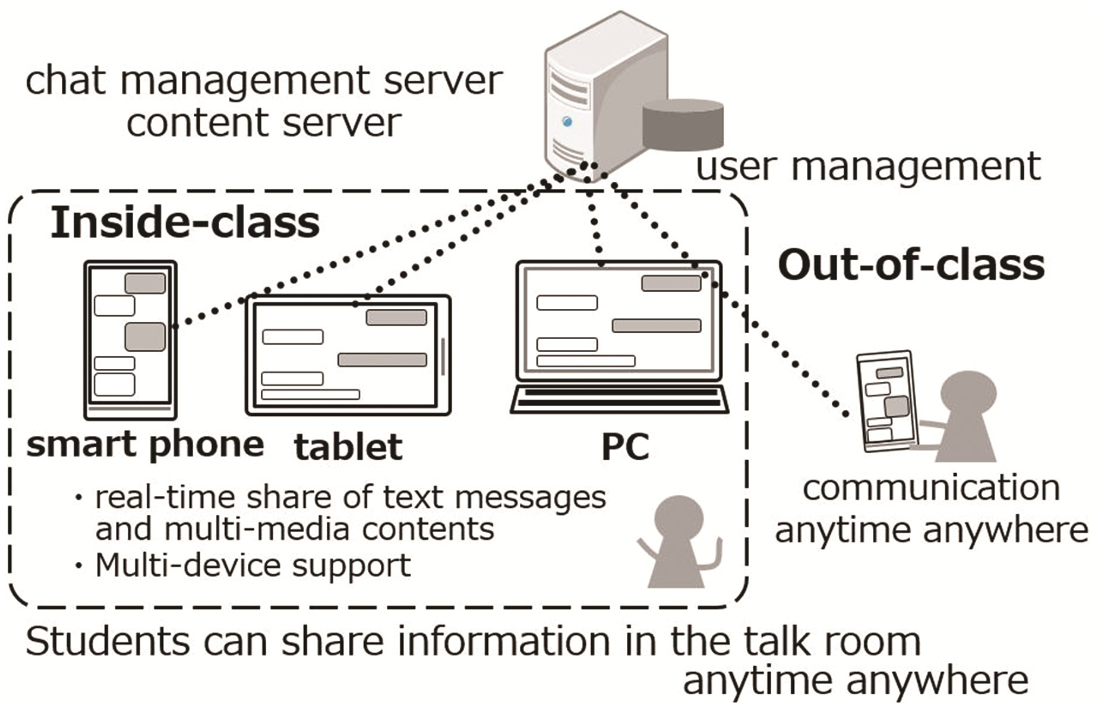 Figure 1: The Client-Server structure of the InCircle system.
Experiments: InCircle vs. Blogger
The researchers conducted a head-to-head evaluation in an international exchange class in Japan. For one semester, students were asked to use a traditional class blog and later, the InCircle chat.
The Interaction Gap
The results were stark. While the class blog (available for nearly 4 months) generated only 16 comments, InCircle (available for just 2 months) generated 146 posts.
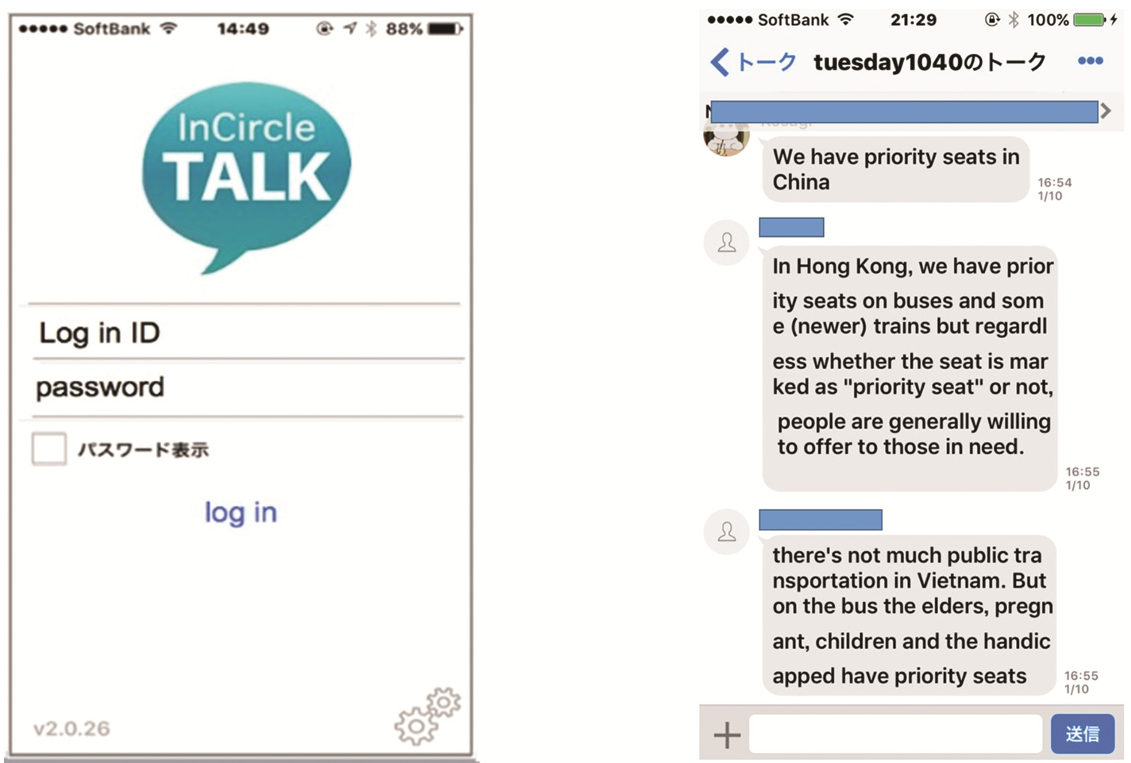 Figure 2: The log-in and chat room interfaces that facilitated rapid student exchange.
Key Discovery: In the blog, a student's answer was an end-point. In InCircle, one student's comment about a game or cultural practice (like 'amida kuji') triggered a chain reaction of responses, creating a genuine collaborative learning environment.
Comparative Results
Based on the Technology Acceptance Model (TAM), students rated the system across several dimensions:
- Usability (Easy to Use): 4.8 / 5.0
- Helpfulness for Classroom Learning: 4.3 / 5.0
- Interface Quality: 4.1 / 5.0
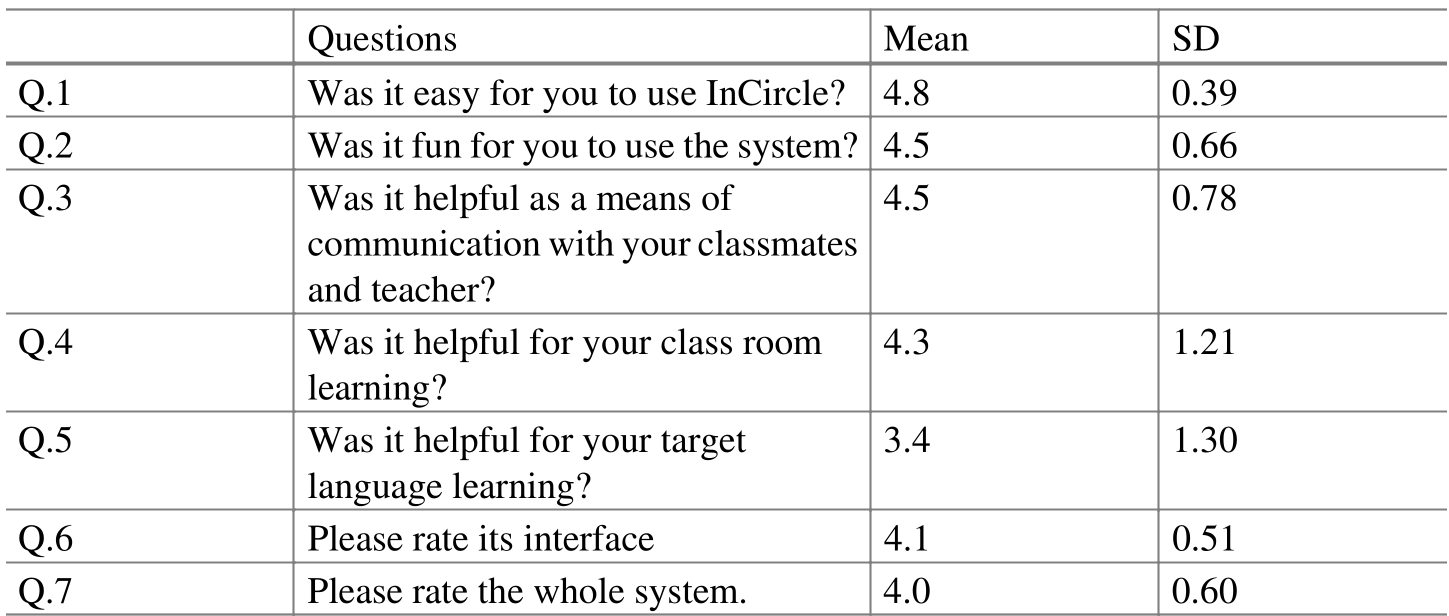 Table: Student survey results showing high satisfaction with usability and fun factors.
Critical Insight & Future Outlook
While InCircle succeeded in cultural sharing, it faced a minor hurdle in language acquisition (rated 3.4/5.0). Because the class was taught in English, students primarily chatted in English, providing less benefit to those specifically aiming to improve their Japanese skills.
The Takeaway: For modern educators, the tool is the message. By adopting a mobile-first, secure chat architecture, we can shift the classroom from a "library" model (reading and silent reflection) to a "café" model (active exchange and social knowledge construction). Future iterations of such tools should look into integrating language-learning scaffolds—such as integrated translation or grammar prompts—to bridge the gap between cultural understanding and linguistic mastery.
Conclusion
InCircle proves that when students are given a familiar, low-friction, and private environment, their willingness to interact spikes. This interaction is the fuel for cross-cultural understanding in the digital age.