
AISpy: Boosting Robot Dexterity through the Power of Mobile Gaming
Enhancing Robot Perception in Grasping and Dexterous Manipulation through Crowdsourcing and Gamification
This paper introduces a crowdsourcing and gamification framework designed to enhance robot perception in unstructured environments. By encoding visual recognition tasks into an addictive tile-matching puzzle game, the system leverages human collective intelligence to label novel objects and resolve low-confidence attribute estimations in near real-time.
TL;DR
Researchers from the University of Auckland have developed a way to make robots smarter by letting people play mobile games. When a robot is "confused" by a weird-looking object, it sends a photo to a puzzle game. As players match tiles, they unknowingly label the object for the robot, allowing it to complete complex grasping tasks in near real-time without needing a massive pre-trained dataset.
The Perception Gap: Why Robots Still Struggle
Despite the era of Large Language Models and advanced Computer Vision, robots in unstructured environments (like a messy kitchen or a recycling center) still hit a "perception wall." If a robot sees an object it wasn't trained on, its confidence drops, and it traditionally waits for a human engineer to step in or it simply fails.
Current solutions like Amazon Mechanical Turk are too slow and expensive. The authors of this paper asked: What if we could turn this boring labeling task into something people actually want to do for free?
Methodology: Gaming the System
The proposed framework, AISpy, acts as a bridge between a robot's local environment and a global network of players.
- Detection: The robot uses a standard CNN (like those trained on COCO) to identify objects.
- Conflict Trigger: If the CNN's confidence is low (e.g., < 90%), it sends a "Label Request" to the server.
- Gamification: The server inserts these "unknown" images into a tile-matching game (think Candy Crush for science).
- Collective Validation: When multiple players match an unknown tile with a "Bottle" tile, the server calculates a consensus. Once confidence hits 95%, the result is sent back to the robot.
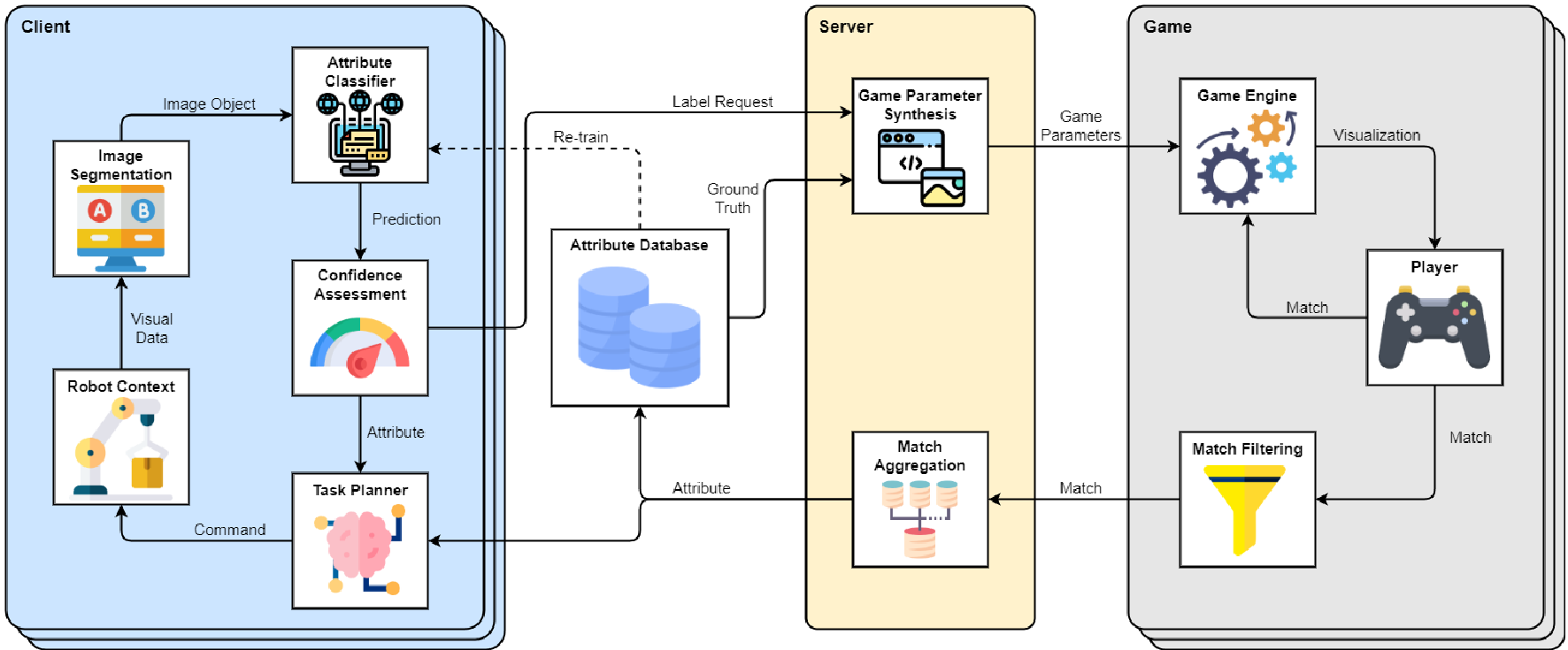 Fig 1. The information flow between the Robot Context, the Game Server, and the Player Base.
The "Proof of Play" Security
To prevent bots or malicious actors from sabotaging the robot's logic, the authors implemented a Proof of Play mechanism. The server provides a random seed for the game board. To submit a match, the client must send the sequence of moves that led to that match, which the server verifies against the seed.
Real-World Test: The Bottle Sorting Challenge
The team tested this with a dual-UR5 robot setup. The robot was tasked with picking up bottles. In the scene, a "chips can" (Pringles-style) was intentionally placed to trick the CNN, which misidentified it as a bottle.
While the robot picked up the high-confidence bottles, the "confusing" objects were sent to the players. The crowd correctly rejected the chips can as a bottle, preventing a sorting error.
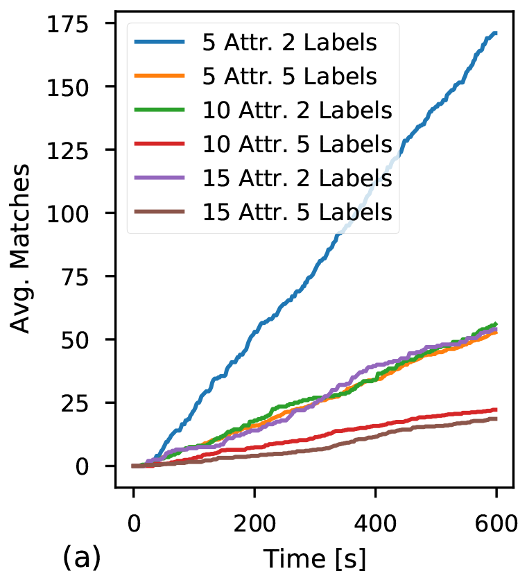 Fig 2. The robot ignores high-certainty objects to focus on those validated by the collective intelligence of the players.
Results & Scaling
The study found a linear relationship between the number of players and the time to resolution.
- Accuracy: Average correct confidence reached 90.6%.
- Speed: While 25 players took a few minutes, the mathematical model predicts that a moderate player base of ~1,900 users would provide labels in sub-second latency.
Critical Insight: The Value of Human Subjectivity
The brilliance of this work isn't just in the game mechanics, but in the Attribute Matching logic. Humans are naturally better at "Affordance" (understanding what an object can do) than raw pixels. By asking players to match attributes rather than just names, the robot gains a more functional understanding of its world.
Limitations: The system still requires a "seed" database of known objects. If the robot encounters something truly alien that doesn't fit any existing category in the game, the system can't label it. Future versions might allow "trusted" players to create new categories on the fly.
Conclusion
This research proves that the "Human-in-the-loop" doesn't have to be a specialist in a lab. By tapping into the billions of hours spent on mobile gaming, we can create a global, distributed brain for our robots, allowing them to navigate the messy reality of the human world.
For more details, visit the project page at newdexterity.org/aispy.