
The ABC Model: Building the Semantic Glue for Multimedia Interoperability
17522_Enhancing the semantic interoperability of multimedia through a core ontology.
This paper introduces a top-level core ontology, the ABC model, designed to enhance the semantic interoperability of multimedia metadata. It establishes a unified, machine-understandable framework that integrates major standards like MPEG-7 and MPEG-21 into a distributed ontology using RDF Schema and DAML+OIL.
TL;DR
The explosion of multimedia content has outpaced our ability to index it meaningfully. While XML provides the "pipes," it doesn't provide the "meaning." This paper presents the ABC model, a top-level core ontology that acts as a universal translator for multimedia metadata. By prioritizing Events over static resources, it allows disparate standards like MPEG-7 (content) and MPEG-21 (rights) to finally speak the same language.
Background: Beyond the Resource-Centric Trap
In the early 2000s, metadata was plagued by a "cataloging" mindset. Traditional models treated a digital image or a video as a static object with fixed attributes. However, multimedia assets are live: they are edited, reformatted, licensed, and repurposed.
The author argues that we need a Temporality-first approach. If we don't treat the "event" of creation or the "action" of modification as first-class citizens in our data model, we lose the ability to answer critical questions: Who was responsible for this change? Which version of this document existed before the loan?
The Core Architecture: Temporality, Actuality, and Abstraction
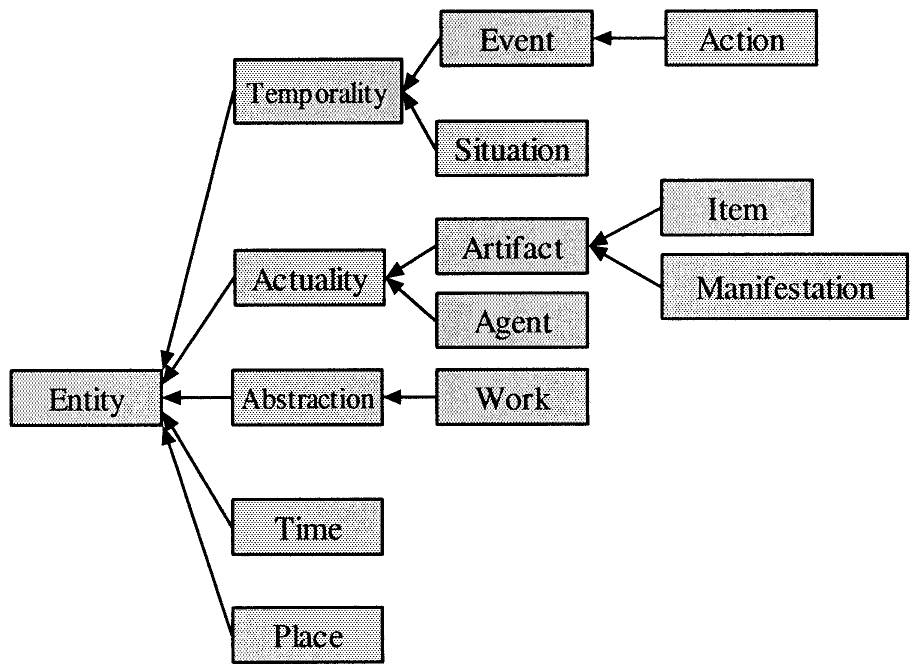
The ABC model breaks down the universe of multimedia into three sophisticated categories:
- Temporality: This is the heartbeat of the model. It uses Situations (periods of stability) and Events (points of transition). For example, a car's color is an existential facet tied to a situation; if you paint it, an Event occurs, leading to a new Situation with a new color.
- Actuality: These are tangible entities—things you can see or hear. It distinguishes between a universal facet (stable properties like "Place of Birth") and existential facets (temporary roles like "President").
- Abstraction: This captures the "Work" itself—the idea of Hamlet that remains the same whether it’s a paperback book or a live performance.
Methodology: Harmonizing MPEG-7 and MPEG-21
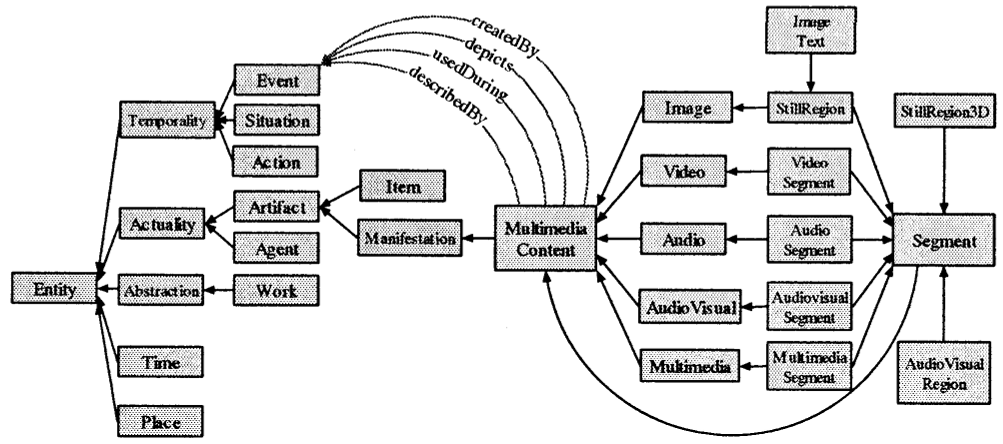
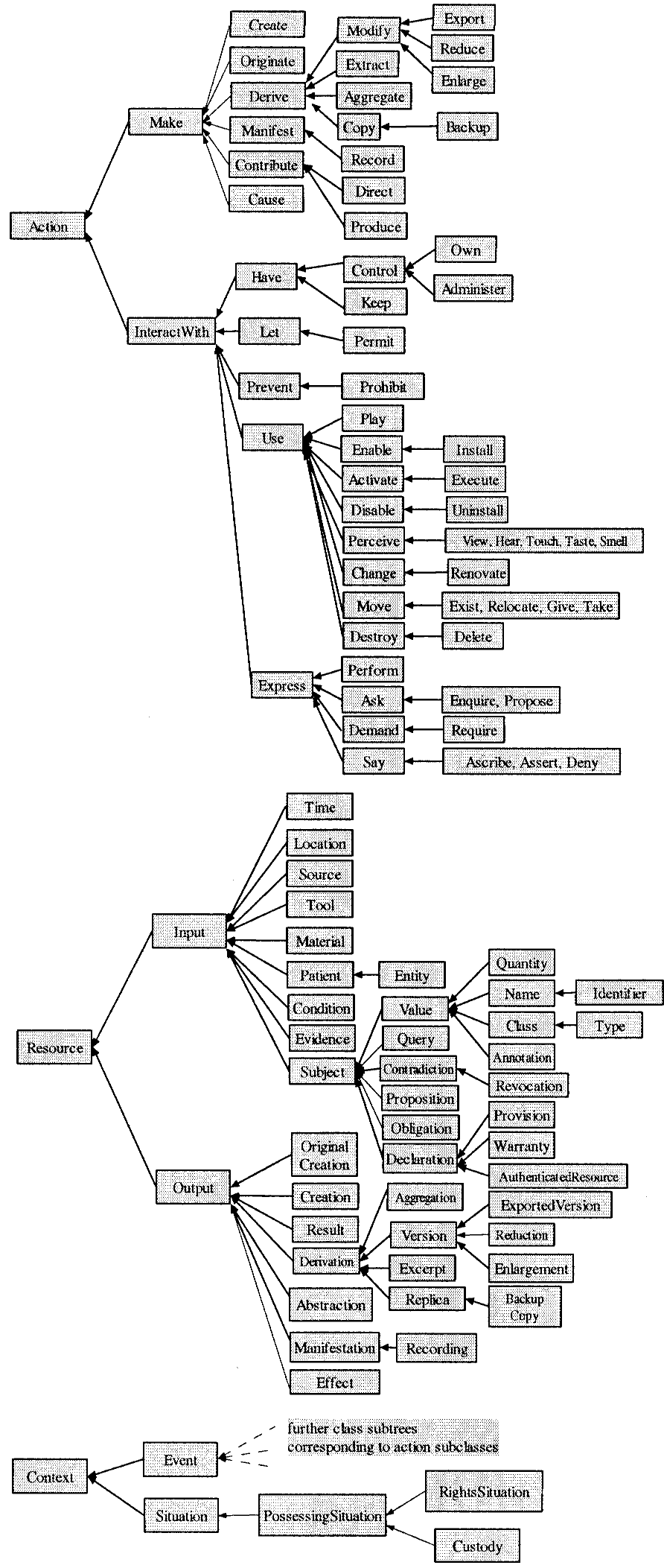
The real power of ABC lies in its role as a "parent" ontology. The paper demonstrates how the complex segment hierarchies of MPEG-7 can be attached to the ABC Manifestation class. Similarly, the Rights Data Dictionary of MPEG-21 fits into the ABC Action and Agent structures.
The result is a distributed machine-understandable ontology. Instead of siloed XML files, we get a linked data graph where a rights expression in MPEG-21 can point directly to a video segment defined in MPEG-7 through the common ABC framework.
Experiments: Real-World Mediation
The author validated the model through several high-stakes scenarios:
- Query Mediation: Using the ABC model to search across four different museum databases (CIMI) simultaneously, despite them using different internal vocabularies.
- Multimedia Aggregation: Automatically generating SMIL presentations by inferring semantic relationships between retrieved items. If metadata suggests a photo and a text are related to the same historical event, the system "knows" to present them together.
Critical Insight: Why This Matters Today
While this paper was written in the early days of the Semantic Web (utilizing DAML+OIL and early RDF), its core philosophy is more relevant than ever in the age of Generative AI and Knowledge Graphs.
The Takeaway: We cannot rely on declarative schemas alone. To achieve true semantic interoperability, we need a formal ontological layer that understands the logic of time and agency. The ABC model provides the blueprint for that layer, ensuring that as multimedia evolves, our systems can keep up with the "who," "what," and "when" of digital life.
Future Outlook
The shift toward OWL (Web Ontology Language) was predicted by the author as the next step for stability. Today, we see these principles reflected in the CIDOC/CRM's continued dominance in cultural heritage and the integration of Knowledge Graphs in modern search engines. The challenge remains the "manual and tedious" nature of initial mapping—a problem that modern Machine Learning is finally beginning to solve.